





















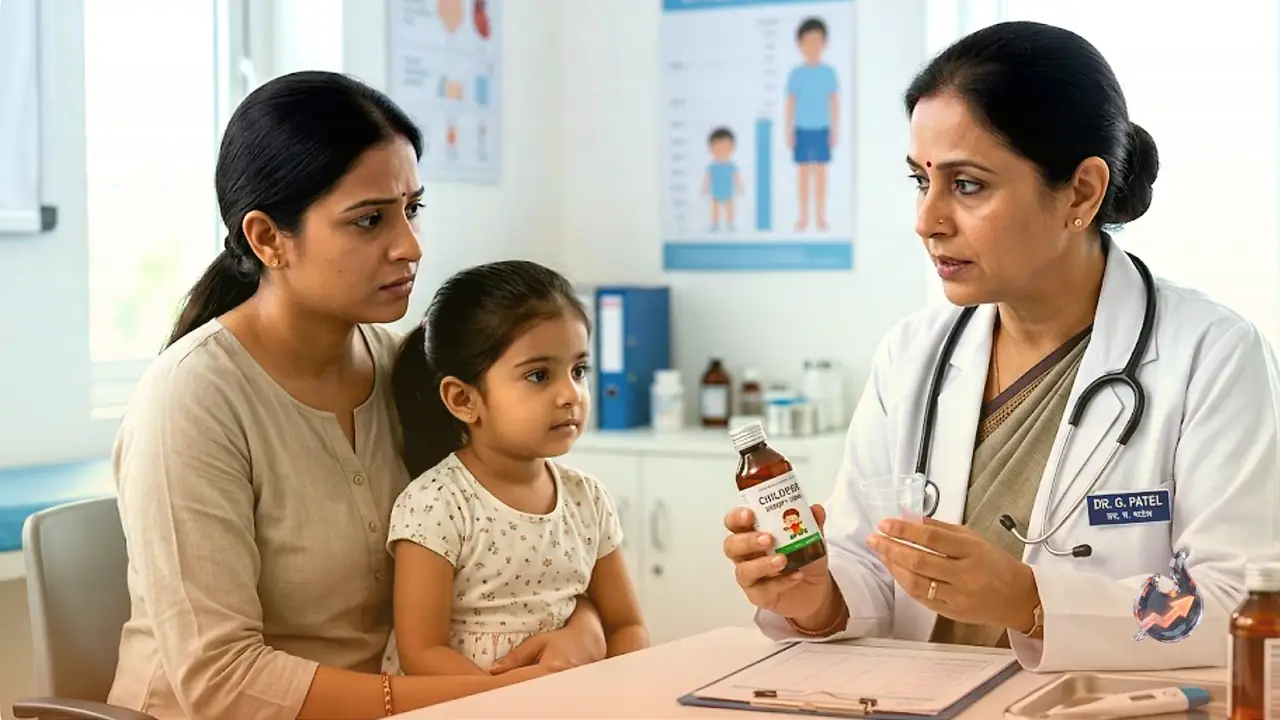

Doctors are seeing a sharp rise in fever cases among children as the weather keeps changing, and in Jaunpur, many parents are responding by giving repeated doses of fever medicine without ever consulting a doctor. Pediatrician Dr. Gunjan Patel warns that this habit can put a child's health at serious risk. Her advice to parents is simple: don't panic the moment a fever shows up, seek timely medical advice instead, and avoid medicating children on your own.
A fever is a signal, not an illness
Dr. Patel explains that fever by itself is not a disease. It is simply a sign that the body's immune system is fighting an infection. Trouble starts when parents see even a mild fever and begin dosing their child with medicine every two to three hours. That approach is wrong, she says, because it raises the risk of overdose, and an overdose can damage a child's liver and kidneys.
Warning signs that need a doctor right away
According to Dr. Patel, certain situations call for immediate medical attention. If a child's temperature is very high, if the child stays constantly lethargic, struggles to breathe, keeps vomiting repeatedly, or has seizures, parents should get to a doctor without delay. Simply repeating the dose again and again just to bring the fever down is not a solution, she says.
Dosage should come from a doctor, not a guess
Medicine should always be given in the exact amount and at the exact intervals a doctor prescribes, Dr. Patel says. The right dose depends on the child's age and weight, so giving medicine based on a rough guess can end up doing more harm than good.
What to keep in mind while the fever lasts
Dr. Patel advises parents to keep giving the child enough water, ORS, coconut water or other fluids through the fever so the body doesn't get dehydrated. Dress the child in light, comfortable clothing and keep the room at a normal temperature. If the fever runs very high, lukewarm water compresses can also be used, but only on a doctor's advice.
Never self-prescribe antibiotics for viral fever
The pediatrician also cautioned that antibiotics should never be given on one's own in cases of viral infection. Antibiotics should only be taken when a doctor recommends them, since the wrong medicine can create serious problems down the line.
A little caution can prevent a much bigger problem
Dr. Gunjan Patel says that a little vigilance from parents can spare children a lot of trouble. If a fever continues for two to three days, or if the child's condition appears to be worsening, parents should reach out to the nearest hospital or a pediatrician without any delay. Timely, correct treatment remains the most effective way to keep children safe and healthy.