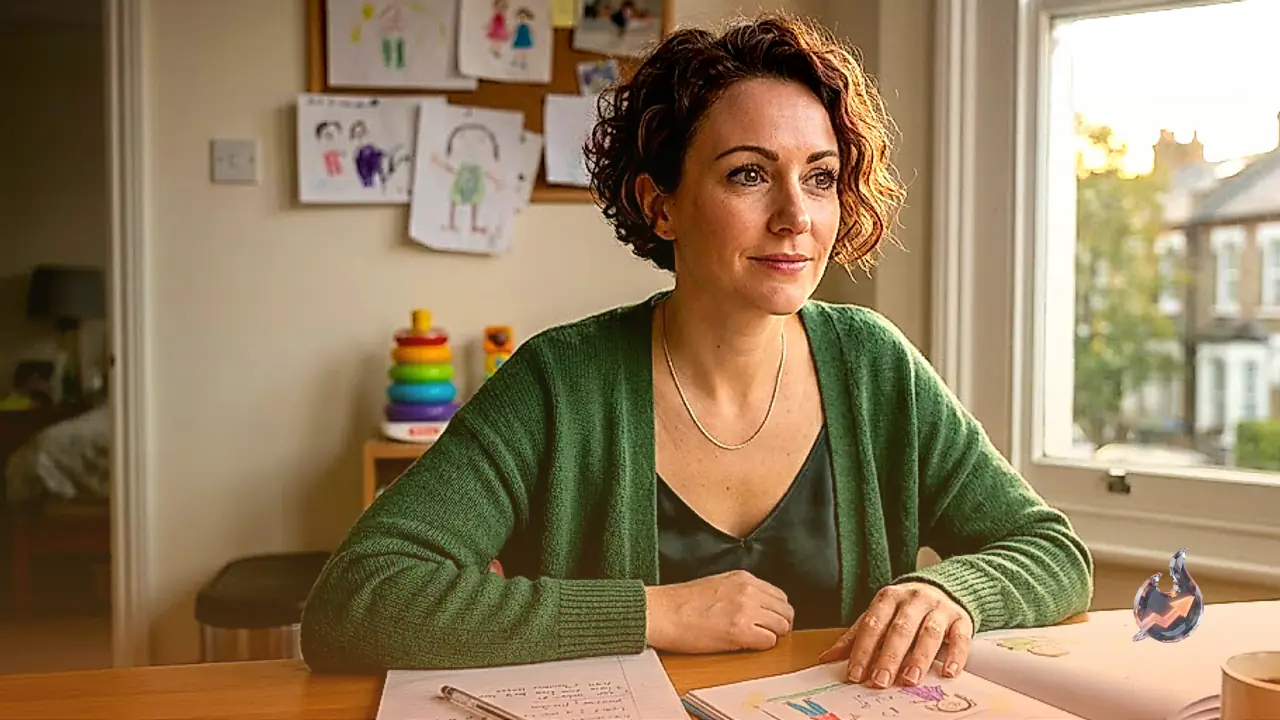























When she returned home early from school as a teenager and explained the situation to her father, he abruptly dismissed the conversation by saying that female issues were not discussed in their household. That early encounter framed how Kate Tolo viewed menstruation for years, treating the pain as something to endure in complete silence. In her early twenties, severe pain during bowel movements eventually led her to an emergency room. Doctors suspected she was suffering from endometriosis, a painful chronic disease that affects roughly 10 percent of reproductive-age women globally, based on World Health Organization estimates.
Endometriosis occurs when tissue similar to the lining of the uterus grows outside the organ, causing intensely painful and heavy periods, pelvic floor dysfunction, gastrointestinal distress, and pain during intercourse. The attending physician recommended a laparoscopy, an invasive surgical procedure required to confirm the diagnosis and excise abnormal tissue. Tolo firmly rejected the surgery, refusing to undergo an invasive operation or cut her body open to get an answer.
Rigorous Protocols and Biomarker Collection
In early 2026, Tolo began collaborating on a personalized health venture with her partner Bryan Johnson, the multimillionaire tech entrepreneur known for his extreme anti-aging regimens. When Tolo shared her ongoing struggles with suspected endometriosis during a medical intake, Johnson became determined to investigate non-invasive avenues for diagnosis and treatment.
After making their relationship public late last year, Johnson positioned Tolo as a female counterpart in the biohacking space. Backed by $2.6 million in funding from their wellness venture Immortals, Tolo started monitoring more than 1,500 biomarkers across her menstrual cycle. Her daily regimen involves nearly four hours of physical measurements, saliva collection, scans, stretches, and regular blood, urine, and stool samples.
This demanding routine represents a major shift for the 30-year-old former fashion marketing professional, who became Johnson's executive assistant and special projects director at his neurotechnology company Kernel in 2021. Tolo, who describes herself as an introvert with a history of anxiety and depression, found the extreme schedule difficult at first. During the second week, an internet outage during red-light therapy triggered a panic attack. Despite the mental and physical strain, Tolo maintains that the demanding routine serves a broader mission to advance female health diagnostics.
Menstrual Blood Testing and Organoid Development
A central focus of their work is the development of non-invasive diagnostics for endometriosis. The pair claims to have identified Tolo's condition over a 42-day assessment using specialized ultrasound scans alongside saliva and blood tests, following earlier MRI and transvaginal ultrasound imaging that showed normal results. Their upcoming phase involves cultivating an organoid in a laboratory using cells isolated from Tolo's menstrual blood to test potential therapies and evaluate the results against standard biopsy methods.
For several months, Tolo has gathered menstrual fluid using a cup and transferred it into vials before shipping the samples on ice to an undisclosed biotechnology laboratory. The collection demands rapid handling so cells remain viable for lab analysis. Her long-term goal is to validate whether women can eventually collect menstrual samples at home and receive an endometriosis evaluation without undergoing surgical exploration.
Clinical Perspectives and Diagnostic Realities
Diagnosing endometriosis remains a major medical challenge, according to Kristin Riley, chief of minimally invasive gynecological surgery at Penn State Health. The condition exhibits variable clinical presentations, and visible tissue accumulation does not always match symptom severity. While clinical history and pelvic ultrasounds aid initial evaluations, surgical laparoscopy remains the primary diagnostic standard, which is why patients often wait five to ten years for a confirmed diagnosis.
Efforts to introduce simpler diagnostic tools have grown across the medical device market. In the United Kingdom, a saliva-based test named Endotest recently received temporary clinical approval to screen for microRNA biomarkers associated with the condition. However, Riley notes that such tools face extensive hurdles before receiving broad regulatory approval or replacing standard surgical assessments in the United States.
Other specialists question the scientific utility of single-subject protocols. Ilana Ressler, an obstetrician-gynecologist at Illume Fertility in Connecticut, emphasizes that clinical interventions require broad, well-validated population data before they can inform medical practice, cautioning against generalizing findings from a single individual.
Public Reception and Commercial Landscape
Johnson describes his involvement as a personal mission to alleviate his partner's chronic pain. While some of their public posts detailing medical procedures have drawn mixed reactions online, Johnson argues that reproductive health issues should be openly addressed without stigma. Tolo, leveraging her communications background, views their public transparency as a way to demystify complex health struggles.
The shared focus on endometriosis has also softened Johnson's public image, which had previously drawn skepticism over extreme longevity experiments such as plasma transfusions. Johnson noted that an automated analysis of his social media sentiment showed negative reactions dropping significantly from previous highs of 80 percent down to mostly positive feedback. Meanwhile, Tolo's social media following expanded significantly after April 2026.
Industry projections from GlobalData suggest that the endometriosis diagnostic sector could expand to $2.5 billion by 2034. While Immortals currently distributes specialized wellness formulations, including topical estradiol and anti-aging creams, the couple states that their menstrual blood testing project requires another eight to twelve months of research before commercial viability can be properly evaluated.
Heat Tolerance and Physical Boundaries
Tolo has also engaged in additional physical tests, such as monitoring temperature spikes using ingestible thermal sensors in high-heat saunas to observe physiological reactions during her cycle. In one instance, pushing core body temperatures to 102.4 degrees Fahrenheit caused nausea and headaches after 25 minutes, though she insisted on completing the session before undergoing abdominal imaging to confirm the sensor cleared her digestive tract.
Reflecting on the rigorous regimen, Tolo acknowledged that her access to resources and funding enables her to undertake extensive experimentation. She maintains that gathering detailed biological data provides valuable insights that could eventually benefit broader research into female reproductive health.