























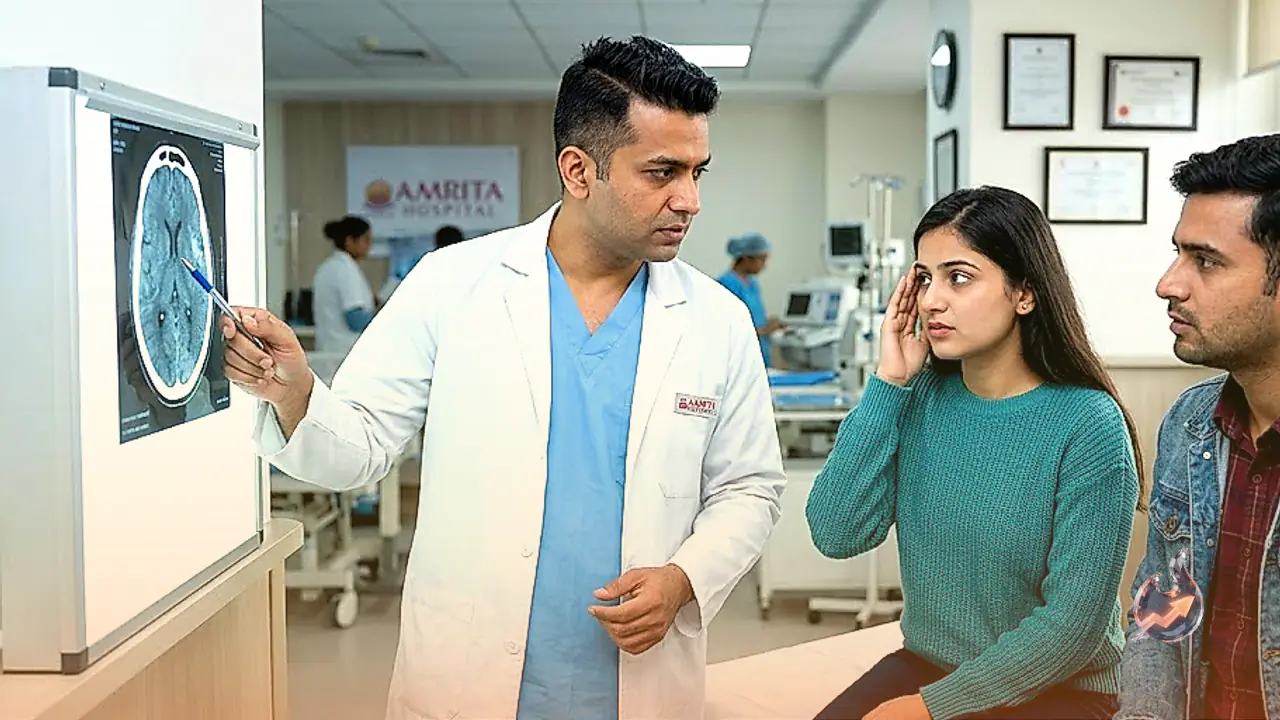

When someone is laughing, talking, and looking entirely normal after suffering a blow to the head, it does not automatically mean they are completely safe. Frequently, the symptoms of internal bleeding or swelling inside the brain do not manifest immediately following a head trauma. A patient might remain stable for a few hours, only for their condition to deteriorate rapidly afterward. In such scenarios, warning signs like severe headaches, vomiting, excessive drowsiness, or behavioral changes must never be ignored.
Internal Brain Bleeding Can Occur Unseen
In a detailed discussion, Dr. Gaurav Kakkar, Senior Consultant and Lead in Neuro-Anaesthesia and Neurocritical Care at Amrita Hospital, Faridabad, explained that intracranial bleeding can indeed occur following an impact. This reality demands widespread public awareness. However, the greater challenge is that internal bleeding within the brain often leaves no outward signs. Recognizing this danger is vital because delayed intervention can prove fatal.
Why Head Injuries Are Dangerous Despite Initial Normal Appearance
Dr. Gaurav Kakkar pointed out that head injuries are considered particularly severe because trauma sustained inside the skull can trigger brain swelling an hour or two later, or even after several hours have passed. As a consequence, a person who appears completely normal on the outside can lapse into unconsciousness within hours. By that time, the window for medical intervention nearly closes. Brain injuries require timely treatment and cannot be brushed aside.
Timeline and Types of Bleeding After Head Trauma
Dr. Gaurav Kakkar noted that head injuries involve two to four distinct types of bleeding. Some hemorrhages occur simultaneously with the impact, while others begin at the time of injury and continue to expand over the subsequent hours. All such forms of bleeding are dangerous. Every variety of head trauma resulting in bleeding must be treated with utmost seriousness. Therefore, remaining vigilant and visiting a hospital immediately is essential. Even if a person looks entirely fine, consulting a neuro specialist at a major hospital for proper evaluation and treatment is critical.
The Danger Behind a Seemingly Normal Patient
Dr. Gaurav Kakkar explained that for the vast majority of head injuries, thankfully, the cases remain mild and uncomplicated. However, roughly 15 to 20 percent of head injuries are extremely severe. Among these, some cases present a completely normal outward appearance while harboring severe internal damage. If such a patient visits a doctor once and leaves, but fails to monitor what medical professionals call red flags, they can experience a sudden collapse. When brain swelling increases abruptly, the situation becomes life-threatening.
Clearing Up Food and Drink Myths Related to Head Injuries
Regarding dietary restrictions often mentioned after head injuries—such as avoiding rice, curd, sour foods, or pickles—Dr. Gaurav Kakkar clarified that modern medical science recognizes no such rules. Food has no proven scientific impact on head trauma. While these beliefs may not be classified as mere superstition, they hold no scientific ground in medicine. Nevertheless, a patient with a head injury should never be given any food or drink until they reach a hospital and undergo a proper medical checkup and treatment. This precaution is necessary because the patient might vomit or lose consciousness, and consuming items beforehand could cause food or liquid to enter the airway and obstruct breathing. Professional medical advice should always be sought for any head injury, no matter how minor it appears externally.
Essential Safety Precautions to Prevent Head Injuries
Dr. Gaurav Kakkar emphasized that head injuries can escalate into critical medical emergencies. Highlighting a key safety motto, he noted that keeping the head safe keeps the home safe. People can incorporate four or five simple safety measures into their daily lives to prevent head injuries. First, whenever riding a two-wheeler, wearing a helmet is mandatory. If riding a bicycle, individuals should stay away from high-speed traffic lanes and can wear a helmet for head protection. Additionally, all two-wheeler and four-wheeler drivers must follow traffic rules strictly, avoiding wrong-side driving and refraining from jumping red lights.
Allowing Minors to Drive Poses Severe Dangers
Dr. Gaurav Kakkar noted that allowing underage and minor children to drive scooters or motorcycles has become a prevalent trend, which constitutes a legal offense in itself. Such children lack the requisite maturity. They frequently neglect helmets and drive at excessive speeds. Hospitals routinely receive minor patients suffering from severe head injuries caused by high-speed accidents.
Dr. Gaurav Kakkar cautioned that operating a bicycle, two-wheeler, or car under the influence of alcohol or any intoxicating substance must be strictly avoided. Furthermore, small children are frequently vulnerable to head injuries resulting from falls off roofs, railings, or balconies. Caregivers must always supervise young children and keep balconies secured. If a balcony is open, installing safety nets can minimize the risk of accidental falls. Embracing the principle of keeping the head safe to keep the home safe is essential for everyday life.