
A sharp political controversy has erupted in Himachal Pradesh over discussions regarding the creation of new administrative districts. State spokesperson of the Aam Aadmi Party, Achal Chhabra, strongly questioned the Sukhvinder Singh Sukhu administration's decision to evaluate the feasibility of carving out new districts. He alleged that with assembly elections drawing nearer, the ruling establishment is offering empty promises to the public to gain political mileage. He pointed out that if the government had genuine intent regarding administrative decentralization, it would have initiated this detailed exercise four years ago rather than raising it towards the end of its tenure.
Fiscal Burden of up to 6,000 Crore Rupees on a Debt-Ridden State
Addressing the economic condition of Himachal Pradesh, Achal Chhabra highlighted that the state is already struggling under a massive debt burden. In such constrained financial circumstances, creating new districts would impose an additional expenditure of approximately 5,000 to 6,000 crore rupees on the public exchequer. He questioned where the administration plans to secure funding of this scale and asked whether the state would be forced to take on even more debt to finance the move. He noted that undertaking such heavy capital commitments without clear revenue sources risks pushing the state further into financial distress.
Neglected Primary Schools, Protesting Teachers, and Hospital Delays
Achal Chhabra stated that the government should prioritize basic public amenities and civic welfare over major administrative restructuring. Pointing to crises in the public schooling and healthcare systems, he noted that multiple schools in the state have been forced to shut down. Concurrently, primary school teachers are staging sit-in demonstrations across the state to demand the resolution of their longstanding grievances, reflecting administrative neglect of foundational education.
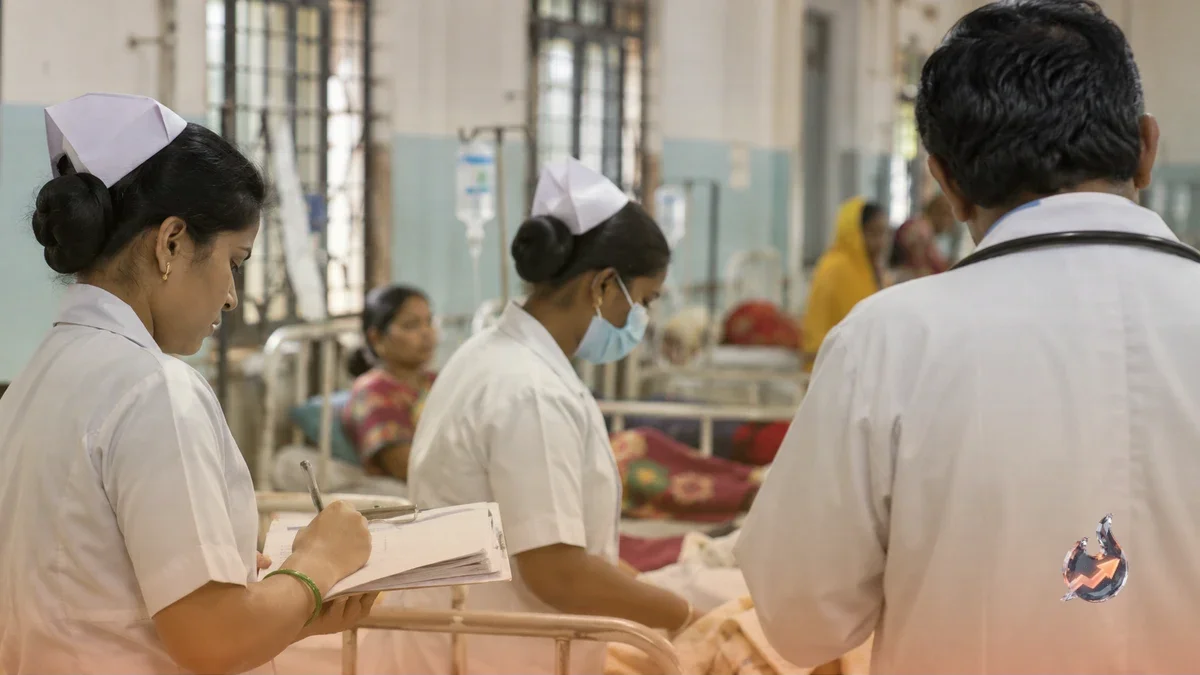
He described a similar situation across state-run healthcare facilities, where ordinary citizens face prolonged waiting periods for essential diagnostic and surgical procedures. In several government hospitals, patients requiring diagnostic tests such as X-rays and MRI scans, as well as necessary surgeries, are subjected to waiting lists stretching up to an entire month. He argued that ensuring functional medical equipment and adequate surgical access in existing healthcare centers should take precedence over allocating billions of rupees to brand-new administrative complexes.
Concerns Over Bureaucratic Staffing and Administrative Capacity
The Aam Aadmi Party spokesperson also raised questions regarding the administrative feasibility and staffing of any new districts. He recalled that the Chief Minister had previously stated that the state did not require additional IAS officers due to prevailing debt constraints. In light of that stance, he asked who would oversee and staff the administrative machinery of the proposed new districts. Establishing a functional district demands significant manpower, including deputy commissioners, police chiefs, and specialized departmental staff. He called on the government to clarify where it intends to source the administrative personnel, infrastructure, and operational resources needed to run these offices.
Divisions Among Ruling Legislators and Timing of the Move
Pointing to internal divergence within the ruling party, Achal Chhabra claimed that the administration has consistently taken major decisions over the last four years without proper consultation with its own lawmakers. Contradictory statements from Congress MLAs regarding the formation of new districts have surfaced publicly, with some openly advocating for the split while others voice opposition. He questioned why the government set up a committee to study the matter without first building a consensus among its own elected representatives.
He described the entire initiative as a political maneuver designed to generate expectations ahead of elections without real intent to deliver. He remarked that by the time the appointed committee completes its deliberations and submits its formal report, the current administration's term will already be nearing its end. The spokesperson insisted that citizens require functional schools, accessible hospitals, and dependable public infrastructure rather than unfulfilled announcements and prolonged committees.