





















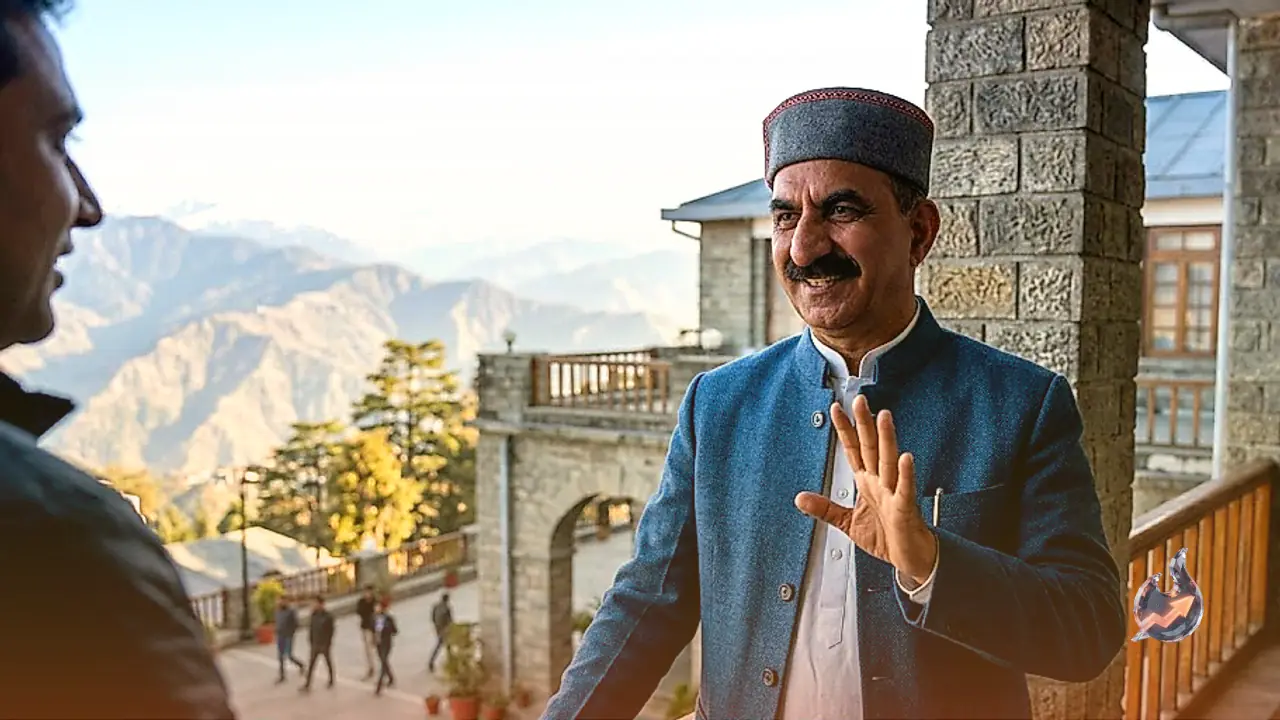

In a major administrative move aiming to reshape the state's workforce and welfare structures, the Himachal Pradesh government, under the leadership of Chief Minister Sukhvinder Singh Sukhu, has rolled out a sweeping set of decisions targeting unemployment, healthcare accessibility, and grassroots economic welfare. During a comprehensive state cabinet meeting held in Shimla on Monday, authorities officially greenlit the filling of more than 7,500 job vacancies spread across a wide range of state-run government departments. The detailed outcomes of this crucial legislative session were later shared by the state's Industries Minister, Harshwardhan Chauhan, highlighting a strong governmental focus on providing new youth opportunities and implementing systemic administrative upgrades.
One of the most anticipated announcements involved immediate relief for candidates seeking to join the state police force. Responding to long-standing demands from applicants who were on the verge of crossing the maximum age threshold, the administration has authorized a one-time age relaxation of exactly one year. This specific concession will apply to the roughly 800 police constable positions that were recently advertised, giving many older aspirants a final and much-needed chance to secure a spot in law enforcement.
The job creation extends far beyond the police department. The cabinet has cleared the hiring of 3,950 employees to serve in 1,975 senior secondary schools, directly addressing severe staffing shortages in the education sector. Furthermore, local governance will see an influx of personnel with 400 Multi Task Workers designated specifically for Gram Panchayats. Other significant approvals include 200 Junior Office Assistants slated for library duties, and 102 dedicated posts created exclusively for the Nurpur Police District. Multiple other departments, including Fisheries, Panchayati Raj, Planning, Economics and Statistics, Tribal Development, and Small Savings, have also received formal clearance to initiate their respective hiring processes.
Healthcare Upgrades and Increased Medical Stipends
Recognizing the urgent need to strengthen the medical ecosystem, the state cabinet sanctioned several financial and structural enhancements for healthcare professionals. Post-graduate medical students actively training in state facilities will see a substantial and immediate increase in their monthly stipends, significantly easing their financial burdens. First-year PG trainees will now receive 50,000 rupees every month, up sharply from the previous 40,000 rupees. The stipend for second-year students has been generously bumped from 45,000 to 60,000 rupees, while third-year students entering the final stages of their training will collect 65,000 rupees instead of their previous 50,000-rupee allowance. Additionally, to retain top-tier medical talent within state-run hospitals, super specialist faculty members will now be eligible to receive the Non-Practicing Allowance.
Medical infrastructure and education are also slated for broad expansion. Both IGMC Shimla and Dr. Rajendra Prasad Medical College in Tanda will introduce new undergraduate courses focused directly on Radiotherapy Technology. Tanda Medical College is also preparing to open a specialized Gastrointestinal Surgery department to handle complex cases. To support critical care across various regions, new dialysis technician roles are being rapidly created in multiple medical colleges, and modern, high-tech medical equipment will be procured for five separate critical care blocks. On a rural level, the Community Health Center situated in Koti, Shimla, is set to be comprehensively upgraded into a fully functional 10-bed hospital facility.
Boosting Grassroots Workers and the Rural Economy
The state government has also moved aggressively to improve the financial standing of essential grassroots workers. ASHA workers, who form the very backbone of rural healthcare delivery, will see their monthly honorarium rise from 5,800 rupees to 6,800 rupees, a welcome change that will officially take effect on April 1, 2026. Similarly, the monthly compensation for Nambardars has been adjusted upwards from 4,500 to 5,000 rupees. Outstanding educators are being recognized as well, with the cabinet approving a reward of 1.50 lakh rupees for National Teacher Award recipients and a 1 lakh rupee bonus for State Teacher Award winners.
The agricultural and fisheries sectors received a massive policy boost specifically aimed at increasing local productivity and supporting local livelihoods. The government is introducing a robust 70 percent financial subsidy for fishermen purchasing new boats, alongside an impressive 90 percent subsidy designed to lower the cost of essential fishing nets. Infrastructure required for safely preserving daily catches is also being heavily subsidized at 70 percent, a program that will directly cover the costs of building new cold storage facilities, setting up freeze-dry units, and purchasing refrigerated transport vans. Under the Mukhyamantri Machhuara Samman Nidhi Yojana, eligible fishing families will receive a financial aid package of 3,500 rupees during the closed breeding season when regular fishing activities are strictly halted.
Infrastructure, Sports, and Child Welfare Initiatives
Several specialized construction projects were given the green light to foster regional development. Dhaneta in Nadaun has been chosen as the prime site for a new All India Institute of Ayurveda. Nadaun will also host an Integrated Aqua Park and a cutting-edge Sports Center of Excellence, with the latter receiving 12.89 crore rupees strictly for equipment procurement and an additional 48 new staff positions to manage its day-to-day operations. Crucial staffing approvals were also granted for the Bharari Sports Hostel, the Jubbal Sports School, and the prestigious Mountaineering Institute located in Manali.
Child nutrition, safety, and rural infrastructure saw equally important policy shifts during the session. The existing Mukhyamantri Bal Poshtik Aahar Yojana has been formally amended to improve dietary standards; as a result, students attending government schools from the nursery level up to the eighth grade will now be provided with either a boiled egg or a piece of seasonal fruit twice every week to combat malnutrition. For child protection at the local level, specialized legal volunteers are scheduled to be stationed directly inside police stations to closely monitor and manage sensitive cases involving missing children.
The cabinet also addressed vital infrastructure and energy initiatives by confirming that the operational capacity of the Fozal Hydroelectric Project has been officially increased from its previous 9 megawatts to a higher output of 16 megawatts. The Jal Shakti department is adopting the ESCO model to ensure better energy efficiency across all its water management operations. Furthermore, a new fire post will be rapidly established in Baroh, Kangra, to drastically improve emergency response times. Urban development plans officially include the construction of a sprawling multipurpose commercial complex in Vikas Nagar, Shimla, operating under a Public-Private Partnership model, as well as the formal administrative approval to fully develop the Jathiya Devi Mountain City project. The cabinet also raised the upper age limit for the e-taxi component of the Rajiv Gandhi Swarozgar Startup Yojana from 45 to 50 years, increased the Yudh Jagir grant from 7,000 to 10,000 rupees, and held preliminary discussions regarding the upcoming monsoon assembly session, which is tentatively planned to be held sometime after August 15.