


















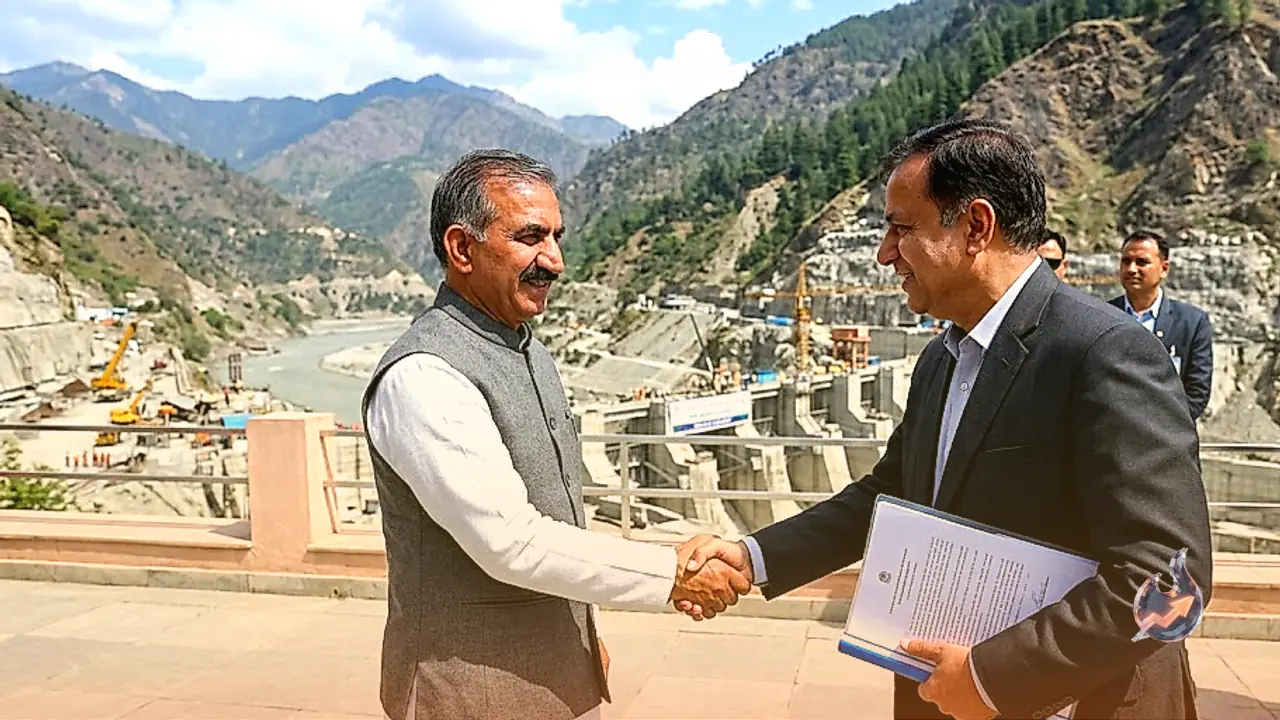

Himachal Pradesh to earn Rs 1200 crore annually from Kishau Dam project as Sukhvinder Singh Sukhu secures major dealHimachal Pradesh
16 Sept 2026, 10:06 am (52 days ago)· 1

Himachal Pradesh to earn Rs 1200 crore annually from Kishau Dam project as Sukhvinder Singh Sukhu secures major deal

Himachal Pradesh is set to earn around Rs 1,200 crore annually once the Kishau Dam project is completed, without spending a single rupee on its construction costs.

Chief Minister Sukhvinder Singh Sukhu announced on Tuesday that Himachal Pradesh will generate an annual revenue of approximately Rs 1,200 crore after the completion of the Kishau electricity project. This landmark agreement marks a decisive step in resolving long-pending water sharing and power generation disputes involving multiple states across northern India, promising a major financial boost for the hill state.

Historic Agreement Signed in New Delhi

The formal agreement for the Kishau project was signed in New Delhi following high-level deliberations between Uttar Pradesh Chief Minister Yogi Adityanath, Uttarakhand Chief Minister Pushkar Singh Dhami, Himachal Pradesh Chief Minister Sukhvinder Singh Sukhu, and Haryana Chief Minister Nayab Singh Saini. This multi-purpose project, pending for nearly six decades, brings together six states including Punjab, Haryana, Uttar Pradesh, Uttarakhand, Himachal Pradesh, Delhi, and Rajasthan to streamline water distribution and hydroelectric power production in the region.

Also read

Zero Financial Burden on Himachal Pradesh

The most striking feature of the agreement is that Himachal Pradesh will not have to spend a single rupee toward the construction of the project. The state's financial share amounting to roughly Rs 800 crore will instead be borne entirely by the beneficiary states that will utilize the water from this project. Chief Minister Sukhvinder Singh Sukhu had earlier firmly refused to incur any expenditure from the state exchequer, making this a massive political and economic victory for his administration.

211 Megawatts of Free Power Generation

Addressing the media in New Delhi following the signing of the memorandum of understanding, the Chief Minister highlighted that the biggest advantage for Himachal Pradesh is receiving 211 megawatts of power generated from the Kishau Dam with zero production cost. The massive expenses required to build the infrastructure will be paid by the states utilizing the water resources. Describing the state's rivers as flowing gold, he emphasized that Himachal Pradesh is successfully moving toward maximizing the economic returns from its valuable natural wealth.

Geographical Scope and Technical Details of the Project

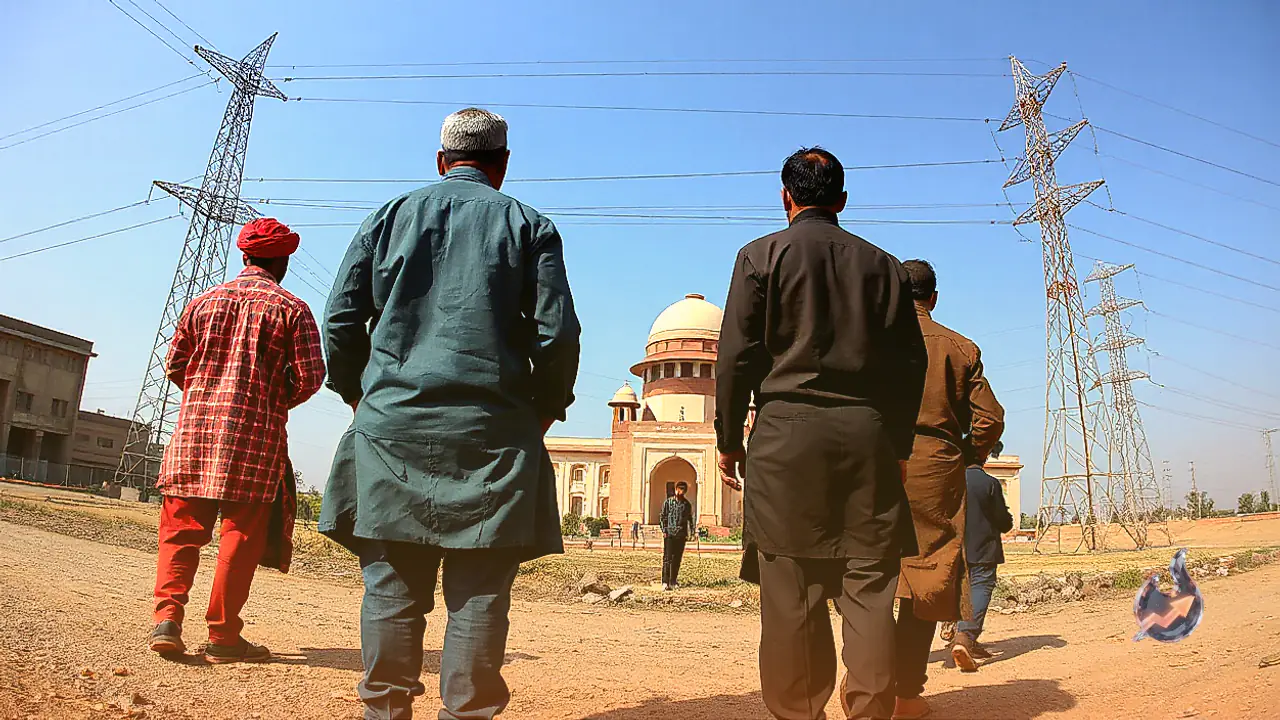
Proposed across the border of Himachal Pradesh and Uttarakhand, the multi-purpose Kishau Dam project is planned on the Tons River within the Yamuna basin. The Tons River serves as a major tributary of the Yamuna. With a total generation capacity of 660 megawatts, the project will directly impact 2,092 residents across eight villages in Himachal Pradesh and 3,406 residents across nine villages in Uttarakhand. The reservoir will submerge a total area of 2,950 hectares, comprising approximately 1,498 hectares in Himachal Pradesh and 1,452 hectares in Uttarakhand. The entire project is estimated to cost around Rs 15,000 crore.


Questions & Answers

How much annual revenue will Himachal Pradesh earn from the Kishau Dam project?
Himachal Pradesh is projected to earn approximately Rs 1,200 crore annually once the project is completed.
Which chief ministers signed the agreement for the Kishau project?
The agreement was signed by the chief ministers of Uttar Pradesh, Uttarakhand, Himachal Pradesh, and Haryana.
How much money will Himachal Pradesh spend on constructing the Kishau Dam project?
Himachal Pradesh will not spend a single rupee on construction, as beneficiary states will cover its share of about Rs 800 crore.
How much free power will Himachal Pradesh receive from the project?
The state will receive 211 megawatts of electricity generated from the dam with zero production cost.
On which river is the Kishau Dam project proposed?
The project is proposed on the Tons River in the Yamuna basin, which is a major tributary of the Yamuna.
What is the total area that will be submerged due to the project?
The project will submerge a total area of 2,950 hectares, including 1,498 hectares in Himachal Pradesh and 1,452 hectares in Uttarakhand.

Comments 5

Rohan Gupta@rohan-gupta·51d ago

The long-term success of large multipurpose ventures like the Kishau Dam project relies heavily on integrating modern technology into its infrastructure. Efficiently managing 660 MW of power and multi-state water distribution requires deployment of smart grid systems, IoT-enabled real-time monitoring, and AI-driven predictive analytics. Utilizing digital twin technology and automated resource tracking will be essential to minimize transmission losses and ensure precise, transparent allocation across the participating states, turning this inter-state agreement into a benchmark for tech-driven utility management.

Ravikash Gupta@ravikash·51d ago

This agreement offers an exemplary zero-CapEx asset creation framework for resource-rich hill states. For an economy facing fiscal pressures, securing 211 MW of power and Rs 1,200 crore in annual revenue without incurring construction debt provides crucial long-term financial relief. Furthermore, breaking a six-decade deadlock through multi-state consensus demonstrates effective cooperative federalism, establishing a viable template for resolving stranded inter-state water and power infrastructure projects across Northern India.

Arjun Mehta@arjun-mehta·51d ago

Building on Ravikash's insight, the political and governance dimensions of this breakthrough are equally crucial. Reaching a consensus among chief ministers across different political parties on a six-decade-old dispute serves as a prime example of effective cooperative federalism. Monetizing natural hydro-resources without incurring capital expenditure is not just a financial gain, but a masterclass in political diplomacy. This agreement demonstrates that when states prioritize pragmatic policy negotiations over regional friction, complex inter-state disputes can be resolved while setting a new benchmark for resource-based governance.

Rohan Verma@rohan-verma·51d ago

This pact offers more than just fiscal relief for the hill state; it also establishes crucial water security within the Yamuna basin for downstream states like Uttar Pradesh. Achieving multi-state consensus after six decades proves that resource management is finally taking precedence over regional political friction. Moving forward, this breakthrough will likely serve as a viable template for resolving other long-stalled river valley projects across the northern region.

Karan Malhotra@karan-malhotra·51d ago

Resolving water disputes pending for six decades through a multi-state consensus is a major milestone from both administrative and legal perspectives. When multiple states set aside their jurisdictional friction to agree on a complex multi-purpose project, it sets a robust precedent for inter-state dispute resolution. This agreement demonstrates how long-term administrative and legal cooperation is essential for managing large-scale national resources.

Citizen journalism

Become a TrendKia journalist

Voice of the people

Share news, photos and videos from your area with TrendKia and let your voice reach the nation. Every citizen a journalist.

Join now
CH 01 LIVE
TrendKia TV ON AIR
Chamar no WhatsApp