























Nature has once again unleashed its extreme fury across the mountainous terrain of Himachal Pradesh. A sudden and violent cloudburst in the Boh Valley region of Shahpur in Kangra district has resulted in unprecedented devastation. The natural disaster effectively wiped out decades of human settlement in just a matter of hours, turning vibrant villages into massive mounds of mud and debris. Despite the catastrophic scale of infrastructural destruction, a major human tragedy was successfully averted. Thanks to the heightened alertness of the local administration and the quick thinking of the residents themselves, not a single human life was lost to the rushing waters, as villages were evacuated just in time.
Entire Villages Swallowed by Debris
The aftermath of the sudden deluge has painted a profoundly grim picture for the local populace. According to the official damage assessment, a total of 38 families have been directly impacted by the disaster. This translates to approximately 200 individuals who woke up to find themselves completely homeless. The geographical breakdown of the destruction shows that two specific villages bore the absolute brunt of the catastrophe. In Gadhgoon village, the terrifying mudslides completely washed away 12 family homes. The neighbouring village of Spaida suffered an equally devastating fate, with 13 houses reduced to absolute rubble.
The trail of destruction extends far beyond just the completely obliterated structures. Officials have confirmed that nine other residential buildings have sustained partial damage, leaving them structurally compromised. Another 12 homes are currently standing precariously in the danger zone, facing an imminent threat of collapse if the weather patterns deteriorate further. The agrarian backbone of these families has also been severely hit, as multiple cowsheds were entirely buried under the heavy debris, resulting in a tragic loss of livestock. The affected families have lost almost everything they owned, with essential household goods, daily rations, and clothing all swallowed up by the thick mud.
Relief Camps and Immediate Support
Recognizing the absolute urgency for secure shelter, the local administration took the immediate precautionary step of fully evacuating both Spaida and Gadhgoon villages. The displaced residents, numbering around 200, have been safely relocated to a temporary relief camp established inside the premises of the local senior secondary school. While a majority are taking refuge in this government-run facility, some affected families have chosen to seek shelter at the homes of their extended relatives in adjacent safe zones.
To address the basic survival requirements of the displaced families, the administrative machinery is working overtime. Relief teams are actively distributing fresh clothing, cooking utensils, food rations, and all other indispensable items required for daily sustenance in the temporary camps.
Financial Aid and Rehabilitation Promises
Following the disaster, Deputy Commissioner Hemraj Bairwa conducted a comprehensive on-ground inspection of the affected zones. During his exhaustive visit to assess the ongoing relief and rehabilitation operations, the DC announced a significant upgrade to the financial assistance being offered. Initially, the administration had sanctioned an immediate relief amount of 15,000 rupees for the owners of fully destroyed homes. However, after witnessing the sheer gravity and totality of the destruction firsthand, this financial aid parameter was substantially increased. The affected families are now receiving expanded compensation ranging from 50,000 to one lakh rupees, and the immediate distribution of these funds is actively underway.
Looking ahead toward long-term rehabilitation, the DC shared crucial updates regarding the permanent resettlement of the displaced families. Both Chief Minister Sukhvinder Singh Sukhu and the State Revenue Minister have extended absolute assurances of comprehensive support. For those unfortunate residents whose houses have been entirely obliterated and who now possess no safe land to rebuild upon, the government has already stepped in proactively. State authorities have identified parcels of government land specifically for rehabilitation purposes. The formal process to allocate this land will commence immediately as soon as formal demands are registered by the displaced families. It has also been confirmed that Chief Minister Sukhu will personally visit the affected villages very soon to review the recovery efforts.
Army Joins the Challenging Rescue Mission
The ongoing relief and rescue operations are facing severe logistical bottlenecks, primarily due to the total destruction of local infrastructure. Restoring road connectivity remains the single biggest hurdle for the administration. While the primary access road has been successfully restored up to the local Panchayat headquarters, the pathways beyond remain entirely impassable for vehicles. Rescue workers and officials are being forced to undertake strenuous foot journeys to reach the victims. It currently takes a 10 to 15 minute trek to access Spaida village, while reaching Gadhgoon requires a gruelling 20 to 25 minute walk through the broken terrain.
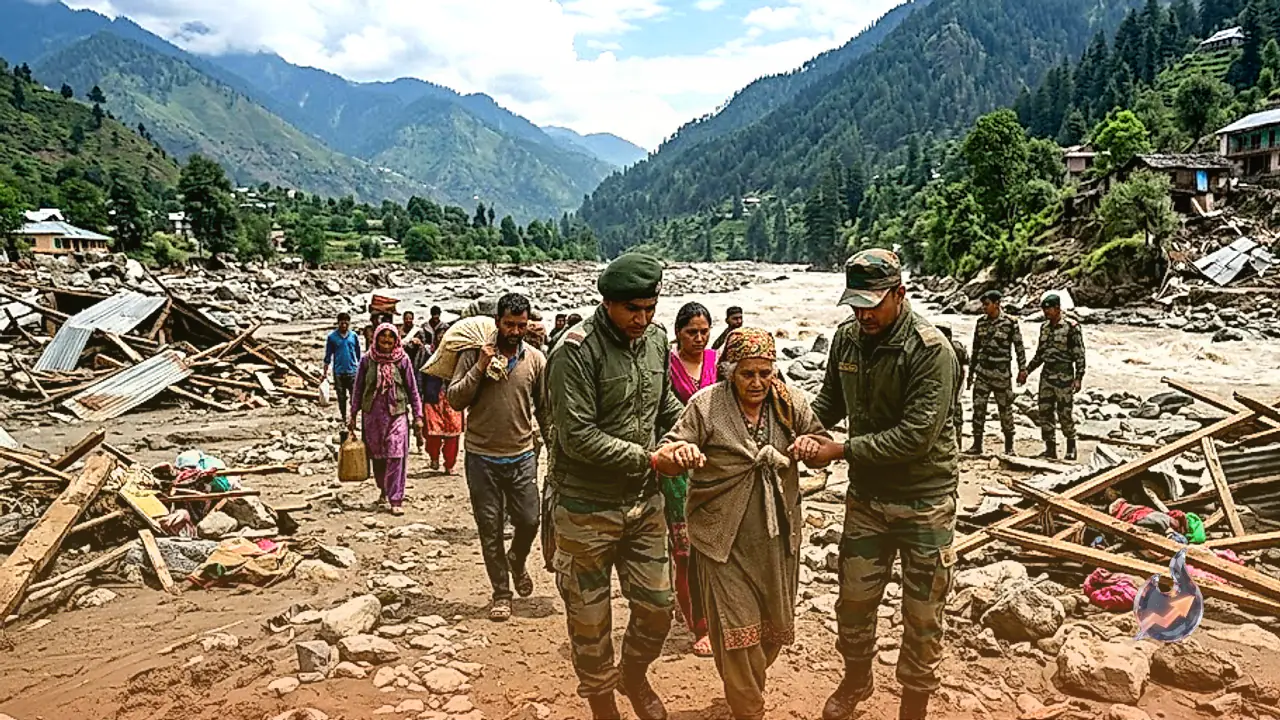
Because the damaged pathways prevent any heavy earth-moving machinery from reaching the disaster sites, the mammoth task of clearing the debris is being executed entirely by hand. To accelerate this critical operation, the administration formally requested military assistance. A dedicated team from the Army has now been deployed at ground zero. The soldiers are working tirelessly alongside civilian disaster response teams to manually dig through the massive mounds of mud, desperately trying to salvage whatever safe household belongings they can extract for the affected families.
Looming Dangers and Future Mitigation
Even as the manual cleanup continues, a massive geological threat continues to cast a dark shadow over the region. High up on the hillside directly above Spaida village, two to three enormous boulders have been left in a highly unstable and precarious position following the landslides. The administration's specialized technical team has already conducted a thorough geological inspection of these overhanging rocks.
To eliminate the severe risk of a secondary disaster, authorities have formulated a concrete action plan. Once the weather clears and overall conditions stabilize, experts will execute controlled blasting or manual chipping procedures to safely dismantle and remove these dangerous rocks. This preemptive measure is deemed absolutely necessary to ensure no further accidents occur in the future.
In the meantime, Deputy Commissioner Bairwa has issued a specific appeal to social organizations and independent donors. He requested that any philanthropic contributions and relief materials be coordinated strictly according to the specific requirement lists prepared by the administration. This strict protocol ensures that the most necessary aid reaches the right families in a timely and organized manner, helping the administration achieve its primary goal of returning these devastated families to normal life as quickly as possible.