














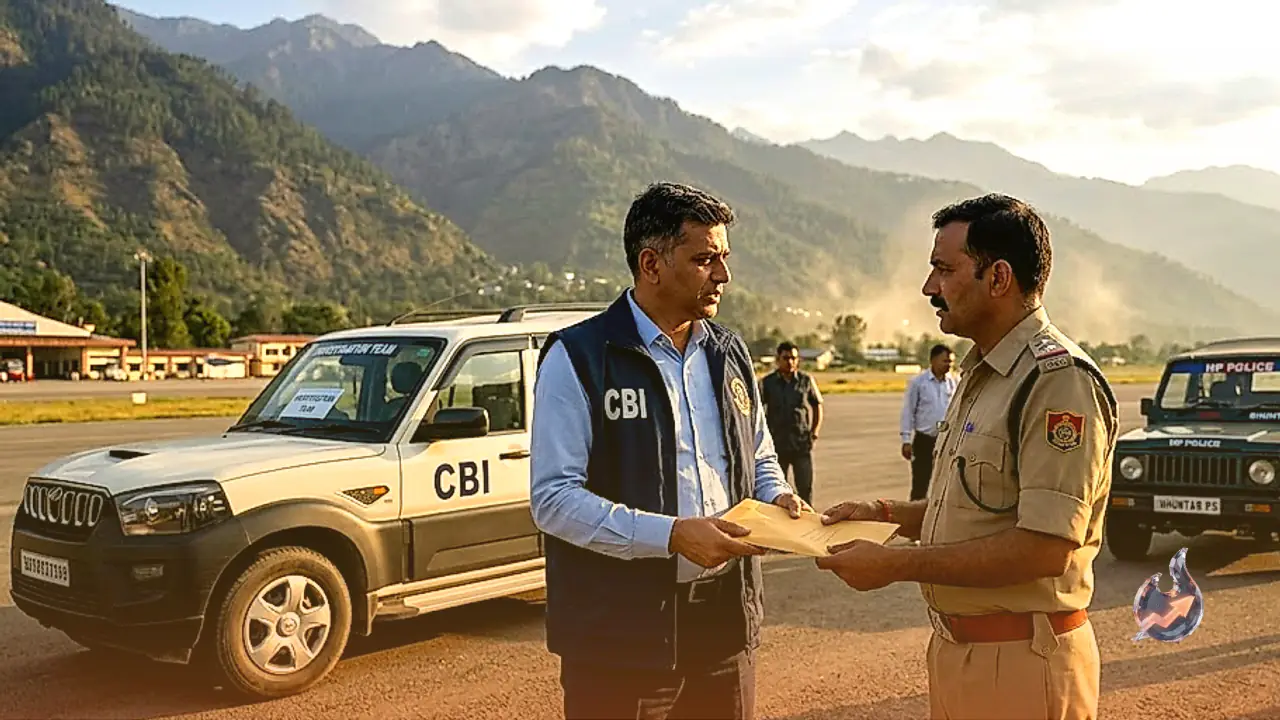

Himachal Pradesh High Court has handed over investigation of the NDPS case involving Tibetan-origin American chef Jamyang Tsering to the Central Bureau of Investigation. A bench of Justice Rakesh Kainthla ordered an independent probe into the police action, the circumstances of the arrest and the serious injuries Tsering suffered during the operation, though the court declined to quash the FIR registered at Bhuntar police station.
What the case is about
According to the petition, Jamyang Tsering arrived in India from the United States towards the end of January 2026. He was travelling with two companions from Manali and Kasol towards McLeodganj. The petition states that the purpose of the trip was to assess business opportunities, including the possibility of setting up a hotel. On 22 February, police stopped their vehicle midway, setting off the chain of events at the centre of the case.
Charas and cash allegedly found in the vehicle
The petitioners allege that police demanded a bag containing Rs 4 lakh in cash from them. When they refused, policemen allegedly forced their way into the vehicle, planted 28 grams of charas among their belongings and built a false case against them. They claim they were then held illegally for several hours without food, water or access to a toilet. The petition further alleges that during this period, police pushed Tsering onto the road, where he was hit by a passing Tempo Traveller. The impact left him with serious injuries and he had to be hospitalised.
Himachal Pradesh Police has denied all these allegations. The police say the 28 grams of charas and Rs 4 lakh in cash were recovered from the vehicle lawfully, in the presence of independent witnesses. According to the police version, Tsering was injured only because he was struck by a speeding Tempo Traveller during the search, not because he was pushed.
High Court questions gaps in the case diary
Justice Rakesh Kainthla, hearing the matter, observed that several important aspects had not been satisfactorily explained in the police case diary. The court specifically questioned why the petitioners were detained at the spot from 6:50 pm to 1:30 am, a stretch of roughly six and a half hours, and noted that there was no clear record of how Tsering came to be injured. Given these gaps, the court said, an independent and impartial investigation had become necessary.
FIR stays, but the probe widens
The High Court refused to quash the FIR registered under the NDPS Act at Bhuntar police station. The court made clear that whether the alleged procedural irregularities or claims of false implication against the police are true can only be decided on the basis of evidence, and that an FIR cannot be quashed at this stage merely on the strength of such allegations. The court also clarified that if the recovery of narcotics is proved during the investigation, any procedural lapses by the police would not automatically absolve the accused of legal responsibility.
A complaint to an IG-rank officer
Advocate Nishant Sharma, appearing for the petitioner, told the court that soon after being taken into custody, Tsering had contacted an IG-rank police officer to complain about procedural violations. He said the CBI probe would now examine not just the circumstances of Tsering's injuries, but also the conduct of the police personnel involved and the allegations that narcotics were planted in the vehicle.
What the CBI will now investigate
Following the High Court's order, the CBI will independently investigate the entire sequence of events, the hours-long detention of the petitioners, the allegations of procedural irregularities against the police, and the serious injuries suffered by Jamyang Tsering. The findings are expected to establish who placed the charas in the vehicle, what exactly happened during the detention, and the circumstances in which Tsering was injured.
Why the order matters
Legal observers see the order as significant because it settles two distinct questions at once, that the allegations against the police need to be examined independently, but that this does not mean the case against the accused automatically collapses. Both threads of the inquiry will now move forward together, and any further legal action will depend on what the CBI's report finally establishes.