























The silver offered by devotees at the Vaishno Devi shrine has become the subject of a court case after questions emerged over just how pure that metal actually was. An initial examination found that the silver accepted as offerings contained only a negligible amount of real silver. This is not merely a dispute over crores of rupees, it also touches the trust of the lakhs of devotees who offered that silver in good faith. Taking the matter seriously, a court has now summoned the complete police investigation record and signalled that it intends to get to the bottom of the alleged fraud.
A startling discovery during testing
The Shri Mata Vaishno Devi Shrine Board had sent around 20 tonnes of silver collected from devotees to a government mint for testing and processing, so that its real purity and value could be properly assessed. The initial testing at the mint found that the metal contained only five to six percent pure silver. The rest was made up of cadmium, iron and other cheap metals. The silver had been estimated to be worth around Rs 550 crore, but after the mint's testing its actual value came out to be only around Rs 30 crore. In other words, the gap between the estimated and the actual value ran into more than five hundred crore rupees, a discrepancy serious enough to alarm officials.
A lawyer's complaint set the case in motion
After the discrepancy over the silver's purity surfaced, Jammu based advocate Deepak Sharma filed a detailed complaint on May 9 with the Inspector General of Police, Crime Branch, and the SSP of the Economic Offences Wing (EOW) Jammu. The complaint demanded that an FIR be registered immediately and a fair investigation launched. It also raised the suspicion that the silver offered by devotees was either adulterated from the outset, or was swapped and tampered with at some later stage. When no substantial progress appeared in the probe over a long period, the complainant eventually approached the court seeking judicial intervention.
Court gets tough, investigating officer summoned for July 29
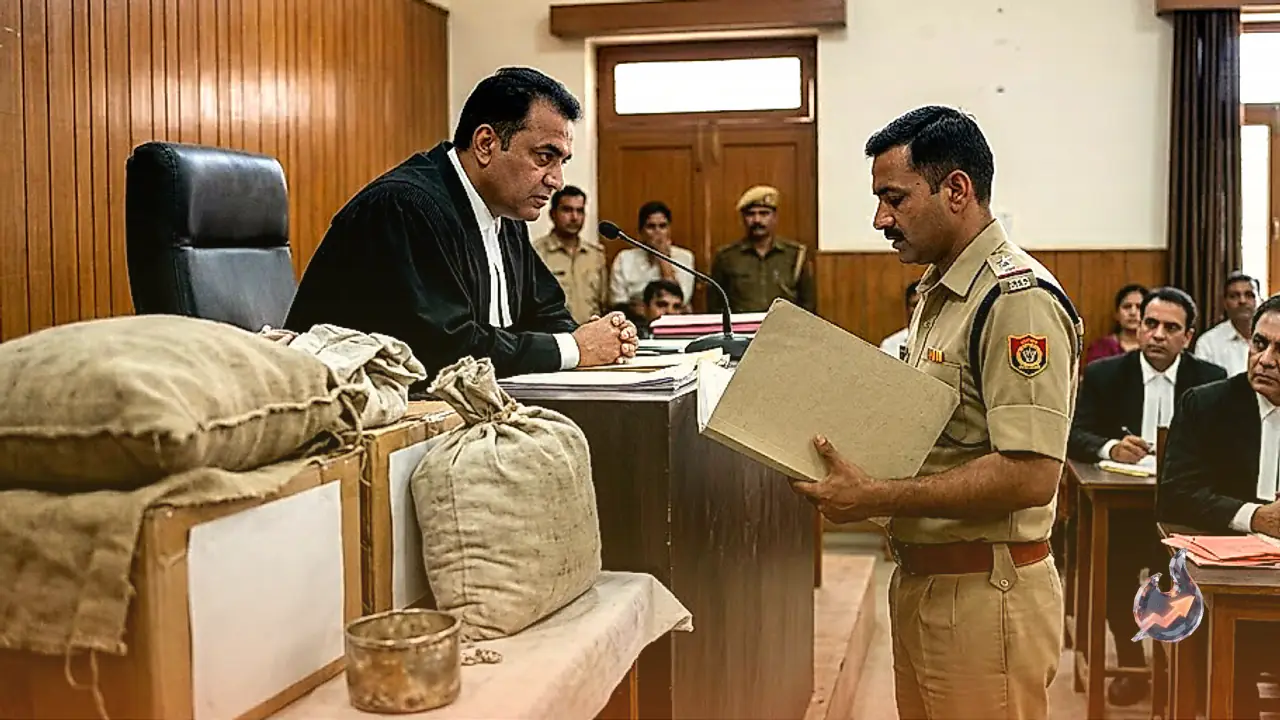
Hearing the petition, the Chief Judicial Magistrate in Jammu directed the police to produce the complete investigation record connected to the case before the court. The court has fixed July 29 as the next hearing date and made clear that the investigating officer must appear in court in person that day. The order came on the very petition that had sought registration of an FIR and a fair investigation. The court also stressed that it is essential to determine exactly how the allegedly adulterated silver reached devotees, whether an organised network was involved, and whether the silver offered as donations was tampered with at some later stage. Following the court's tough stance, all eyes are now on how the investigation proceeds.
Petitioner questions the Crime Branch's status report
On the court's directions, the Crime Branch submitted a status report stating that the case had been forwarded to the Zonal Police Headquarters Jammu after approval from the Crime Headquarters in Srinagar. The petitioner strongly objected to this. His argument was that the Economic Offences Wing Jammu has its own police station and should have acted directly on the complaint, rather than the case being routed between different offices. The petitioner also pointed out that the Crime Branch's report made no mention of any steps taken to preserve the crucial evidence linked to the case. After hearing these arguments, the court issued a strict direction for the investigating officer to appear in person on July 29 along with the complete record. All eyes are now on the next hearing, which could reveal exactly where and how this fraud involving devotees' faith took place.