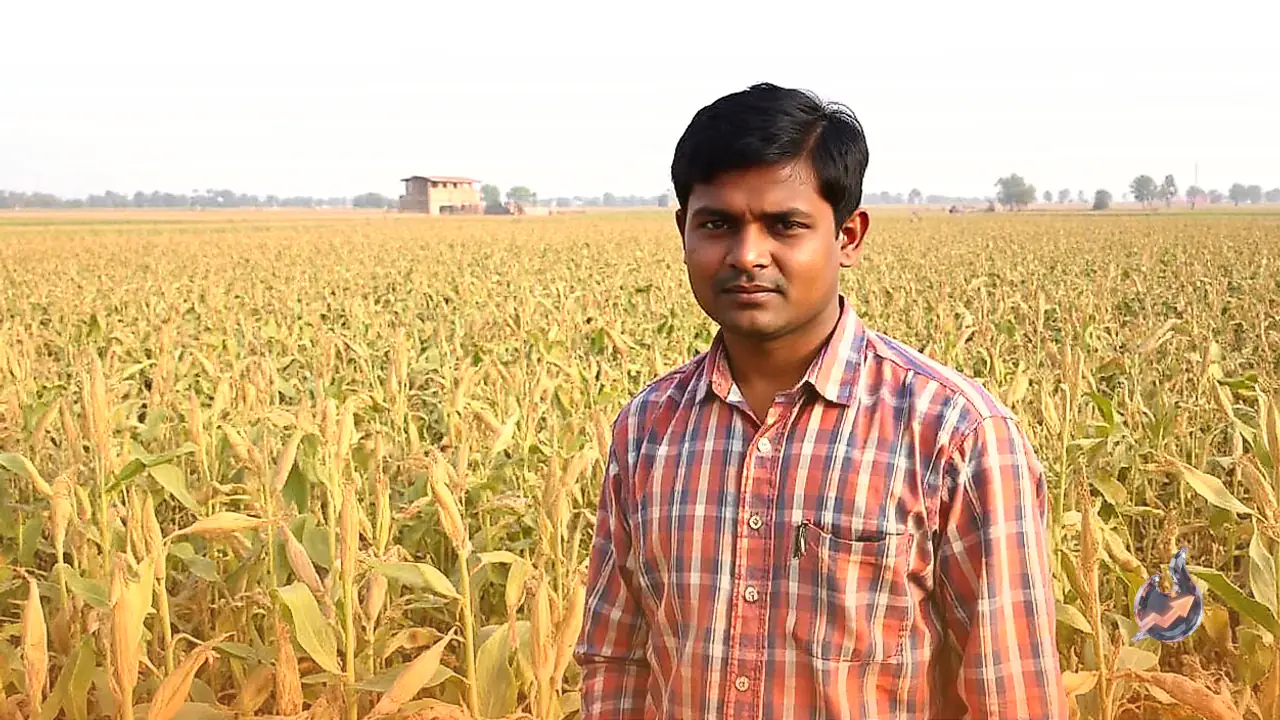

Farmers across Bokaro engage heavily in pea cultivation, yet selecting the wrong seed variety often leads to reduced production and financial setbacks. Agricultural experts emphasize that choosing the right variety not only maximizes output but can also significantly shorten the crop cycle. To address these challenges, Dr. Sushma Saroj, an agricultural scientist at the Bokaro Krishi Vigyan Kendra, has outlined crucial insights regarding advanced pea varieties, optimal seed rates, and improved farming practices to help local growers achieve maximum profitability.
Early and Mid-Season Pea Varieties
Selecting the appropriate seed variety serves as the foundation for a successful harvest. According to Dr. Sushma Saroj, pea cultivation broadly falls into two main categories: early-maturing and mid-season varieties. For early sowing, farmers can opt for the Arkel pea variety. Meanwhile, recommended mid-season alternatives include NDVP-1, 4, 8, VL-3, Swarna Amar, and Vivek. Additionally, growers interested in specialty crops can explore salad peas and snow peas, selecting high-performing options such as HASP and Oregon Sugar Pod.
Optimal Sowing Windows and Harvest Timelines
Different varieties demand specific planting schedules and maturation periods. The ideal window for early-maturing peas spans from September to October, with the Arkel variety standing out as a prime choice. This specific crop matures within approximately 50 to 55 days after sowing and delivers an estimated yield of around 70 to 75 quintals per hectare.
Conversely, the recommended window for mid-season cultivation runs from October to November. Within this category, the Swarna Amar variety reaches harvest maturity in about 85 to 90 days, boasting a remarkable yield potential of 200 to 250 quintals per hectare. Similarly, the NDP variety takes roughly 85 to 90 days to mature, yielding between 120 and 130 quintals per hectare. In contrast, the Vivek variety requires a longer growing period of 105 to 110 days, producing a stable yield of about 105 to 110 quintals per hectare.
Seed Rate and Proper Planting Distance
Achieving a robust harvest requires careful attention to seed density and spacing. Data provided by agricultural specialists indicates that cultivating one hectare of land requires approximately 60 to 70 kilograms of seeds. During planting, maintaining a distance of 30 centimeters between rows and 10 centimeters between individual plants ensures that every seedling receives adequate space and nutrients for healthy root and shoot development.
Balanced Fertilization and Rhizobium Treatment
Because peas belong to the legume family, incorporating a balanced mix of nutrients into the soil is essential for optimal growth. Experts advise applying 25 kilograms of nitrogen, 50 kilograms of phosphorus, and 25 kilograms of potassium per hectare, supplemented by 20 kilograms of sulfur. Furthermore, treating seeds with Rhizobium culture before planting is strongly recommended. Applying roughly 200 grams of Rhizobium culture powder per acre enhances nitrogen fixation, enabling farmers to secure superior yields even from smaller plots of land.