




















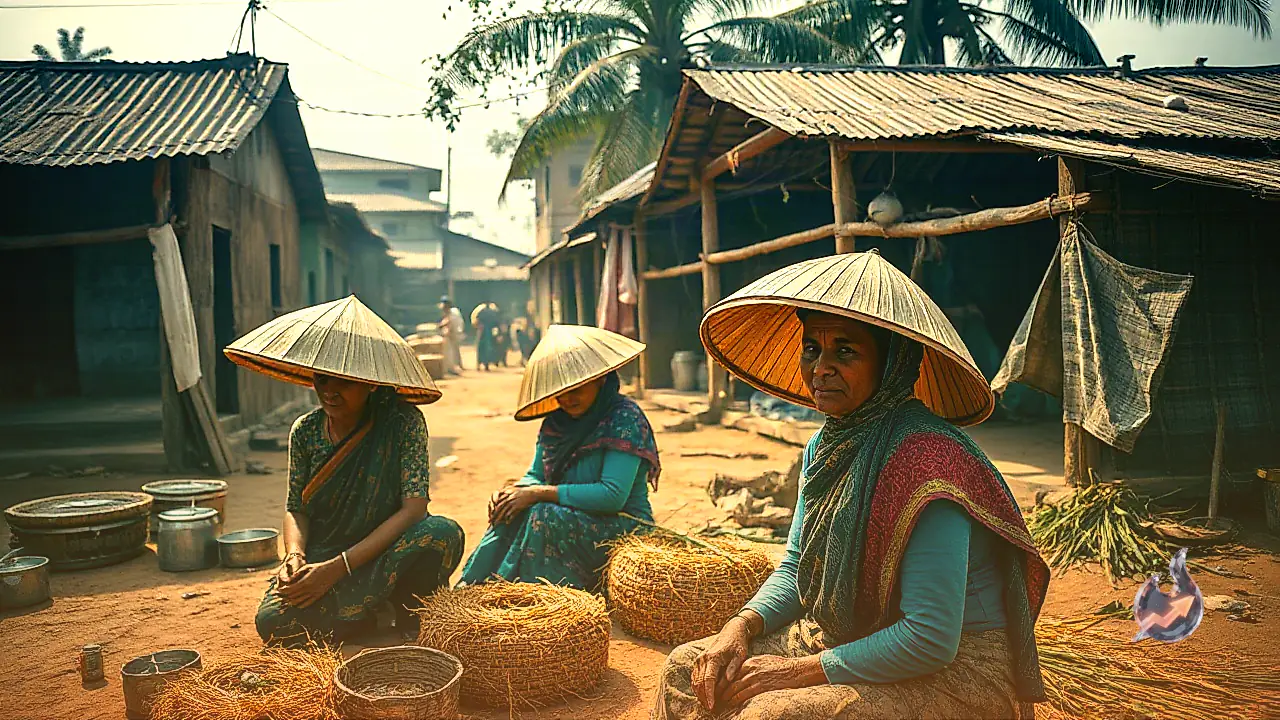

In the quiet rural pockets of Jharkhand, indigenous wisdom and natural forest resources are enabling women to build independent sources of domestic livelihood. In Mulibani village, situated roughly 100 kilometres away from Jamshedpur, a dedicated collective of women is handcrafting durable utility hats made from locally sourced bangu leaves. Operating entirely without factories or mechanized equipment, this home-based initiative leverages manual craft to produce functional headwear designed to shield outdoor workers from heavy rains and scorching sunshine.
Transforming Forest Produce Into Home-Based Earnings
With conventional employment avenues largely scarce in remote settlements like Mulibani, residents frequently rely on surrounding wilderness resources to sustain their households. Jamuna, a local resident, explained that the acute absence of formal jobs prompted women to look towards naturally abundant flora such as bangu leaves. Because the leaves are readily available in neighboring tracts, women can fashion them into saleable goods right from their doorsteps. This arrangement allows them to remain close to their families, avoid distressing migration for manual labour, and contribute regular funds toward daily domestic maintenance.
The Handcrafting Technique and Field Utility
Around 10 to 15 women from the village currently participate in this collective handcraft venture. The operation follows an organized community process: participants gather bangu foliage from the nearby terrain, sort and shape the leaves into uniform dimensions, and manually assemble them into sturdy hats. The resulting product is especially popular among local agricultural labourers and farmers working long hours in open fields. Thanks to the overlapping leaf structure, rainwater rolls off smoothly without drenching the wearer's head, while the dense foliage provides effective relief against harsh summer heat.
Rural Markets, Modest Pricing, and Future Aspirations
Once completed, the women transport the inventory to surrounding village fairs, weekly rural bazaars, and traditional haats for direct sale. Individual hats sell for 10 to 20 rupees each. While the unit price is modest, producing and selling the headgear in substantial volumes yields meaningful supplementary earnings for participating households. Beyond financial returns, the craft keeps regional botanical knowledge and indigenous artisanship alive. The artisans now hope for structured market linkages that could introduce these biodegradable products to larger regional commercial centers, allowing their earnings to grow further.