























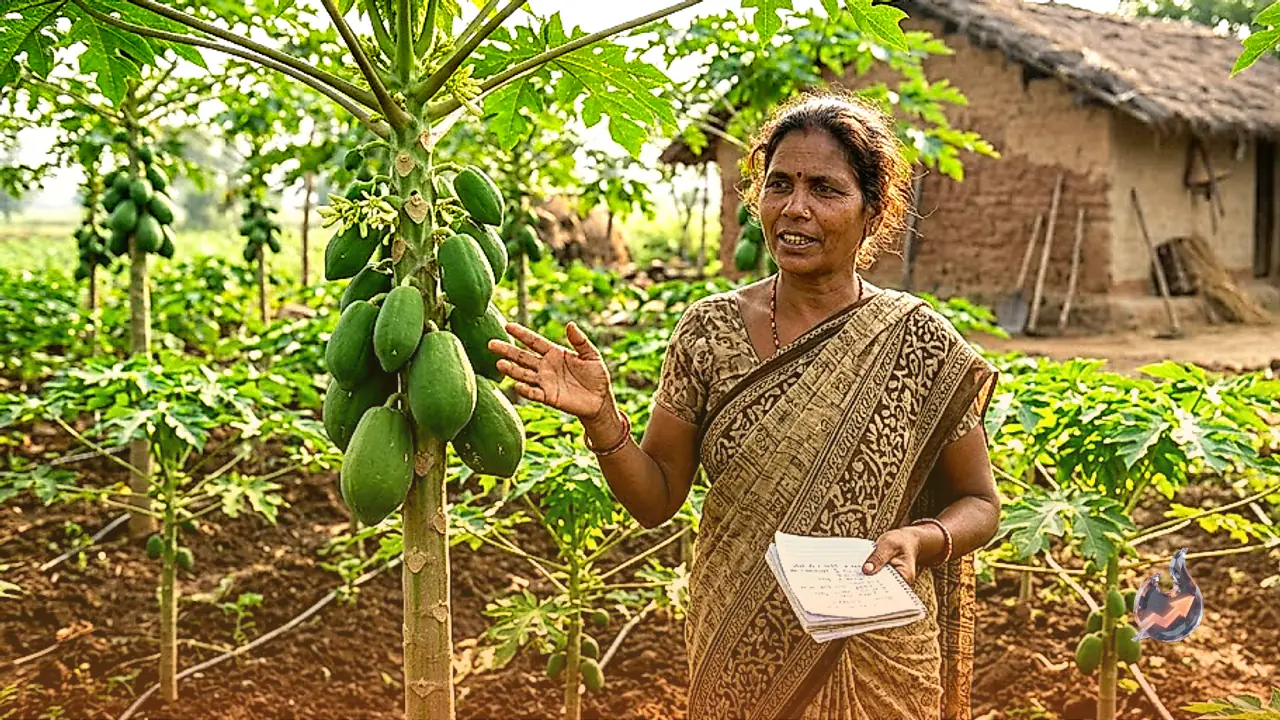

Horticulture offers an attractive alternative for agricultural producers seeking higher returns compared to conventional cropping. Sharing practical insights into commercial fruit production, farmer Ambika from Deoghar highlighted that cultivating specialized papaya varieties can substantially increase agricultural earnings. By adopting modern cultivars and following systematic field practices, growers can maximize yields from modest landholdings.
Early Fruiting Dwarf Varieties
For growers preparing to establish a papaya plantation, Ambika recommends selecting either the VNR or East West varieties. A primary advantage of these specific cultivars is their relatively compact stature. Unlike traditional papaya trees that require significant vertical development before yielding fruit, these dwarf types begin producing fruit when the stem reaches just about two spans above the root base. Consequently, growers do not have to wait for the trees to attain substantial height before the harvesting cycle begins, allowing for faster turnaround and convenient orchard handling.
Input Costs and Expected Financial Returns
Outlining the economic aspects of papaya farming, Ambika explained that planting one acre typically involves an initial operating cost between 1 and 1.5 lakh rupees. When the orchard receives attentive crop care, timely agronomic interventions, and produces healthy volumes, total net profit can climb to between 6 and 7 lakh rupees. However, realized financial gains naturally fluctuate depending on overall yield levels, cultivation expenses, and prevailing wholesale market prices at harvest time, as shifting retail and mandi rates directly influence final revenue.
Optimal Sowing Window and Expert Consultation
Regarding the optimal plantation calendar, Ambika highlighted that October serves as a highly suitable month to initiate planting operations. Farmers can conveniently begin preparing their fields and setting out saplings following the conclusion of Durga Puja. Producers intending to adopt VNR or East West papaya cultivars are advised to thoroughly examine the specific requirements of both varieties. Consulting local agricultural scientists regarding regional soil compatibility and prevailing weather patterns also serves as a crucial preparatory step to ensure plant health and secure robust harvests.