






















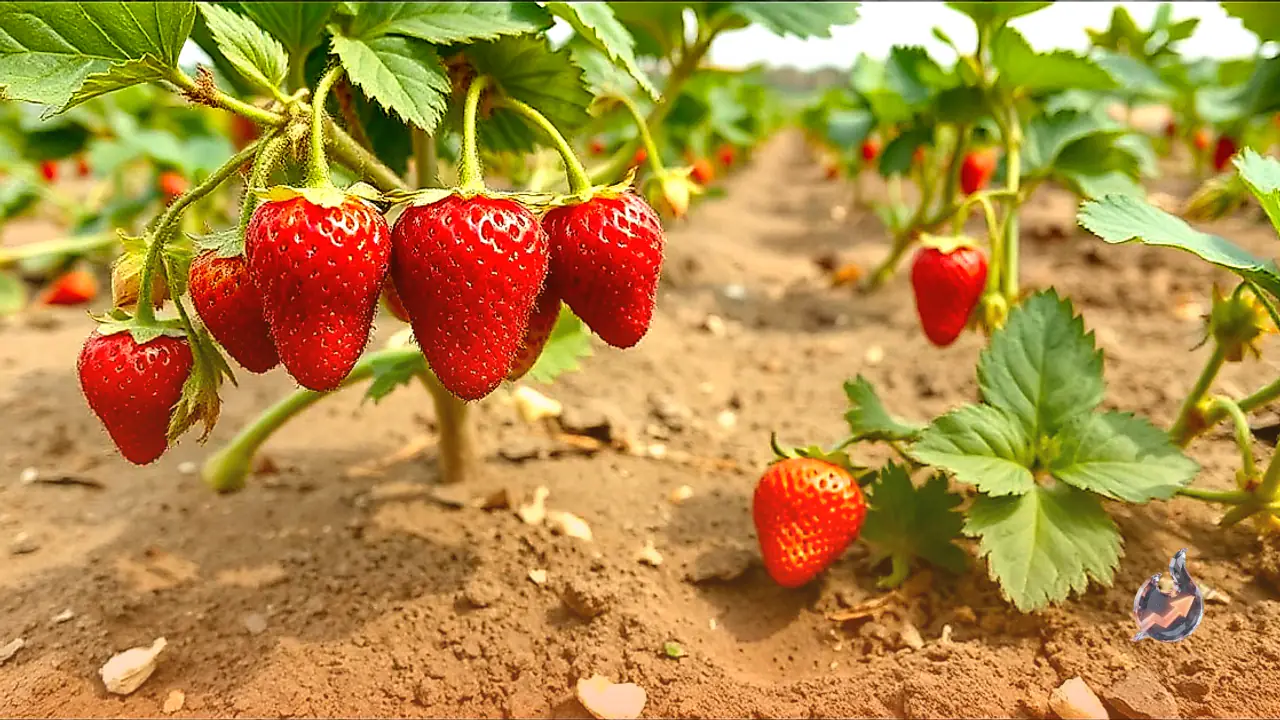

People in Deoghar have traditionally seen red strawberries arriving only from hill stations and Himachal Pradesh, but now local production has become a realistic possibility. Whether Deoghar farmers can grow this fruit in their own fields and if the local soil and climate are suitable has become a major talking point among regional cultivators. As the winter season sets in, the market demand for strawberries rises sharply. Because of its delicious taste and health benefits, this fruit commands strong market prices. For farmers looking to venture beyond conventional crops, this fruit can serve as a promising new avenue to boost their income. Although the local soil profile makes cultivation somewhat challenging, it is by no means impossible to grow strawberries right here in Deoghar.
Agricultural Expert Insights and Departmental Trials
According to Deoghar agricultural expert Ambika Kushwaha, the local soil is generally not ideal for strawberry farming on its own, but if farmers put in extra effort and manage the crop with proper care, good yields can certainly be achieved. Previously, strawberry cultivation was also initiated under the horticulture department, during which he personally planted crops as well. He maintains that growing strawberries in Jharkhand soil is entirely feasible. The only requirement is that farmers must pay closer attention to its maintenance compared to regular crops. The most encouraging part is that local markets in Deoghar already show a steady demand for strawberries. Consequently, farmers can attempt to cultivate this crop and work towards increasing their earnings.
Getting Started and Field Preparation
For those interested in starting strawberry farming, selecting the right plot of land is the crucial first step. Choose land where water accumulation or logging is never an issue. After thoroughly ploughing the field, mix well-rotted farmyard manure into the soil and prepare raised beds. It is important to note that strawberry cultivation does not start from seeds, but rather from pre-grown saplings. Therefore, farmers should purchase healthy and disease-free plants from reputable nurseries. Plant these saplings at proper intervals along the raised beds. Following plantation, farmers can use plastic mulching around the plants, which helps retain soil moisture and significantly curtails weed growth.
Choosing the right crop variety is another critical factor for success. Farmers can experiment with varieties such as Festival, Sweet Charlie, and Winter Dawn. These strains are widely recognized for their high yield, exceptional taste, and superior fruit quality. The period between October and November is considered ideal for initiating this farming. Once planted, irrigate the crop at regular intervals while ensuring that water does not stagnate in the field. Careful monitoring is especially vital during the flowering and fruit-setting stages.
A Viable Alternative for Local Cultivators
For Deoghar farmers wishing to experiment beyond traditional farming, strawberries offer a promising agricultural trial. However, instead of dedicating an entire field right at the start, it is advisable to test the crop on a small patch of land. This approach allows growers to understand local yield patterns relative to soil and weather conditions. In essence, the bright red strawberries traditionally found in hill regions can now find a home in Deoghar fields, provided farmers have the right information, dedication, and meticulous care.