
















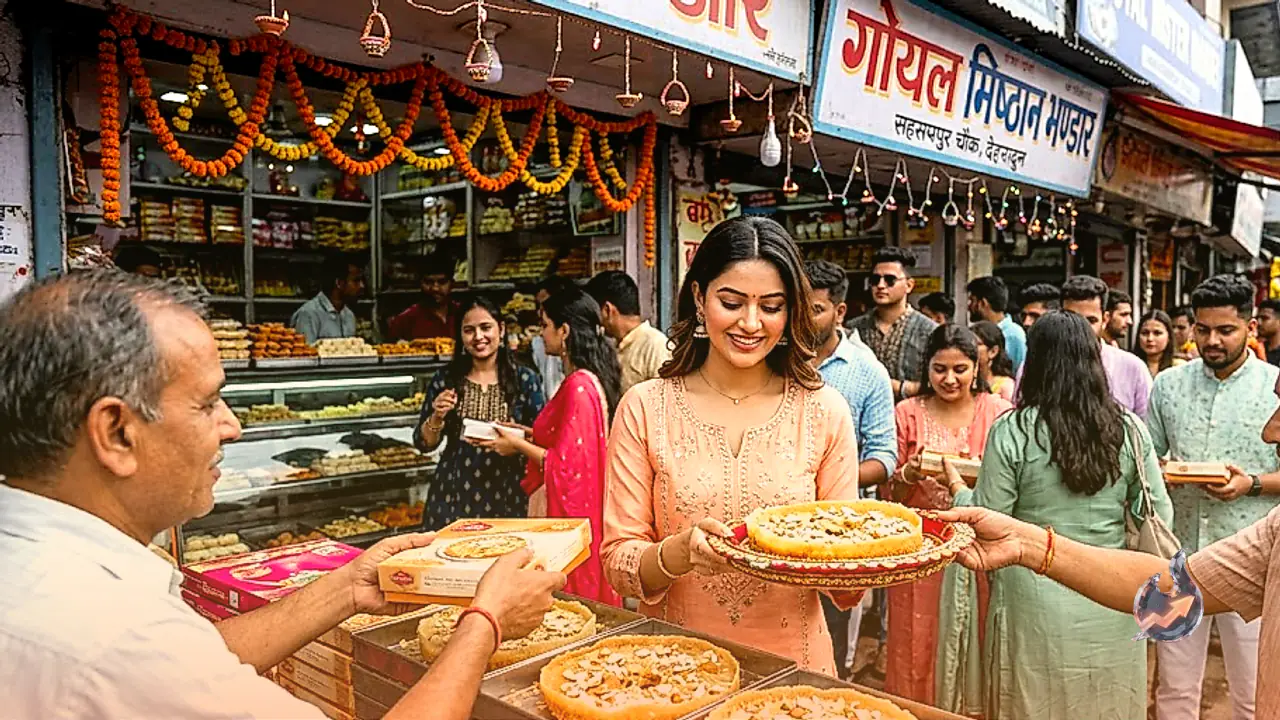

Raksha Bandhan brings immense joy and festive spirit to markets as sisters head out to purchase sweets for their brothers, adding vibrant energy to local shops. The standout delicacy that doubles the festive cheer during the monsoon month of Sawan is undoubtedly Ghevar. Currently, Dehradun markets are experiencing an extraordinary demand for this traditional sweet. While the city hosts numerous confectioneries, Goyal Sweet Shop located at Saharanpur Chowk stands out for its pre-independence legacy and lip-smacking Ghevar served during the rainy season.
Complex Preparation Process and Varieties
Shop owner Arun Kumar गोयल explains that Ghevar is entirely distinct from other sweets due to its extremely intricate preparation method. Crafting this delicacy requires operating multiple furnaces simultaneously, and a skilled artisan can only produce 12 to 14 kilograms of flour-based Ghevar in a single day. Consequently, stocks must be built up well in advance of the festival. To protect the sweet from moisture, which can instantly ruin its crisp texture, special water-jacketed packaging methods are utilized. The shop offers plain, dry fruit, malai, and kesar varieties prepared in both pure desi ghee and vegetable fat.
Decades of Customer Trust and Authentic Taste
The local community's trust in Goyal Sweets spans generations. Regular patron Mukesh Gupta shares that he has been purchasing sweets from this establishment for the past three decades and describes their kesar Ghevar as exceptionally delightful. During Raksha Bandhan, he frequently buys Ghevar along with rasgullas from here. The authentic touch and expertise of veteran artisans remain the biggest USP of this traditional shop.
History of Ghevar and Current Market Prices
Arun Kumar गोयल notes that Ghevar originated in Rajasthan, though it is now relished with great enthusiasm across India. For centuries, Braj and its surrounding regions have maintained the tradition where sisters bring Ghevar to their brothers' homes on Raksha Bandhan. The festival is considered incomplete without this sweet, causing its demand to skyrocket throughout Sawan. Dehradun markets currently offer plain Ghevar, sweet Ghevar, dry fruit Ghevar, and malai Ghevar. Prices vary depending on the ingredients used; while simple versions are more affordable, varieties richly garnished with mawa and dry fruits command between 600 and 800 rupees per kilogram.