























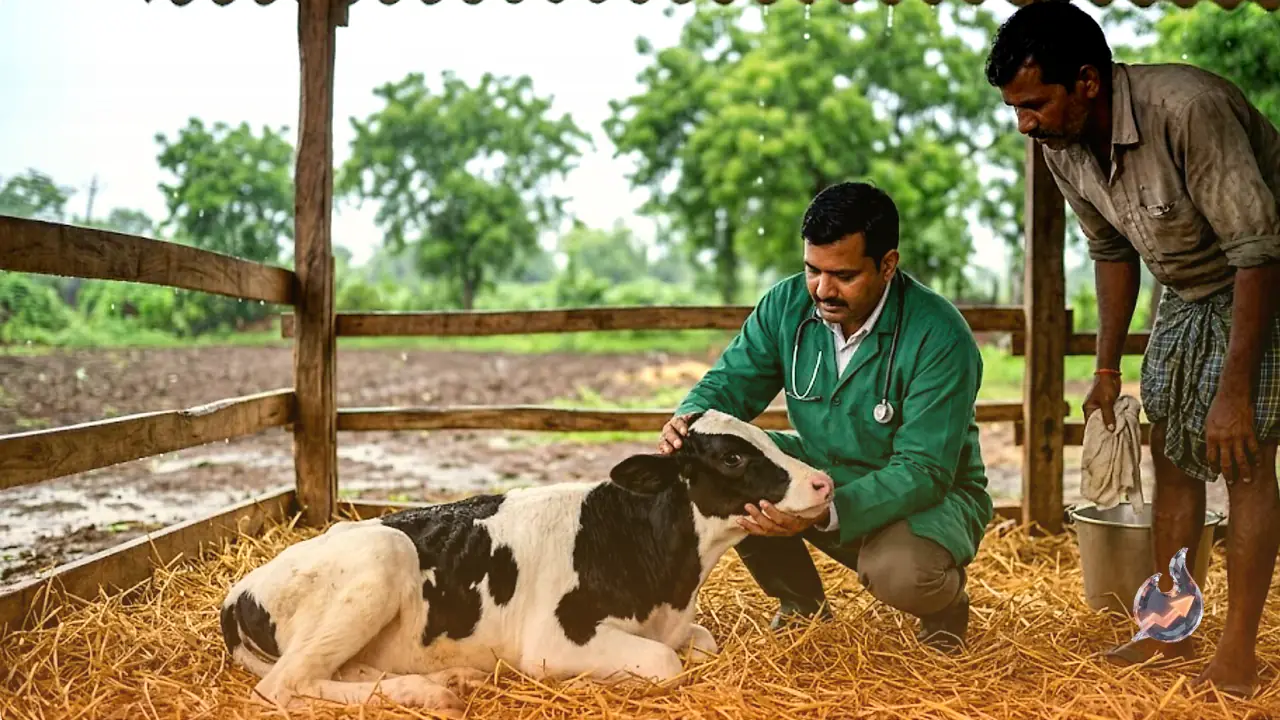

As the monsoon brings much needed relief from scorching summer heat for farmers and cattle owners, it also opens the door to serious health risks for newborn calves. Constant humidity in the air, along with mud and dirt all around, can quickly trigger infection, diarrhoea, pneumonia and high fever in newborn calves. If proper care is not taken in time, these problems can even turn fatal, which is why farmers need to pay extra attention to calf care during the monsoon months.
Colostrum within the first three hours matters most
Dr Arun Kumar Singh of the Animal Husbandry Department said newborn calves must be fed the mother's first thick milk, known as colostrum or kheas, immediately after birth. Kheas is rich in nutrients and immunity boosting elements that strengthen a calf's internal ability to fight disease. According to Dr Singh, feeding kheas within two to three hours of birth is the most beneficial window. This makes the calf stronger from within and significantly lowers the risk of any infection taking hold.
Keep the shelter dry and clean
During the monsoon, calves should always be kept in a dry, clean and well ventilated space. They should never be tied up in areas where water is collecting or mud has formed. Dry hay or straw should always be used as bedding and changed regularly. If a calf suddenly gets soaked in the rain, it should immediately be wiped down thoroughly with a dry cloth and moved to a warm, safe spot. Dr Singh noted that simply maintaining cleanliness can prevent several serious infectious diseases in calves.
Balanced diet and timely veterinary advice
Farmers must also pay close attention to what their calves eat and drink. Clean, fresh water should always be available, along with a balanced diet suited to the calf's age. If a calf shows any unusual symptoms, such as diarrhoea, lethargy, high fever, coughing or a sudden refusal to drink milk, the nearest veterinarian should be contacted without any delay. Dr Singh explained that timely treatment can not only save a calf's life but also protect farmers from significant financial losses.
Vaccination, deworming and traditional remedies
Getting calves vaccinated and dewormed on schedule is essential. Alongside this, a few simple traditional remedies can also help keep calves healthy. With proper guidance from a veterinarian, farmers can use turmeric and jaggery in limited quantities, which helps maintain a calf's disease resistance. However, Dr Singh was clear that no home remedy should ever be treated as a substitute for proper medical treatment. Regular care, cleanliness, nutritious feeding and timely veterinary attention remain the most effective way to keep calves completely healthy through the monsoon season.