





















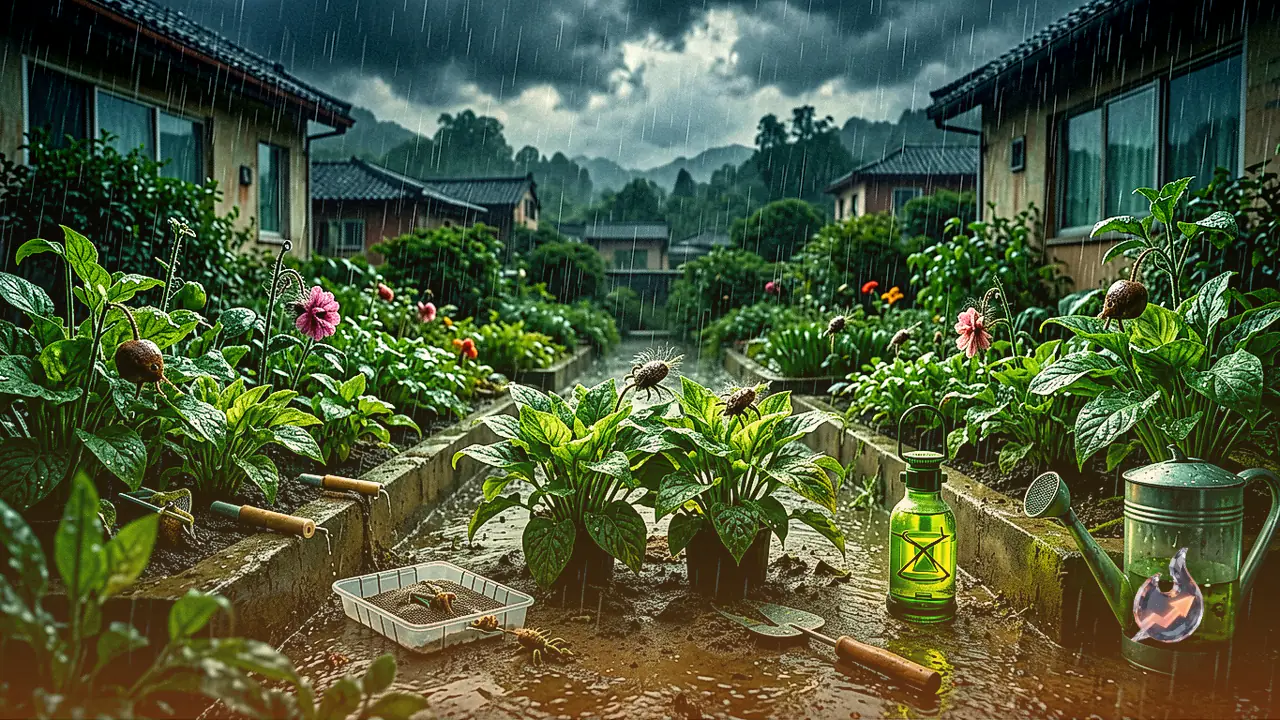

The monsoon season is widely considered ideal for plant growth, but it also brings a unique set of challenges that gardeners must manage carefully. While the rains fill the surroundings with lush greenery, the continuous moisture and high humidity create a breeding ground for various harmful insects and pests. Relying solely on regular watering, basic fertilizers, and routine soil weeding is simply not enough during this period. If pests are not identified and managed promptly, new plant shoots, developing fruits, and fresh vegetables can suffer severe damage.
Proper Drainage and Cleanliness Form the First Line of Defense
The foremost rule of garden maintenance during the rainy season is ensuring that water never stagnates in pots or garden beds. Prolonged waterlogging starves plant roots of essential oxygen, eventually causing them to rot and wither away. Gardeners should always check that flowerpots have adequate drainage holes at the bottom and immediately empty any water collected in collecting trays or saucers. For garden beds, digging small drainage channels helps prevent pooling, while regular removal of dry and infected leaves prevents diseases from spreading throughout the garden.
Managing Fruit Flies and Sap-Sucking Pests
Among the most troublesome pests during the monsoon is the fruit fly, which attacks fleshy vegetables like bottle gourd, ridge gourd, bitter gourd, cucumber, and pumpkin, as well as fruits like mangoes and guavas. The female fruit fly lays eggs beneath the skin of the fruit, causing it to rot from the inside and drop prematurely to the ground. Methyl eugenol pheromone traps are widely used to control this specific pest. Additionally, aphids and whiteflies, though small in size, can inflict heavy damage by sucking the sap from the leaves of chili, eggplant, okra, and cabbage crops. This saps the plant vitality, causes leaves to curl and dry up, and often transmits viral infections between plants. Yellow sticky traps serve as an effective tool for monitoring and controlling these tiny invaders.
Controlling Thrips, Borers, and Caterpillars
As humidity rises during the rainy season, microscopic pests known as thrips can also damage vegetable crops. These minute insects rasp the surfaces of onion, garlic, chili, and tomato leaves and flowers to extract plant sap, causing the foliage to curl upward and stunting overall growth. Blue sticky traps are particularly useful for detecting and reducing thrip populations when placed near vulnerable plants. Meanwhile, stem and fruit borers pose a major threat to crops such as eggplant, tomato, and okra. Their larvae tunnel inside stems and developing fruits, causing unseen internal damage while the exterior of the plant appears healthy. Similarly, caterpillars rapidly devour the leaves of cabbage, tomatoes, and chickpeas, leaving plants severely weakened. Lure-based pheromone traps are effective in keeping adult moth populations under control.
Utilizing Solar Light Traps and Neem Oil Sprays
Many harmful monsoon pests are nocturnal creatures that become extremely active after dark. Stem borer moths, certain beetles, and cutworms launch their attacks under the cover of night. In such cases, deploying a solar light trap proves to be an exceptionally useful solution. Attracted by the light, these insects fly toward the trap and drop into a water basin or net, keeping their numbers in check. Because solar light traps run entirely on renewable solar energy, there is no need to worry about electricity bills. Furthermore, heavy downpours and strong winds can snap fragile plant stems, making it essential to tie them securely to wooden stakes or bamboo supports. Spraying organic neem oil every fifteen days also aids significantly in managing insects and fungal infections. By avoiding total reliance on natural rainfall and maintaining proper drainage, hygiene, timely pruning, and early pest detection, gardeners can successfully safeguard their green spaces.