




















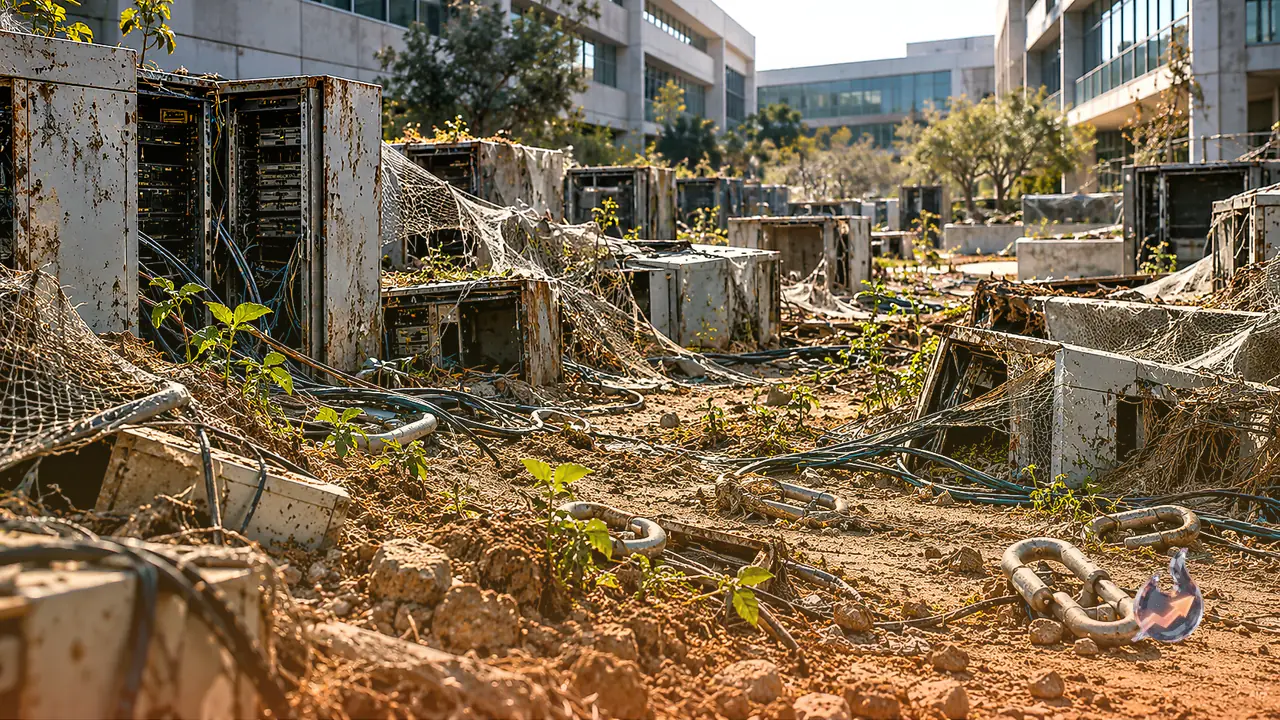

Any sober examination of the contemporary digital ecosystem reveals that the shared space of the web has drifted drastically from what was originally promised. Unmistakable signs of systemic fatigue and cultural decay dominate the landscape, leaving a self-consuming architecture in their wake. Across enterprise software and daily user interaction alike, the foundational optimism of the connected world has surrendered to exhaustion and structural fragmentation.
Corporate tech powerhouses Meta and Google have had to settle sweeping consumer lawsuits over privacy violations and the documented mental health harms associated with platforms engineered for compulsive engagement. Classrooms across the globe are stripping smartphones from student desks, while several national governments enact formal age barriers barring individuals under 16 from standard social networks. At the same time, parents face escalating anxiety as children bypass foundational aspirations to pursue short-lived influencer visibility, wander into digital casino ecosystems, or drift into insular extremist communities online.
The Slop Factory and Algorithmic Grievance
Generative AI, once received as a playful technical curiosity, has mutated into an industrial-scale content factory that floods feeds and conversation threads with low-utility, distorted material. Everyday users now swipe through endless headlines detailing automated workplace displacement, cognitive erosion, and the blurring line separating reality from software fabrications, turning earlier fascination into acute distress. The energy-hungry data centers underwriting this computational push face rising public resistance and persistent political controversy.
Navigating the internet today increasingly feels like entering a turnstile of calculated manipulation. When Oxford University Press selected rage bait as its defining term of the year, tracking a threefold surge in usage over a single 12-month period, the choice captured a broad cultural recognition: accounts seeking algorithmic compensation deliberately manufacture bad-faith provocations and hostile commentary, employing automated generative pipelines to capitalize on public friction. The retreat of rigorous moderation across major platforms has removed critical guardrails, unleashing a tide of inauthentic accounts, speculative conspiracies, and aggressive hostility.
Surveying the networked environment in 2026 offers little that feels worth defending. A decade prior, spontaneous peer communities, artistic experimentation, and rich intellectual exchange still appeared strong enough to counterbalance the commercial noise. That fragile equilibrium has decisively broken down.
Dead Internet Realities and Infrastructure Vulnerability
This deterioration does not stem merely from a decline in human temperament. The once-fringe Dead Internet Theory, which posits that digital activity consists overwhelmingly of artificial agents talking to other bots, has gained concrete empirical backing. Data published by a cybersecurity firm early this year revealed that automated software agents have overtaken human users in sheer volume, driven by an 8,000 percent traffic explosion through 2025. This reality explains why so many individuals scrolling through empty algorithmic feeds pause to question what they are even looking at, followed by the uneasy realization of whether this state of affairs is permanent.
Yet this prevailing mess obscures a deeper structural reality. West argues that general perceptions dramatically overestimate the actual footprint of the internet, which represents only a negligible fraction of the wider human condition. Furthermore, the physical network remains extraordinarily delicate. In 2001, a single train derailment inside a Baltimore tunnel severed critical regional fiber-optic bundles, triggering widespread communication slowdowns across the United States. Bound to physical vulnerabilities, the web has always moved through continuous cycles of collapse and reconstruction.
The Mirage of Permanence and Hyperlink Rot
Because market narratives packaged the web as a permanent repository of civilization's accumulated knowledge, each fleeting phase of the network comes to dictate the present cultural moment. Today, financial incentives reward the rapid fabrication of inflammatory trash, forcing dedicated creators into an uneven contest against automated pipelines that turn out mass-produced output with near-zero friction.
West contrasts this hollow commercial grid with the intensely personal web that once stretched from early GeoCities pages to mid-era Tumblr, charting how those idiosyncratic communities were steadily marginalized. While a few limp on in broken forms, many have been erased entirely. During middle school, West maintained a homepage centered on his passion for anime, and later documented his undergraduate years through a personal weblog. Looking back, the divergent fates of those two digital artifacts underscore the medium's unpredictability.
“I really wanted to delete my anime site,” West explains.
Lacking access to the legacy AOL credentials, he was powerless to take it down, leaving the page to drift indefinitely as an ad-strewn remnant of dead hyperlinks. By contrast, his college blog vanished when he neglected to renew the domain registration during his final year of writing, wiping out an entire year of personal documentation. This contrast reveals a persistent paradox: digital materials that people hope will endure often disappear overnight, while trivial artifacts that owners wish to erase linger stubbornly in public view.
This persistent volatility shatters early assumptions that the web would serve as an infallible, permanent archive. Insisting that digital assets exist forever misunderstands the medium entirely; online platforms function as temporal reminders of mortality, mirroring the mortal trajectory of the users who inhabit them. While early web culture famously witnessed public figures facing retroactive scrutiny over unburied historical posts, locating a specific exchange within a modern AI-managed email account in 2026 presents an unexpected chore. Entire platforms that defined their era can dissolve without warning, a dynamic underscored in January 2025 as users posted farewell messages on TikTok in anticipation of an impending federal prohibition across the United States.
Such widespread volatility has systematically undermined the authority of web-based citations and documentation. A dedicated study of hyperlinks published within The New York Times between 1996 and mid-2019 demonstrated that 25 percent of all examined links had become dead ends. A related academic survey from 2016 documented that three out of every four citations in formal scholarly articles have drifted, leaving target web addresses displaying content entirely different from what was originally referenced. Furthermore, research from the Pew organization confirmed that over half of Wikipedia entries contain at least one external reference link leading to nothing.
Finding Compost in the Digital Wasteland
The institutional drive to maximize metrics inevitably reshapes individual psychology. West observed that while rereading Marilynne Robinson's novel Gilead, an intrusive thought interrupted his enjoyment: because this marked his fourth or fifth pass through the text, the reading session could not be tallied toward his annual total on Goodreads. This impulse toward quantified validation produces the exact hollow environment that non-human scripts inevitably colonize.
Stripping away the algorithmic mandates of engagement-driven platforms exposes the overlooked sectors that modern social networks actively obscure. Unindexed corners, such as aggregators serving YouTube video streams with zero viewership, show ordinary people recording songs and laughing without commercial ambition. Similarly, unmonetized poetry exchanges flourishing across obscure literary webzines confirm that meaningful creative expression continues online whenever the profit motive is stripped away.
Barring an acute, catastrophic infrastructural failure, the current corporate internet will not vanish overnight. Yet the expanding fissures across its infrastructure create fertile ground for decentralized, emergent alternatives. The current digital monopoly holds no guarantee of dominating the next era.
Invoking the metaphor of agricultural compost, West notes that rot is merely biological decay redirected toward productive regeneration. Whether this decomposing digital waste can yield fertile soil for a renewed communication environment remains uncertain, but the collapse of the present structure clears room for whatever takes root next.