
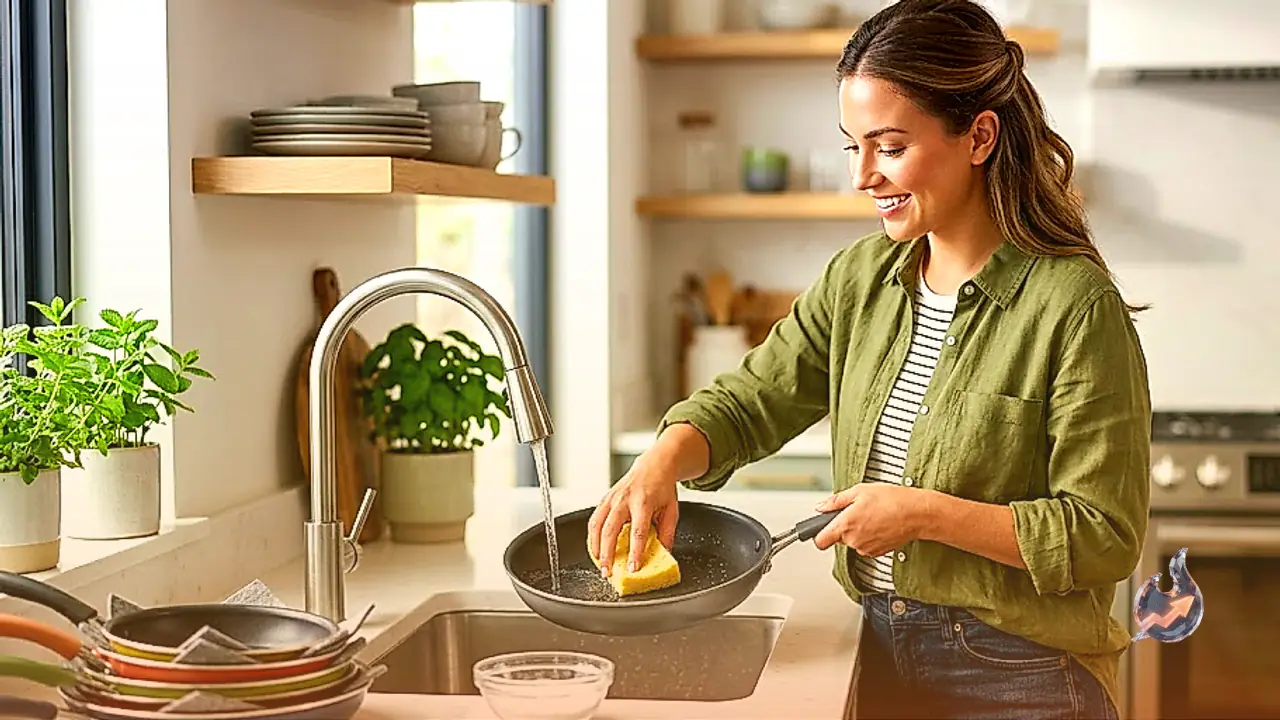
























Non-stick cookware, such as pans and kadhais, has become an indispensable part of modern kitchens due to its ability to cook food with minimal oil and offer hassle-free cleaning. However, improper washing routines and reckless handling can degrade the special protective coating rapidly, drastically shortening the lifespan of these utensils. Once the surface coating gets damaged, food begins to stick and the pan loses its functionality. Adopting proper maintenance habits and correct washing techniques can preserve your non-stick cookware for years.
Avoid Thermal Shock on Hot Pans
One of the most frequent mistakes made in the kitchen is placing a hot pan directly under cold running water immediately after cooking. Sudden temperature fluctuations cause severe thermal shock, which warps the metal base and weakens the delicate non-stick layer. Always allow the cookware to cool down completely to room temperature before initiating any cleaning process.
Soak with Lukewarm Water and Mild Liquid Soap
Lukewarm water acts as an effective medium to break down stubborn grease and leftover food particles. Pouring a small amount of warm water along with a mild liquid dishwashing soap into the pan and leaving it to soak for a few minutes softens food residues. This eliminates the need for aggressive scrubbing. Highly concentrated chemical cleansers and harsh detergent powders should be strictly avoided as they strip away the gloss and degrade surface quality.
Use Soft Microfiber Cloths and Sponges
Always opt for soft sponges or gentle microfiber cleaning cloths when washing delicate coated surfaces. Rough wire scrubbers, steel wool, and hard-bristled brushes leave permanent scratches on the surface. Once scratches appear, the smooth non-stick barrier deteriorates rapidly and food starts burning onto the exposed patches.
Remove Tough Stains with Baking Soda
For stubborn grease marks or burnt food spots, brute force is counterproductive. Instead, mix a small quantity of baking soda with water inside the pan and let it rest for 10 to 15 minutes. After soaking, gently wipe the surface using a soft sponge. This natural method dissolves tough discoloration without compromising the underlying non-stick layer.
Drying and Safe Storage Practices
Storing wet cookware can lead to unsightly water spots and eventual loss of luster. After washing, wipe the cookware dry with a clean cotton towel or allow it to air-dry completely. When stacking multiple pans inside cabinets, place a layer of cloth or paper towels between them to prevent friction scratches from adjacent cookware bases.
Essential Everyday Cooking Guidelines
Maintaining non-stick cookware also involves careful handling during everyday meal preparation
- Avoid using metal spoons, spatulas, or ladles that can gouge the surface. Switch exclusively to heat-resistant wooden or silicone utensils.
- Never preheat or heat an empty non-stick pan on high flame for prolonged periods, as excessive heat breaks down the chemical structure of the coating.
- Stick to low or medium heat settings and gentle liquid cleansers to ensure long-lasting performance.


