



















Culinary traditions across Rajasthan shift fluidly with the changing seasons, offering distinct delicacies for every weather pattern. While scorching summers call for chilled refreshments, the arrival of monsoon clouds shifts appetites toward warm, traditional preparations. When the rainy season begins in Sawan, one iconic sweet immediately takes center stage across every local marketplace.
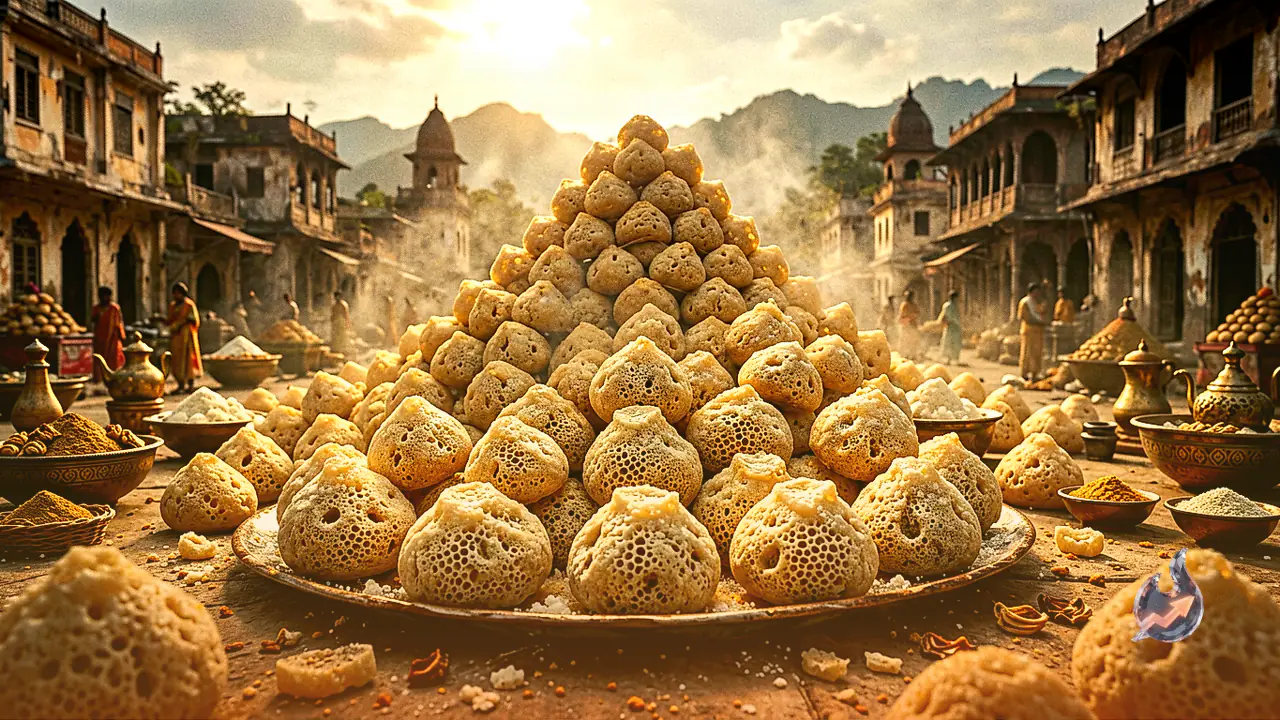
That sought-after delicacy is Ghevar, instantly recognizable by its honeycomb-like textured pattern and a sweet sugar syrup glaze. As visually striking as it is flavorful, demand for this confection shoots up dramatically as soon as the monsoon sets in, enjoying a particularly massive following among women.
Calling it the definitive dessert of the Rajasthani rainy season is entirely accurate. The hallmark of a traditionally crafted Ghevar lies in its intricate mesh-like structure and crisp, crumbly texture, which makes it the ultimate treat to enjoy while raindrops fall. During the Sawan period, sweet shops witness an overwhelming rush for it.
Vinod Garg, a well-known sweet maker from Karauli, explains that the atmospheric moisture and cooler air help achieve the ideal texture during preparation. This is why local artisans dive straight into making Ghevar the moment Sawan arrives, offering plain varieties alongside rich Malai and Mawa-loaded options that dominate customer demand.
This traditional sweet shares a deep, enduring bond with regional festivals like Teej and Sawan in Rajasthan. During Hariyali Teej, women traditionally exchange sweets, and sending Ghevar from a married woman's parental home to her marital household remains a cherished custom in many areas. When shopfronts are decorated with displays of Ghevar, the inviting aroma draws people in, with many waiting all year just to savor it the moment the first showers hit.
A unique aspect of Ghevar is that its authentic character shines brightest during the monsoon months, making local confectioners look forward to this season with high expectations. Sales skyrocket around Sawan, Teej, and Rakshabandhan, cementing its status as an absolute favorite among female patrons.
The culinary appeal of Ghevar is closely tied to the rainy weather, which is why it remains the signature sweet of Sawan. While major cities across Rajasthan now stock the sweet year-round, in places like Karauli, it is traditionally prepared primarily during the monsoon and specifically throughout the Sawan month.