
























Several vegetables tend to lose their freshness and rot quickly even after being placed inside the refrigerator. Much like coriander and green chilies that spoil in no time, okra also requires careful handling to last. While everyone enjoys the delicious taste of okra, storing it successfully for up to a week can prove quite difficult. Often, the presence of moisture and humidity inside the cooling compartment makes it slimy and causes it to decay rapidly. To store this popular vegetable for days while keeping it fresh, crisp, and free from any stickiness, adopting the right kitchen habits is essential.
The Right Way to Wash and Dry
Never wash okra before placing it inside the refrigerator. Coming into contact with water introduces moisture deep inside, which triggers stickiness later on. If the vegetables are visibly dirty and washing them becomes unavoidable, spread them out completely on a dry cotton cloth after the rinse and let them dry thoroughly. Do not transfer them to cold storage as long as even a single droplet of water remains on the surface. Eliminating all external moisture is the key to preventing premature decay.
Using Vinegar for Better Results
If you prefer cleaning your okra with water prior to storage, you can incorporate a simple household ingredient to help preserve its texture. Mix a single teaspoon of white vinegar into a bowl of water and let the vegetables soak in it for about five minutes. Afterward, rinse them with clean water and dry them completely. Vinegar helps reduce the natural sticky substance found in okra, keeping the surface cleaner and extending its usable shelf life significantly in the cooling environment.
Avoiding Premature Cutting
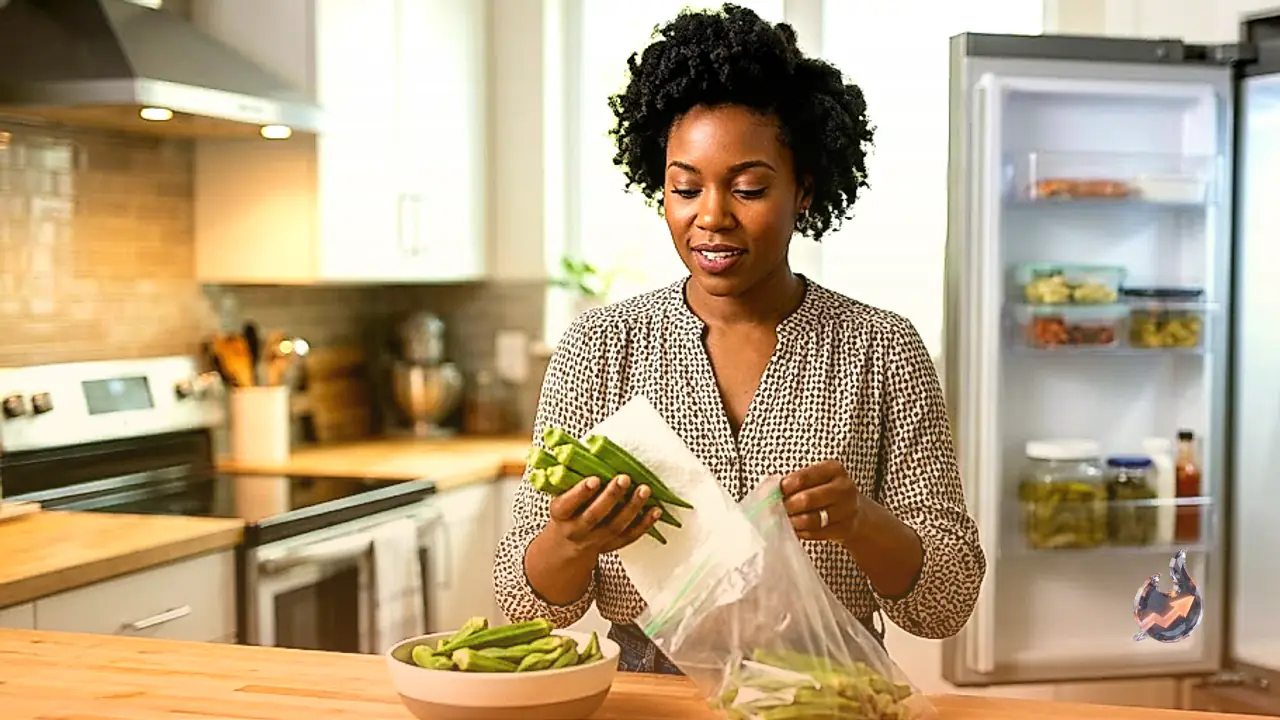
Never make the mistake of chopping off the stems or tips before putting okra away. It should always be stored intact with its stem attached. Cutting off either end beforehand allows air and moisture to penetrate directly into the interior, causing the vegetable to turn black very quickly. Additionally, utilizing an airtight container or a ziplock bag lined with paper towels on both the bottom and top layers creates an effective barrier that absorbs unwanted humidity and keeps the produce crisp.