




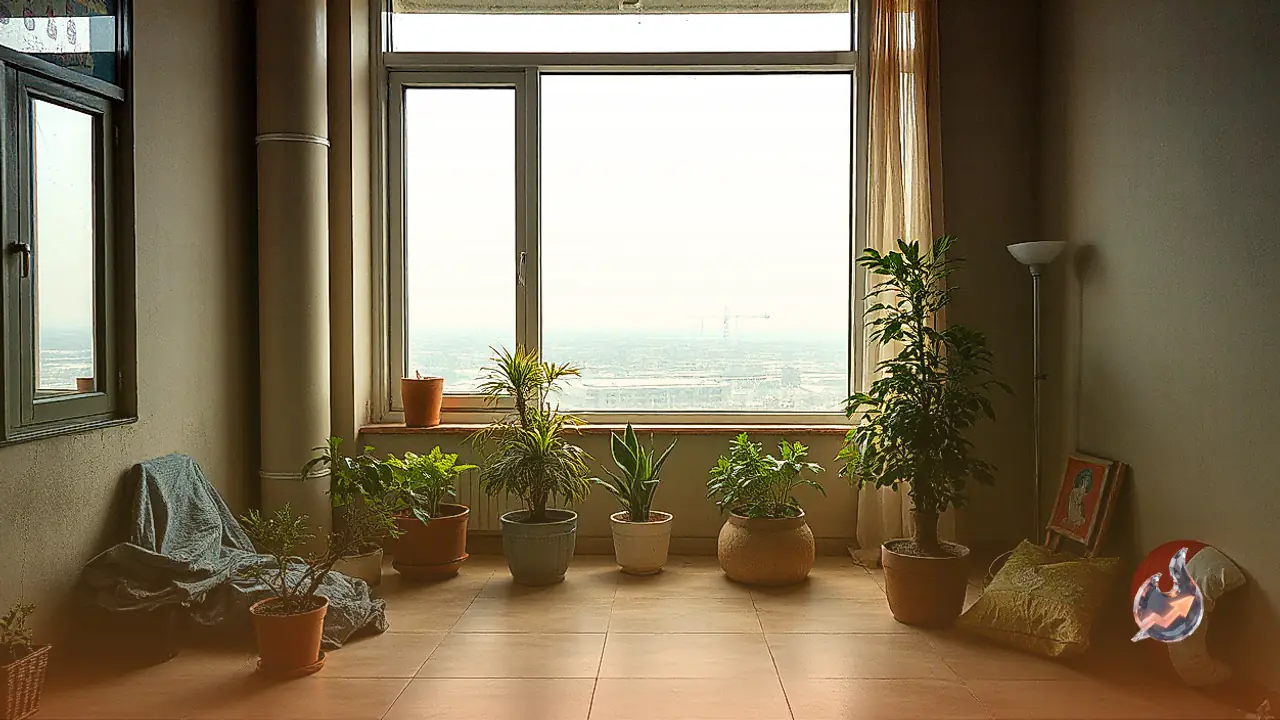


















Hazy skies have once again settled over the capital region as the winter transition sets in, bringing noticeable layers of smog during mornings and evenings. Commuters are reaching for protective face masks to shield their lungs from worsening outdoor conditions. The Air Quality Index has already touched the 200 mark, and seasonal weather patterns consistently push these figures toward 300 and 400 as winter peaks. While protective masks offer an outdoor shield, indoor air quality remains equally vulnerable to microscopic pollutants, turning indoor greenery into an accessible natural defense for residential spaces.
Not All Greenery Cleanses Indoor Air
Many homeowners invest in indoor foliage under the impression that every potted leaf scrubs toxins from the atmosphere, but that assumption falls short. Gaya Prasad, who runs the oldest plant nursery in Delhi located at Chhatarpur, points out that ordinary decorative flora lacks the filtration properties needed to lower household contamination. Among dozens of common indoor varieties, precisely three plants possess proven capabilities to curb airborne particulate matter. Whenever ambient air quality deteriorates across the region, footfall spikes at local nurseries for these specific varieties.
Aralia Snow White Takes the Top Spot
Leading the lineup of effective air purifiers is Aralia Snow White, considered the most potent option for eliminating domestic air pollutants. Characterized by its compact size and delicate appearance, the plant fits comfortably on work desks, window ledges, or living room tables without occupying substantial floor space. Its foliage features white, patterned edges designed by nature to trap and absorb microscopic dust and hazardous particulate residues. As toxic haze increases across city neighborhoods, interest in this variety surges, with starter specimens retailing from 400 rupees onward.
Steady Demand for Snake Plant and Areca Palm
Alongside Aralia, Snake Plant and Areca Palm hold longstanding reputations for dependable domestic air filtration. Both varieties witness their highest sales volume right at the onset of cold weather, and market demand has escalated sharply once again this season. These plants are sold in varying container sizes to accommodate different household layouts and budgets. Compact nursery containers start around 250 rupees, whereas larger, fully grown specimens command prices reaching up to 800 rupees. Placing them in bedrooms or seating areas aids in circulating cleaner air throughout the home.
Common Pitfalls in Maintaining Potted Flora
Plant owners frequently visit nurseries complaining that their newly bought foliage withered within weeks of purchase. Gaya Prasad explains that improper handling, rather than poor plant health, is almost always behind early decay. Indoor greenery naturally resides away from direct sunlight, meaning moisture evaporation occurs very slowly. Despite this fact, many people pour water into the containers on a daily schedule, leaving the soil constantly soaked. Saturated earth cuts off oxygen from the root system, causing root rot and structural decay.
Balancing Moisture and Organic Nutrients
Indoor potted greenery requires moderate watering only two to three times each week rather than daily saturation. Owners should inspect the soil depth with their fingers to verify whether moisture remains beneath the surface before pouring in fresh water. If the soil feels damp, watering should be postponed until the top layer dries out. For nourishment, reliance on organic inputs delivers the most sustained health benefits. Enriching the pots with vermicompost and well-decomposed cow dung manure supplies essential minerals, ensuring the plants thrive and filter toxins across long periods.