























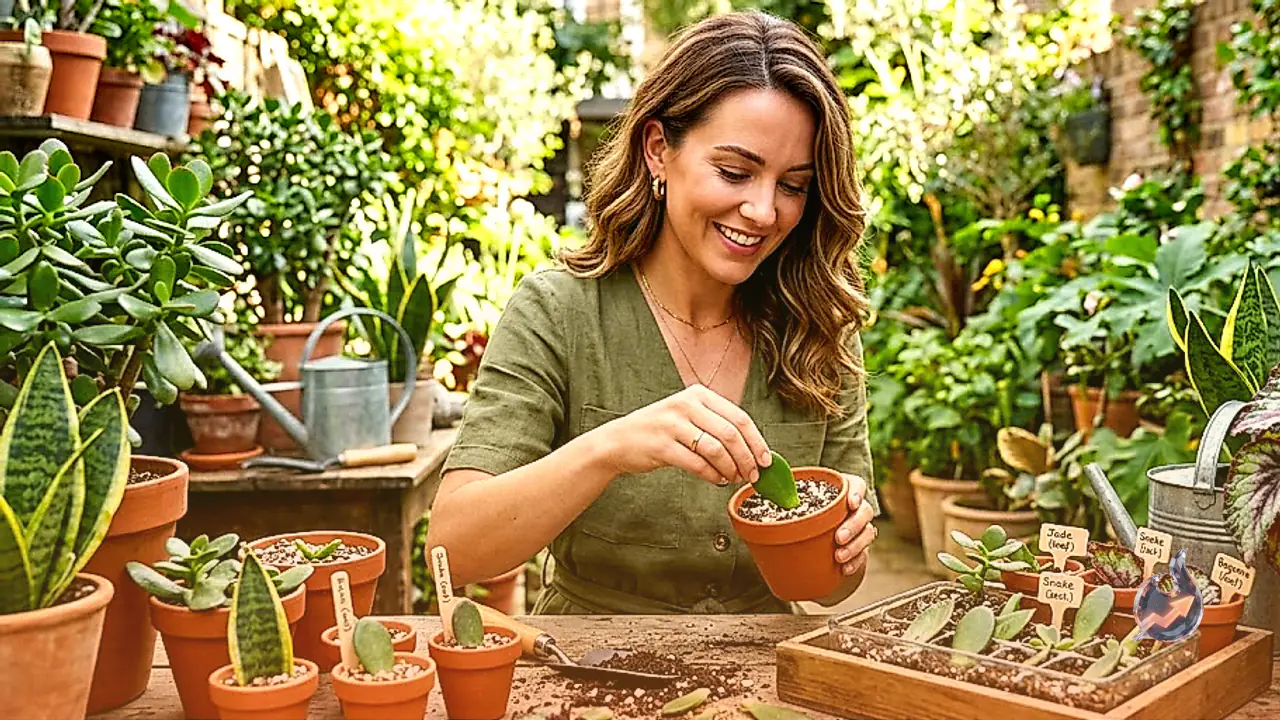

Cultivating a flourishing balcony, terrace, or backyard green space is a rewarding hobby for many plant enthusiasts. However, heading to a commercial nursery every time you want to add a fresh specimen can quickly turn into an expensive routine. Gardeners do not always need to purchase fresh pots to expand their green collections. With the right technique, a single healthy leaf harvested from an existing houseplant can be used to generate an entirely new, rooted plant.
The Core Principles of Leaf Propagation
In horticultural terminology, regenerating a full plant from a standalone leaf is known as leaf propagation. The process involves placing a mature, disease-free leaf into an appropriate growing medium such as well-draining soil, coco peat, or water. When provided with favorable environmental conditions, the leaf first sprouts delicate roots from its severed base, followed by the gradual emergence of a brand-new shoot. Gardening expert Chandrashekhar Mishra explains that while not every botanical species is capable of regenerating from foliage alone, the method works remarkably well for several popular ornamental varieties.
To achieve consistent results and prevent the leaf from decaying, three fundamental cultivation guidelines must be strictly observed
- Careful Leaf Selection: The starting foliage must be robust, fully mature, and entirely free of pests or fungal infections. Damaged leaves lack the energy reserves needed to produce new tissue.
- Flawless Drainage: The potting mix or growing substrate must allow moisture to flow freely without creating standing water. Excessive wetness quickly causes the leaf tissue to rot.
- Balanced Light Exposure: Fresh cuttings should never be placed in harsh, scorching direct sunlight. Instead, they require bright, indirect ambient light tailored to the specific needs of the parent species.
For those maintaining specimens such as jade plant, snake plant, begonia, portulaca, or gasteria, this regenerative propagation technique delivers excellent results.
1. Regenerating Jade Plant from a Single Leaf
The jade plant is widely cultivated in home settings for its thick, glossy, jade-green foliage. Because its fleshy leaves store significant moisture reserves, the succulent is naturally resilient. To produce an offshoot, gently detach an undamaged, fully developed leaf from the parent stem. Rather than inserting the cutting straight into moist soil, allow it to rest in a dry, shaded location for 1 to 2 days. This curing period allows a protective callous to form over the wound, preventing infection.
Once calloused, lay the leaf flat atop a porous, fast-draining succulent soil mix. Under stable ambient moisture and filtered light, fragile roots will gradually emerge from the calloused base over several weeks. Gardeners should resist the urge to disturb or lift the cutting during this waiting period, as delicate new root fibers snap easily. When both roots and tiny baby leaves are clearly visible, transplant the young growth into an individual pot.
2. Multiplying Snake Plants from Sectioned Cuttings
Renowned for its extreme hardiness in indoor environments and office corners, the snake plant can be multiplied by dividing a single upright leaf into multiple segments. Select a tall, undamaged leaf and slice it into clean segments measuring approximately 3 inches each. When dividing the leaf, take strict note of its original orientation; keeping the top and bottom edges facing the correct anatomical direction is critical, as upside-down cuttings will fail to root.
These 3-inch cuttings can be positioned upright in a container of clean water or anchored into a lightweight mix of coco peat and perlite. After a few weeks of consistent conditions, sturdy roots will develop from the submerged or buried edge. Once the root system is well-established, transfer the segments into standard potting soil. It is worth noting that not every snake plant cultivar retains its original variegated leaf patterns when propagated from leaf segments, meaning results can vary depending on the specific variety.
3. Propagating Colorful Begonias Through Leaf Cuttings
Gardeners who appreciate vibrant foliage patterns and delicate blooms often turn to begonias as a standout ornamental option. Begonias respond exceptionally well to leaf propagation. A single healthy leaf can be laid flat on a constantly moist substrate. In advanced horticultural practices, the primary veins on the underside of the leaf are scored with a blade, or the leaf is sliced into smaller triangular wedges and placed onto damp potting soil or coco peat.
Moisture regulation is the decisive factor when working with begonias. The substrate must remain evenly damp without becoming saturated or soggy. In a warm and humid environment, small root clusters and adventitious plantlets will begin forming along the cut veins within several weeks. Once the juvenile leaves have developed enough strength, they can be separated and potted on individually.
4. Propagating Portulaca with Minimal Maintenance
Portulaca is celebrated for its vivid warm-weather blossoms and its ability to thrive under minimal human intervention. Propagating this resilient ground cover from individual fleshy leaves is also achievable. Select a firm, healthy leaf and position it on top of a soil blend formulated for rapid drainage.
The leaf does not need to be buried deeply; placing it lightly against the surface of the medium is sufficient. Gardeners must maintain mild surface moisture while avoiding any heavy watering, as standing water will quickly destroy the cutting. During warm, favorable weather, roots and fresh shoots will emerge in short order. Once the seedling establishes structural strength, relocate it to a sunlit pot or garden bed.
5. Growing Decorative Gasteria from Cured Leaves
Gasteria is an appealing, slow-growing succulent that features distinctive tongue-shaped leaves and textured surfaces. It thrives on bright windowsills, covered balconies, and well-lit indoor tables. To generate a new offshoot, carefully twist a mature leaf off the main stem and let the severed base dry out in the air for 1 to 2 days.
After the cut end callouses, set the leaf onto an airy blend of coco peat and perlite rather than burying it deep into the soil. With proper humidity and indirect lighting, a root system will form within a few weeks. When new miniature leaves begin to poke out around the base, the young plant can be moved into its own dedicated container.
Essential Safeguards for Successful Leaf Propagation
Gardening expert Chandrashekhar Mishra emphasizes that patience is the single most critical virtue throughout leaf propagation. Plant tissue does not sprout roots overnight, and the overall timeframe depends heavily on local weather, plant species, ambient humidity, and room temperature. To maximize the chance of success, follow these key precautions
- Pest and Disease Prevention: Always start with immaculate foliage that shows no symptoms of disease or insect infestation.
- Strict Moisture Control: Never allow water to pool in propagation trays or potting soil. Waterlogging is the leading cause of failed cuttings.
- Filtered Light Placement: Shield delicate cuttings from harsh direct rays by keeping them under bright, indirect light suited to the plant's natural preference.
- Multiple Simultaneous Attempts: Because individual cuttings do not always take root successfully, setting up several healthy leaves at once is a far more practical and reliable approach than relying on a single attempt.