






















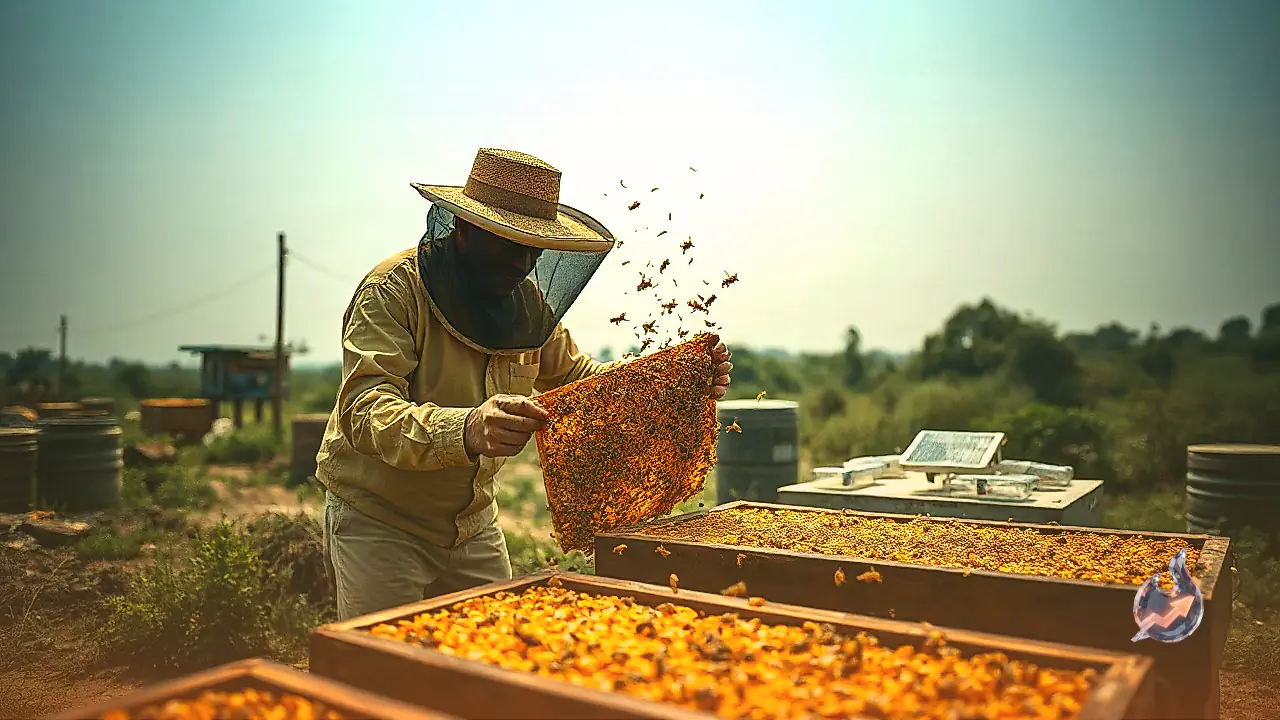

Discovering a beehive under a balcony or near the roofline of a home is a common sight, yet the traditional method used to clear it often ends up spoiling both the honey and consumer health. In Nadiyanwa village of Jehanabad district in Bihar, beekeeper Santosh Kumar has spent the past 8 years building a thriving apiculture enterprise. Starting with just 10 bee boxes, he has expanded his operations to approximately 400 boxes, sustaining his family entirely through this livelihood. Drawing from his extensive fieldwork, he warns that hasty domestic attempts to chase bees away with fire and smoke often turn pure honey into a contaminated hazard.
How Smoke Infuses Harmful Gases into Honey
The standard domestic response to an unwanted beehive is to burn dry leaves or twigs beneath it, creating thick smoke to drive the swarm away. While the insects disperse, the honey inside the comb absorbs the airborne byproducts. Santosh Kumar points out that burning debris produces toxic gases such as carbon dioxide and carbon monoxide in dense concentrations. These combustion gases directly penetrate the comb structure and dissolve into the sticky honey.
Once contaminated by smoke, honey loses its distinctive floral aroma, natural sweetness, and therapeutic qualities. Consuming honey laced with smoke residue poses clear health risks to the human body. This is why honey harvested under controlled, scientific methods retains high purity and safety ratings in retail markets, remaining free from combustion impurities.
The Safe Scientific Method for Hive Removal
Whenever a domestic hive must be relocated or harvested, following professional apiculture guidelines prevents stings while keeping the yield intact.
- Donning Protective Gear: Before approaching the swarm, one must wear an apiculture hood or a protective cap that fully covers the head and neck, paired with thick protective gloves. This completely shields vulnerable areas such as the face, throat, and hands from defensive stings.
- Gentle Detachment: Fully protected handlers can approach the structure calmly. Using clean implements, the comb should be detached smoothly and carefully from its supporting surface without aggressive swinging or sudden impacts.
- Natural Swarm Dispersal: The moment the comb is detached from its anchoring point, the resident bees naturally take flight and scatter safely into the surrounding area without turning aggressive.
Employing this disciplined procedure ensures the harvested honey maintains complete purity, with its nutritional composition and flavor profile entirely unaltered. In Bihar, the state government continues to extend systematic support to beekeepers across rural districts, promoting safe and scientific honey extraction techniques as a sustainable livelihood.