




















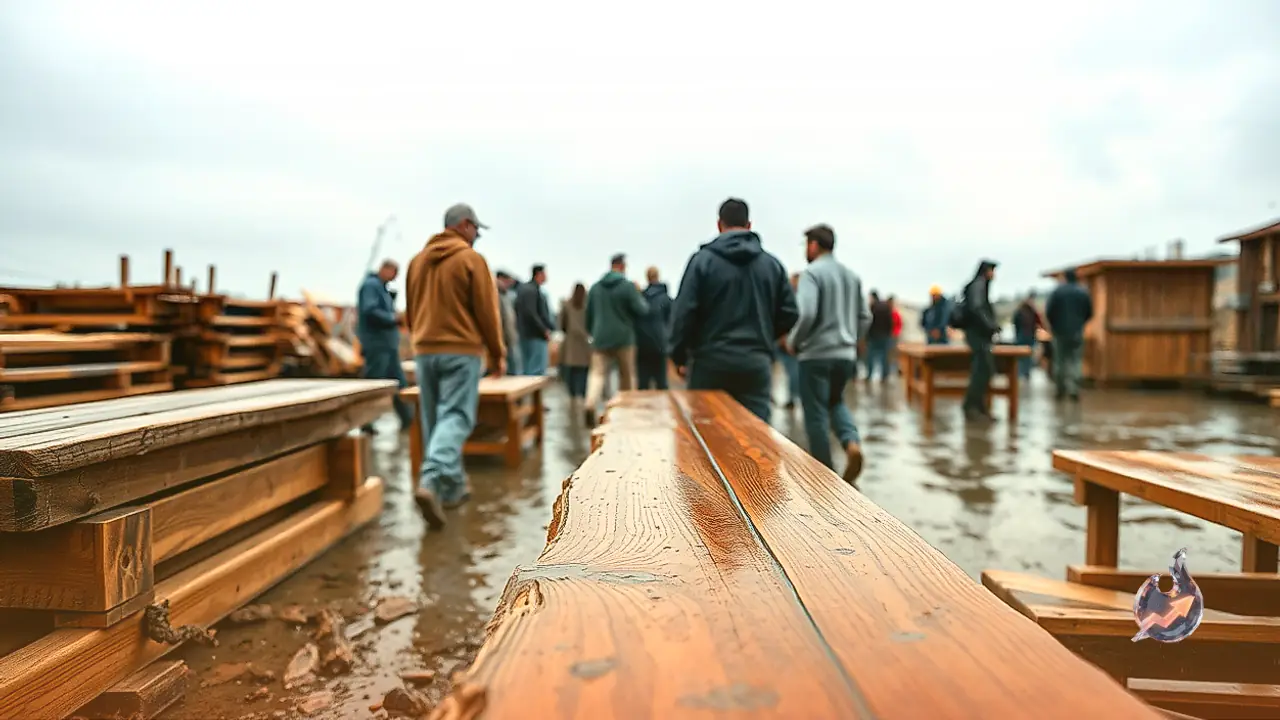

When planning new furniture for living spaces or open areas, long-term durability against environmental wear remains the primary consideration. Pieces positioned in gardens, open balconies, or damp areas often degrade rapidly if made from standard lumber, as water exposure causes warping, rot, and termite infestations. Understanding the distinct properties of various tree species helps ensure that structural integrity is preserved even in challenging, moisture-heavy settings.
Mainstay Timber Varieties for Standard and Heavy Furniture
For everyday indoor furniture, craftsmen commonly turn to teak, shisham, sal, mahogany, mango, and neem. Teak stands out as a premium and dependable benchmark due to its structural stability. Because it naturally repels moisture and insect damage, structures made from teak retain their quality over extended timelines without decaying.
Shisham represents a notably dense, heavy, and robust hardwood. Its grain structure accommodates detailed carving, making it an enduring staple in Indian households for items like dining tables, wardrobes, and bed frames. Meanwhile, sal provides immense hardness and load-bearing strength. Due to these rigid mechanical traits, sal is deployed primarily in structural construction, such as exterior frames, window casings, and main entrance doors.
Mahogany blends seamlessly into both classical and contemporary aesthetics. It resists ambient dampness effectively and does not deteriorate rapidly when subjected to water contact. On the cost-conscious end of the spectrum, mango and neem provide budget-friendly options. Neem wood benefits from inherent bitterness that discourages pests, while mango wood serves as a practical, lightweight choice for affordable joinery.
Top Wood Species Engineered by Nature for Wet Environments
For applications where timber directly encounters water or constant dampness, selection shifts toward species recognized for deep water resistance: teak, kardhai, ipe, deodar, and gular. Teak derives its resilience from a high concentration of natural oils and silica embedded within its fibers. This biochemical composition prevents rot and deters wood-boring insects, which explains its long-standing deployment in boat hulls and weather-exposed outdoor seating.
Kardhai demonstrates remarkable stability even when submerged or exposed to standing water over prolonged durations. In rural construction, builders have relied on kardhai for resilient structures exposed to the elements. Gular carries a distinctive reputation: absorption of water is understood to enhance its firmness rather than soften it. Historically, gular timber was selected for sculpting figures and assembling components situated close to or within water bodies.
The Enduring Resilience of Ipe and Deodar
Ipe ranks among the densest and strongest timber options available. Its exceptional weight and tight cellular structure make it suitable for submerged substructures and outdoor pedestrian bridges. Historically, royal architects and rulers incorporated dense timber of this caliber to support bridge spans and reinforce palace roofs exposed to extreme weather.
Deodar, often associated with red cedar, carries natural aromatic oils distributed throughout its grain. These oils serve as a natural barrier against fungal growth, mildew, and moisture infiltration, making it an ideal candidate for damp or high-altitude environments.
Treatment Strategies to Counter Insects and Rot
Beyond selecting an inherently durable species, treating timber ensures maximum service life against wood-boring beetles and subterranean termites. Formulations involving boric and borax compounds are applied to penetrate wood fibers. This treatment provides a protective chemical shield that stops infestations before they begin. Evaluating budget, site exposure, and appropriate chemical seasoning guarantees that outdoor furnishings remain functional and structurally sound for decades.