

















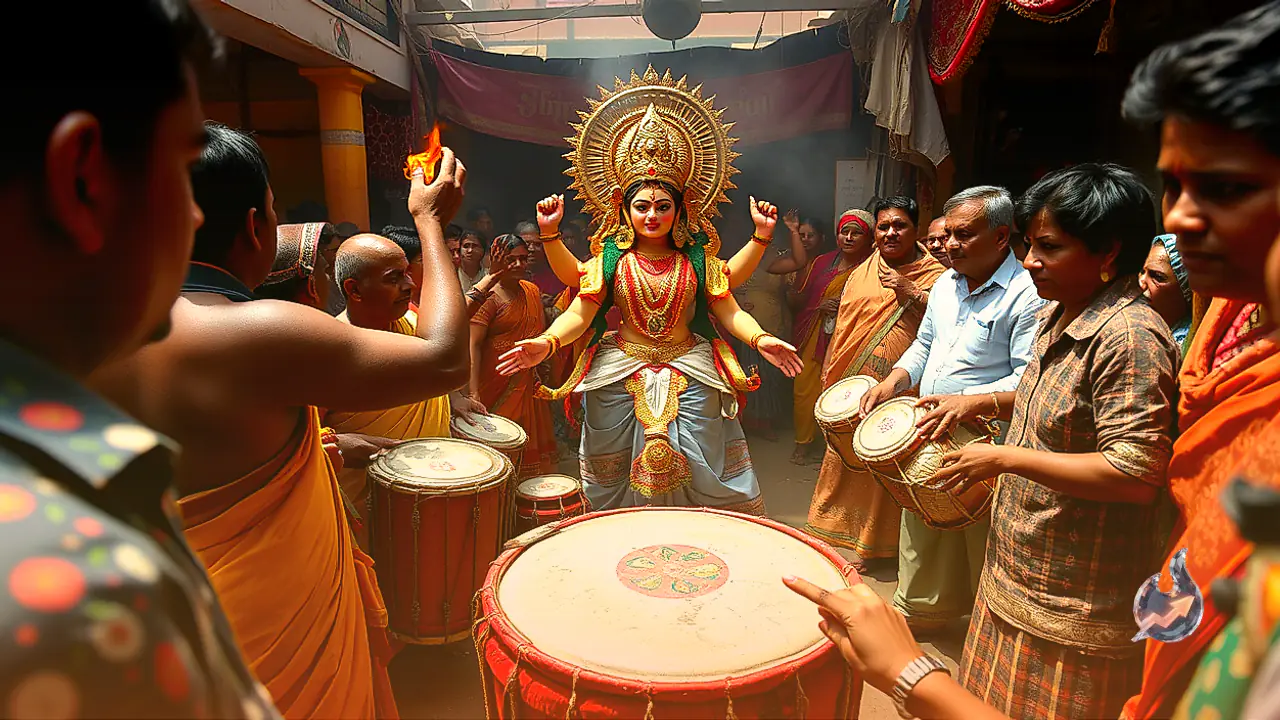

During the festive days of Durga Puja, the atmosphere across devotional pandals transforms completely into an energetic realm of sound, aroma, and faith. The resounding beat of the traditional dhak drums, the aromatic clouds drifting through the hall, and devotees moving rhythmically with burning earthenware incense burners make the celebration uniquely captivating. Especially in the heritage of West Bengal, the Dhunuchi dance has evolved into an unmistakable emblem of the festival. Holding a small clay receptacle bearing lit incense while stepping to intense percussive patterns captures the attention of every onlooker. Yet, this practice is far from being a mere showcase of folk performance or entertainment; it is deeply rooted in sacred ritualistic traditions and heartfelt veneration of Goddess Durga.
What Is a Dhunuchi and How It Functions
A dhunuchi is a specially designed ritual vessel made of baked clay, historically employed in worship ceremonies to burn natural incense before deities. Its structural form is carefully shaped for ceremonial handling: the bottom base is narrow and elongated to provide a firm handgrip, while the top portion widens into an open, flared bowl to facilitate air circulation. Inside this earthen container, burning coals or dried coconut husks are placed to create a steady bed of hot embers. Over this glowing base, powdered incense, camphor, and fragrant resinous materials are sprinkled, producing dense, aromatic white smoke. During Durga Puja rituals, worshippers hold this smouldering vessel in their hands and dance before the goddess during liturgical aarti ceremonies. The thick smoke swirling around the vigorous, agile movements of the dancer creates a visually striking spectacle against the festival backdrop.
Spiritual Symbolism and Sacred Traditions
The practice of dancing with the dhunuchi is an established devotional tradition within Durga Puja observances. According to long-standing beliefs, stepping rhythmically before the idol while carrying the sacred incense burner is a tangible expression of surrender, reverence, and devotion to the divine feminine power. The offering of scented smoke has always been an integral component of Vedic and regional worship practices. The plumes rising from the burning resins sanctify the immediate atmosphere and contribute to the elevated spiritual mood of the congregation. Consequently, this performance is regarded as a sacred rite rather than a superficial theatrical show. Exact practices and localized interpretations of this sacred ritual often vary across different families, ancestral regions, and established temple lineages.
The Vital Connection with the Rhythmic Dhak
Any manifestation of the Dhunuchi dance remains incomplete without the resonant accompaniment of the dhak. The dhak is a large, traditional percussion instrument whose deep, thundering patterns define the acoustic landscape of Durga Puja. Dancers balance their steps, posture changes, and hand gestures precisely in synchronization with the escalating tempo of these drums. In standard performances, participants balance a single incense burner in one hand. However, seasoned exponents occasionally perform daring feats by balancing multiple burning vessels across both hands, and sometimes even gripping an additional one firmly between their teeth. While such displays are visually thrilling, they require immense discipline and caution due to the presence of live embers and intense heat inside the earthen vessels.
Performances During Evening Aarti and Broader Participation
The Dhunuchi dance is customarily conducted during primary ritual hours, particularly accompanying the evening invocation known as Sandhya Aarti. As the priests conclude their offerings, massive gatherings assemble inside the pandals across West Bengal to witness and participate in the vibrant sequence. Over the decades, this sacred practice has transcended age and gender barriers. Today, women, men, youths, and elders all take an active role in stepping into the ritual circle. Encouraged by this popular enthusiasm, several puja organizing committees regularly organize structured competitions where participants showcase their stamina, rhythm, and devotion before community panels.
From Ancient Rite to Living Cultural Heritage
Over generations, what began as a solemn ritual act has expanded into a rich cultural celebration that unites entire communities. As the drummers quicken their pace and performers spin through billowing fragrant clouds, onlookers clap and chant, amplifying the collective jubilation of the gathering. The true uniqueness of this heritage lies in its harmonious integration of worship, percussion, and expressive body movement. The dense fragrant smoke, the echoing cadence of the dhak, and the disciplined rhythm of the participants together embody the living soul of Durga Puja as celebrated through centuries of tradition.