















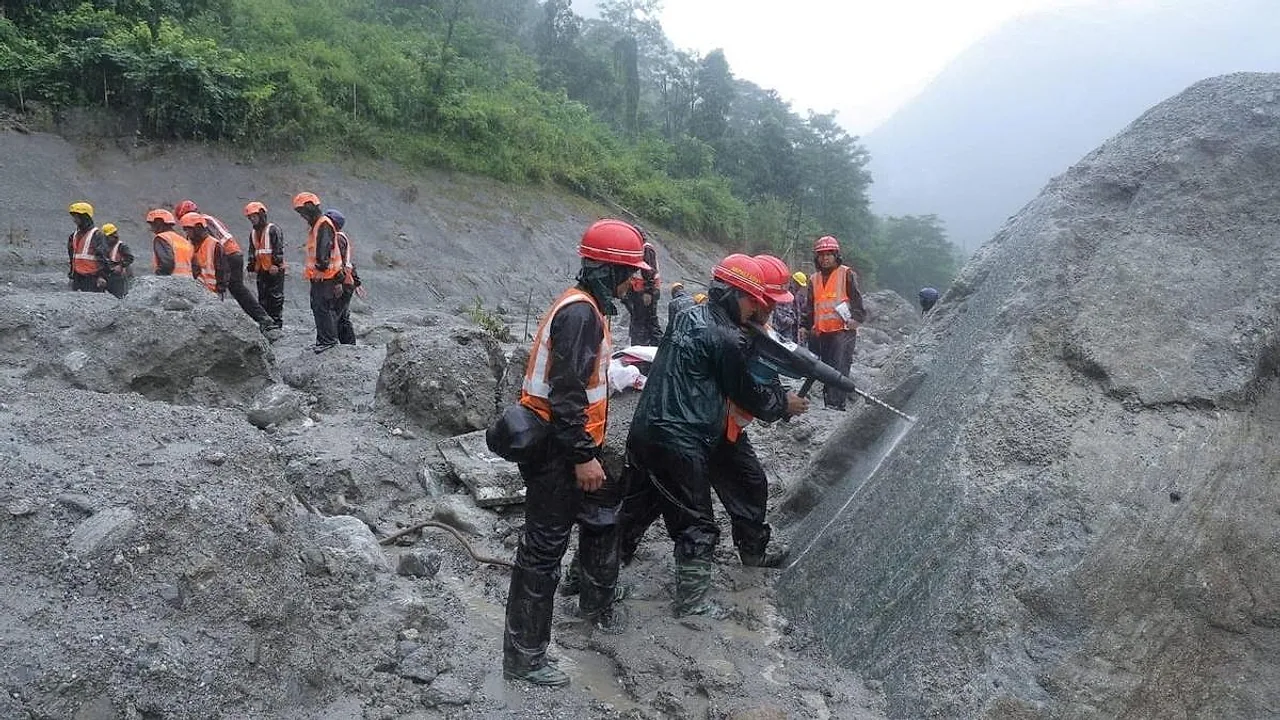

A catastrophic natural calamity has swept across Nepal and the border regions with Tibet, resulting in a death toll exceeding 900 people while over 4,000 individuals remain unaccounted for. The disaster was triggered by a glacial collapse near the border, causing massive sudden floods in mountain rivers that have severely impacted local communities and infrastructure.
Prime Minister Balendra Shah on the Unfolding Crisis
Prime Minister Balendra Shah described the situation as an unimaginable and heartbreaking tragedy, emphasizing that the administration is utilizing all available resources to manage the aftermath. He noted that assessing the full extent of infrastructure and human loss along the Bhotekoshi River in Rasuwa has proven exceptionally difficult. Despite adverse weather, rugged terrain, and persistent hazards, authorities are pressing forward with full resolve to protect civilian lives.
UN Climate Chief Highlights Vulnerability of the Hindu Kush Himalayas
The disaster has brought renewed global attention to the fragility of mountain ecosystems. UN Climate Chief Simon Stiff stated on Sunday, August 30, 2026, that scientists and local communities have warned for years about the grave threats facing the Hindu Kush Himalayan region due to climate change. He stressed that the glacial outburst near the Nepal-China border clearly demonstrates the extreme vulnerability of these high-altitude regions to ongoing environmental shifts.
Preservation Challenges and International Financial Aid
As recovery operations continue, local authorities face severe hurdles in preserving and identifying the recovered bodies. Foreign Secretary Amrit Bahadur Rai stated that Nepal urgently requires freezer units and DNA testing kits to prevent decomposition and health hazards. Meanwhile, international support has begun arriving. China provided financial assistance worth 2.2 million US dollars, with Chinese President Xi Jinping and Prime Minister Li Keqiang expressing condolences. Chinese Ambassador Zhang Maoming handed over a check of 35 million Nepali rupees, equivalent to roughly 2 million dollars, to Finance Minister Swarnim Wagle, alongside an additional 200,000 dollars from the Red Cross Society of China.
Temporary Burials in Chitwan and Ongoing Military Search Operations
In south-central Nepal's Chitwan district, located hundreds of kilometers downstream from the epicenter, the sheer volume of bodies washed down by the Bhotekoshi River overwhelmed forensic teams. Under mounting pressure, authorities buried roughly 100 unidentified victims in temporary graves on Saturday. A convoy transported the bodies to a wooded area where a bulldozer dug a large trench in red soil under the presence of officials. Concurrently, Nepal Army spokesperson Brigadier General Raja Ram Basnet confirmed that search and rescue operations have been significantly expanded across hills, settlements, and coastal zones.
Bodies Recovered and Handed Over at the Uttar Pradesh Border
The downstream impact extended across international borders into India. In Uttar Pradesh's Maharajganj district, four unidentified bodies were recovered from the Narayani-Gandak river. Following post-mortem examinations on Monday, August 31, 2026, the remains were formally handed over to Nepalese authorities. Led by local officials including Tehsildar Amit Singh and Additional District Magistrate Prashant Kumar, the bodies of three women and one man were transported via ambulances to the Maheshpur border near Thuthibari and transferred to the Nawalparasi administration along with DNA samples to assist families searching for missing loved ones.