


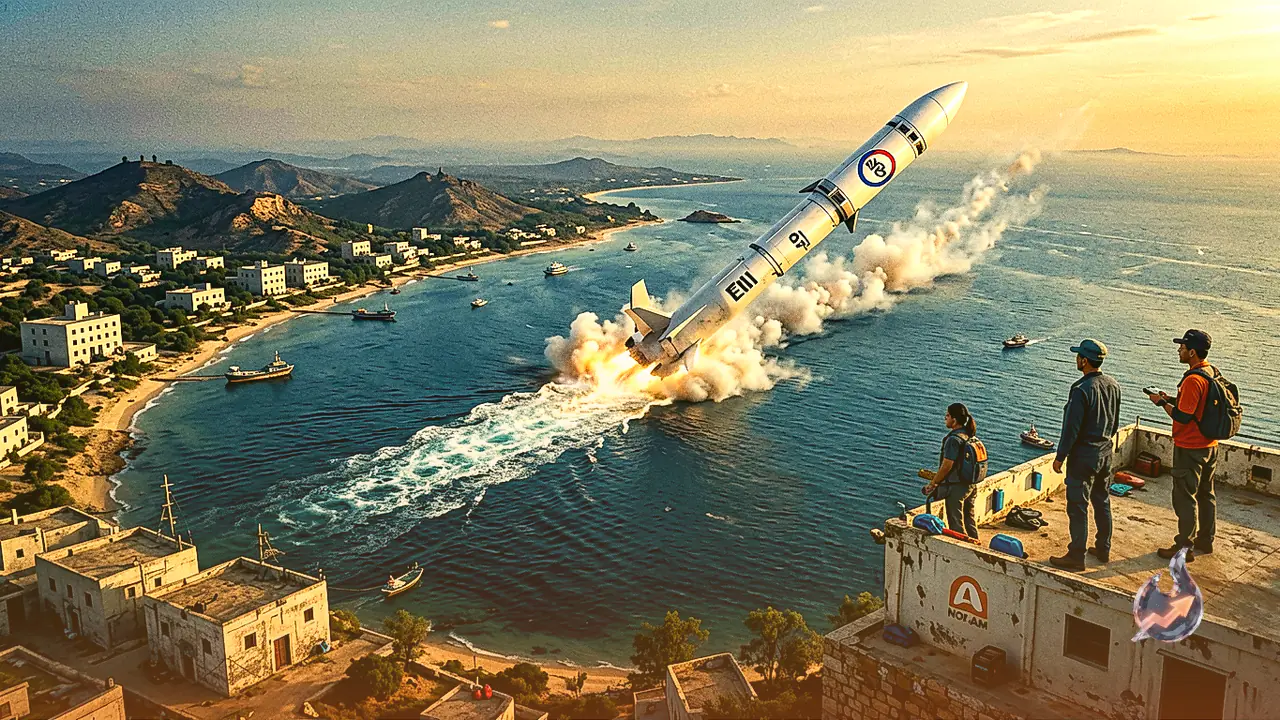




















The war in West Asia has taken a dangerous new turn. US forces struck Iran for a fourth consecutive day and reimposed a naval blockade on the country's ports to halt the movement of ships. In response, Iran's army and Revolutionary Guards fired missiles and drones at American bases at the Al Azraq base in Jordan and a logistics site in Mina Abdullah, Kuwait, while also claiming a strike on the US Fifth Fleet stationed in Bahrain. President Donald Trump has made clear that if Tehran does not return to the negotiating table, US strikes will expand next week to target Iran's power stations and bridges. Meanwhile, Jordan, Kuwait and Bahrain all say they intercepted Iranian aerial attacks, and Washington has piled fresh sanctions on Iran's oil trade.
Washington's naval blockade and Trump's stern warning
US military forces struck Iran for a fourth straight day and reimposed a naval blockade to stop ships from moving through the country's ports. The blockade was first imposed in mid-April and then lifted in mid-June, just a day after an interim agreement was signed that set a 60-day window for talks on issues including Iran's nuclear programme. But as violence intensified around the Strait of Hormuz, those talks completely stalled, forcing the US to reimpose the blockade. The blockade directly affects global energy supply chains, since oil shipped from Iranian ports feeds refineries and markets around the world.
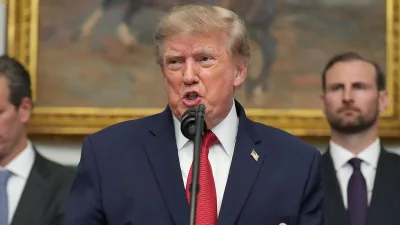
President Trump has withdrawn his earlier threat to impose heavy taxes on ships passing through the Strait of Hormuz, but he has issued a fresh, sharper warning instead. In an interview with Fox News, he said, "Next week is going to be very bad for them because next week is the turn of the power plants and the bridges. Until they come to the table, we are going to blow up all their power plants and bridges." In the same interview, he repeated the threat, saying next week would be terrible for Tehran because the power stations would be targeted first, followed by the bridges. In other words, if Tehran refuses to negotiate, the US will widen its strikes to hit Iran's electricity infrastructure and bridges, directly affecting ordinary citizens' daily lives, power supply and movement. US Central Command, or CENTCOM, also clarified that the goal of these recent strikes is to destroy Iran's military capability to attack civilian and commercial vessels along the Gulf's main oil and gas shipping route.
The Strait of Hormuz normally carries close to a fifth of the world's total oil and natural gas trade. The ongoing tug-of-war between the US and Iran for control of this narrow waterway, combined with weeks of Iranian retaliatory strikes, is pushing the entire region back to the brink of full-scale war. On one side, the US is ramping up military and economic pressure on Iran; on the other, Iran is targeting American bases in neighbouring countries to signal that it has no intention of backing down.
Crude oil prices surge sharply
Crude oil prices jumped sharply on Wednesday, July 15, 2026, as the US-Iran war intensified and strikes hit energy facilities. Markets were rattled after President Trump imposed a naval blockade on all Iranian ports and Iran retaliated by targeting American infrastructure in the region. Brent crude closed at its highest level since June 12 for a second straight session, while West Texas Intermediate, or WTI, closed at its highest level since June 15, with the rally continuing into Wednesday morning trade, a sign that investors are not taking this confrontation lightly.
By 0029 GMT on Wednesday, Brent crude had risen $1.46, or 1.72 percent, to $86.19 a barrel, while WTI crude was up $1.11, or 1.4 percent, at $80.40 a barrel. The rally is a clear signal that investors are taking seriously the risk of a major disruption to oil supplies through the Strait of Hormuz, since a large share of the world's oil trade passes through this single route.
Iran admits striking US bases in Jordan and Kuwait
Iranian state television reported on Wednesday that, in response to strikes carried out on the country by US security forces, Iran's army and Revolutionary Guards separately attacked American bases in Jordan and Kuwait. According to state broadcaster IRIB, Iran's army targeted the Al Azraq base in Jordan using drones. Additionally, the Revolutionary Guards confirmed firing cruise missiles at a US military logistics centre in Mina Abdullah, Kuwait. Iran stated clearly that the Strait of Hormuz will remain closed until the US completely halts its aggressive actions. This makes clear that Iran is not confining its retaliation to its own borders, but extending it to any country hosting American military bases.
Jordan announced on Wednesday, July 15, 2026, that it had successfully destroyed in mid-air three Iranian missiles aimed at the country. The announcement came after Tehran claimed responsibility for the attack, at a time when the US had reimposed a naval blockade on Iran in protest against attacks on ships passing through the Strait of Hormuz. Jordan's military shared this information officially.
Attack on the US Fifth Fleet in Bahrain, and a threat to halt all of West Asia's energy exports
Iran's Islamic Revolutionary Guard Corps claimed on Wednesday that it had targeted command-and-control, logistics, fuel and military equipment sites belonging to the US Fifth Fleet stationed in Bahrain. Iran says the action was carried out in response to American activity in the Indian Ocean and attempts to control the Strait of Hormuz and disrupt maritime routes. The Guards warned Washington that if it tries to control sea lanes to halt the region's oil and gas exports, other shipping routes tied to US and allied interests will also be shut down. The Guards made clear that the region's energy exports will either be accessible to everyone or to no one, meaning Iran's threat now extends beyond its immediate rivals to third countries that import and export oil through this route.
In a related development, Iran's paramilitary Revolutionary Guard had also warned on Tuesday that if the US blockade continues, energy exports from the whole of West Asia will be halted. That means Iran's threat is no longer confined to its own ports but now extends to disrupting the entire region's oil and gas trade, which could hit major energy exporters such as Saudi Arabia, the UAE and Qatar as well.
Kuwait and Bahrain also thwart Iranian air attacks
Two Gulf monarchies, Kuwait and Bahrain, confirmed that they had successfully thwarted fresh Iranian airstrikes, as the confrontation between Tehran and Washington over control of the Strait of Hormuz kept deepening. Kuwait's military said it shot down Iranian attack drones, calling it "Iran's devious aggression." Bahrain's military then also announced that it had succeeded in intercepting and destroying several Iranian aerial weapons. Earlier that morning, Bahrain's Interior Ministry had sounded warning sirens and urged citizens and residents to remain calm and head to the nearest safe location.
Bahrain Defense Force's General Command said in an official statement, "Iran continues its systematic hostile posture of criminal attacks that target civilians." The statement added that the forces succeeded that morning in intercepting and destroying a large number of Iran's treacherous air attacks. Meanwhile, Iranian state media claimed that Iran had launched separate counterattacks on American military bases in Kuwait and the US Fifth Fleet stationed in Bahrain in response to US strikes, meaning tensions flared simultaneously in three Gulf countries, Jordan, Kuwait and Bahrain, in a single day.
New rounds of US strikes and a rising casualty toll
US Central Command announced the completion of a new round of strikes against dozens of military sites in Iran. According to CENTCOM, American fighter jets, drones and naval vessels fired precision weapons during the seven-hour operation at Iran's missile and drone sites, naval capabilities and coastal defence systems, to further weaken Iran's capacity to endanger commercial ships and their crews. Earlier, CENTCOM had said the goal of these strikes was to destroy Iranian capabilities used to attack commercial vessels in the Strait of Hormuz. US armed forces also announced the start of a new round of daytime strikes, marking a major shift in the pace and timing of the military campaign, since every strike carried out over the preceding days had been conducted only at night.
Iran's Health Ministry said on Wednesday, July 15, 2026, that more than 260 people were injured overnight in fresh US airstrikes. Ministry spokesperson Hussein Karmanpour shared this figure but did not disclose a death toll. This round of injuries is far higher than in any previous clash between Iran and the US over dominance of the Strait of Hormuz. Later, Health Ministry spokesperson Hossein Karmanpour also said that more than 35 people have been killed in US airstrikes over the past several days, and at least 72 people remain hospitalised. Earlier, Iranian government spokesperson Fatemeh Mohajerani had said more than 30 people had been killed in US airstrikes "in recent days," though it was not immediately clear what time period she was referring to. Throughout this war with the US and Israel, Iran has released full casualty figures only occasionally, making it difficult to gauge the actual scale of the damage.
Iran's military confirmed on Wednesday that at least seven personnel were killed in overnight US strikes on the Bampur military base near the southeastern city of Iranshahr. According to the military, the strike was intended to cause maximum casualties, with 13 missiles fired at the base's guesthouse, security posts and residential facilities. The military said several more personnel were wounded and vowed a "decisive response" to the attack. Separately, Iran's state news agency IRNA reported on Wednesday that US forces carried out fresh strikes on the southern port city of Bushehr, home to Iran's only civilian nuclear power plant, which adds to the sensitivity of such strikes. Bushehr's governor, Mohammad Mozaffari, said the American enemy struck three separate locations in Bushehr on Wednesday, coming right on the heels of a strike on the same city the previous day, as military confrontation between Washington and Tehran keeps intensifying.
Separately, the US military on Tuesday, July 14, 2026, completely denied a claim that its forces had targeted a civilian wheat storage facility in Iran. The military clarified that all strikes were focused solely on Iranian military installations aimed at weakening Tehran's aggressive capability against commercial shipping in the Strait of Hormuz, an indication that Washington keeps trying to show its strikes are confined to military targets even as reports of civilian casualties on the ground keep surfacing.
Washington expands sanctions on Iran's oil trade and digital currency network
The US Treasury Department has expanded sanctions on Iran's petroleum sector, specifically targeting the shipping network of oil tanker trade figure Mohammad Hussein Shamkhani. Treasury Secretary Scott Bessent said the department also froze $130 million held in digital wallets linked to Iran's central bank, an area where activity has increased significantly since the war began, suggesting Iran is turning to digital currency to cushion war costs and the impact of sanctions. These steps came right after the US military struck Iran for a fourth consecutive day and reimposed the naval blockade. According to the International Maritime Organization, Iran has targeted ships in the Strait of Hormuz in response.
Indian sailors' lives at risk while crossing the Strait of Hormuz
An Indian sailor aboard an oil tanker passing through the Strait of Hormuz on Monday, July 13, 2026, described the journey as terrifying, filled with uncertainty and conflicting instructions. Speaking on condition of anonymity, the sailor said his massive Very Large Crude Carrier, loaded with more than two million barrels of crude oil, and its entire crew got caught between opposing pressures. While travelling the southern route near the Omani coast, they were squeezed between threats from the Iranian navy on one side and American encouragement to keep moving on the other, meaning their lives were directly at stake between military threats and the company's bonus incentives.
Separately, the body of an Indian sailor who had gone missing after an attack on his ship near Oman's coast has been recovered. Heramb Karmakar, a 30-year-old marine engineer from Pune in western India, had been missing since Sunday following an attack on the Cyprus-flagged vessel GFS Galaxy. Manoj Yadav of the Forward Seamen's Union of India said, "On Tuesday evening I got a call from the ship's owning company informing me that the Omani coast guard had found Heramb Karmakar's body." Yadav said, "About 60 hours had passed since we first got word that he was missing." The ship's remaining 23 crew members, including 10 Indian nationals, had already been rescued safely on July 12.
The Indian consulate in Dubai confirmed it is working with UAE officials and the shipping company concerned to provide Heramb Karmakar's family with every possible assistance. The mission posted on the social media platform X, "We express heartfelt condolences on the tragic death of an Indian national in the attack on commercial vessel MV GFS Galaxy on July 12, 2026." This episode shows that the confrontation over the Strait of Hormuz is no longer confined to governments and militaries, but is now reaching ordinary workers who pass through this route every day.
Developments in Israel: a soldier sentenced for espionage, and Netanyahu's trip to the US
Israel's military announced that an active-duty soldier has been sentenced to five years in prison for sending videos of anti-missile operations to an Iranian agent. According to the military, the soldier sent two such videos last June during the 12-day war with Iran and received payment in return. The military also said he handed over several other videos recorded in civilian areas to the same Iranian agent, which turns this into more than a mere security lapse, effectively espionage carried out for payment involving sensitive information.
Separately, a senior Israeli official said Prime Minister Benjamin Netanyahu will depart for the US on Saturday, July 18, 2026. According to the official, Netanyahu is keen to meet President Donald Trump, though it remains uncertain whether a meeting between the two leaders will actually take place. The trip comes at a moment when tensions between the US and Iran are at their peak, so it will be closely watched across the region.
Explosions near the US consulate in Erbil, Iraq
Multiple explosions were heard on Wednesday near the US consulate in Erbil, the capital of Iraq's autonomous Kurdistan region, after which air defence systems were activated immediately. Journalists on the scene reported seeing several drones flying over Erbil's skies before the air defence system intervened. Explosions occurred as the defence system targeted the drones, and smoke was clearly visible near the consulate. This same consulate has repeatedly been targeted by drone and rocket attacks during the West Asia war. Wednesday marks the first time explosions have been reported near the Erbil consulate since a fragile ceasefire took effect in April, a sign that the April truce is now on the verge of completely unravelling.