























Live: U.S. Hits 140 Iranian Military Sites in Third Wave; Hormuz Closed, Qatar Base StruckLive
12 Jul 2026, 10:20 am (45 days ago)· 2

Live: U.S. Hits 140 Iranian Military Sites in Third Wave; Hormuz Closed, Qatar Base Struck

A fresh flare-up of fighting between the U.S. and Iran has gripped West Asia, with American forces striking Iranian territory and Tehran hitting back against Gulf shipping and U.S. allies in the region. Iran's Gulf island of Qeshm has also been struck by projectiles. The UN Secretary-General is now urging both sides to cease hostilities at once and return to dialogue.

The geopolitical situation in the Middle East has reached a volatile flashpoint following an Iranian attack on a commercial vessel and Tehran's unilateral declaration to close the Strait of Hormuz. In a swift military response, United States forces have conducted a massive campaign against Iran. The US Central Command (CENTCOM) confirmed late Saturday that they have completed a third round of strikes, targeting over 140 Iranian military installations. These operations successfully struck missile and drone launch sites, naval assets, ammunition depots, communication infrastructure, and coastal surveillance centers.

Strait of Hormuz and Military Escalation

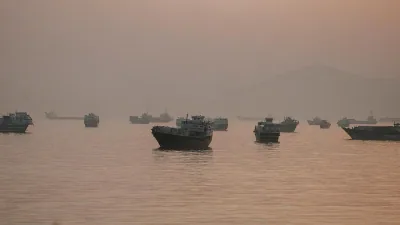
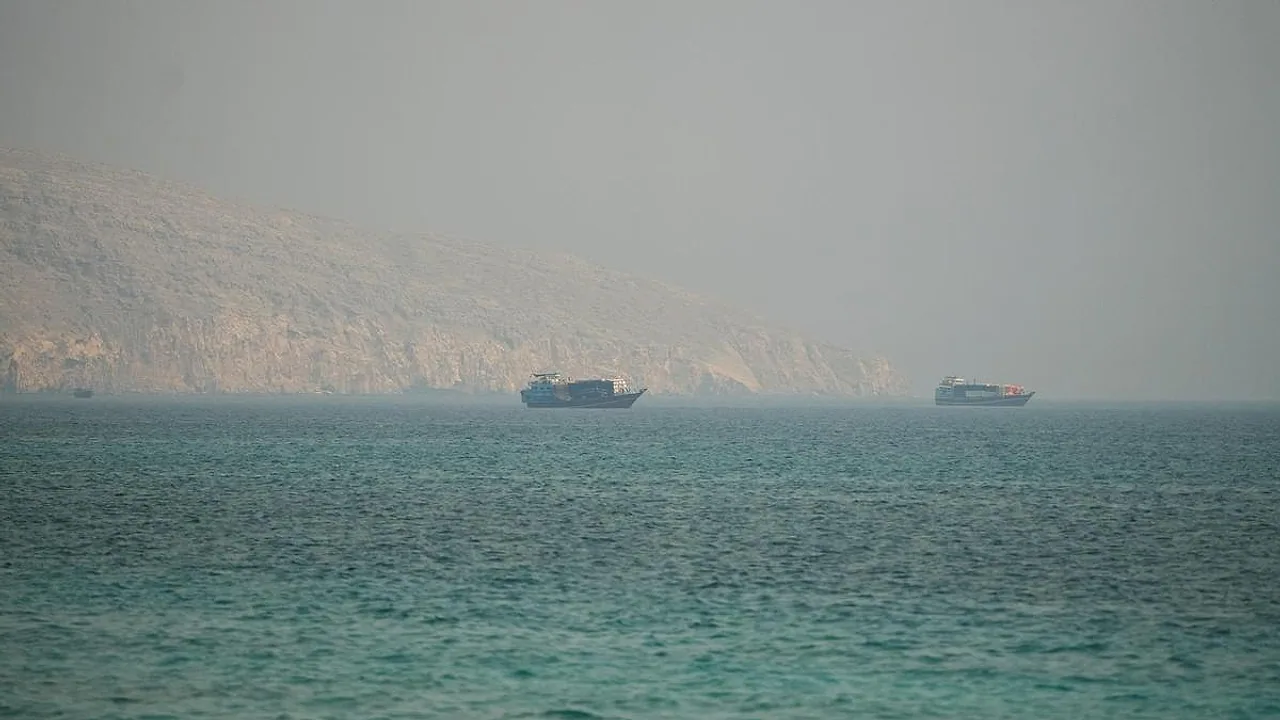
The Islamic Revolutionary Guard Corps (IRGC) stated on Sunday, July 12, 2026, that they had incapacitated a vessel for failing to adhere to sanctioned shipping lanes despite repeated warnings. The resulting distress call from the GFS Galaxy, operating near the Omani coast, forced the crew to abandon ship. According to Oman's Maritime Security Center, 23 crew members have been rescued, with search operations continuing for one missing person. Meanwhile, CENTCOM has firmly rejected Tehran's claims that the Strait of Hormuz is closed, asserting that the waterway remains open and that US forces are positioned to ensure the freedom of navigation.

Also read

Missile Strikes Across the Gulf

In retaliation for the US strikes, Iran launched a series of missile and drone attacks against neighboring Gulf states. The United Arab Emirates issued public alerts regarding imminent threats, while explosions were reported in Qatar near the Al Udeid Air Base. The IRGC claimed to have hit the base with ballistic missiles, alleging the destruction of command-and-control facilities. Kuwait's military confirmed that its air defense units intercepted incoming projectiles. Furthermore, three Iranian missiles landed within Jordanian territory, causing no casualties. Oman has formally protested the strikes on its territory by summoning the Iranian ambassador, describing the act as a violation of sovereignty.

Diplomatic Strains and Peace Efforts

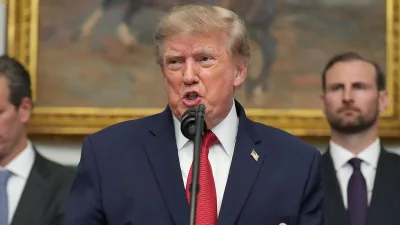
Pakistan and Saudi Arabia have expressed grave concern over the deteriorating situation. Following discussions led by Prime Minister Shehbaz Sharif, Deputy Prime Minister Ishaq Dar held phone talks with Iranian Foreign Minister Abbas Araghchi, urging both sides to exercise restraint. Simultaneously, a US military delegation has arrived in Beirut to discuss the implementation of an Israeli withdrawal from 'pilot zones' in southern Lebanon. United Nations Secretary-General António Guterres has called for an immediate cessation of hostilities. President Donald Trump remarked that the US had struck Iran forcefully in response to the aggression against commercial shipping. Mohsen Rezaee, an advisor to the Iranian Supreme Leader, emphasized that the Strait of Hormuz remains more valuable than dozens of nuclear weapons, pledging to defend the waterway.

Upcoming Israeli Elections

Amidst the regional turmoil, the Israeli Knesset announced that national elections will be held on October 27, 2026. This marks the first time in decades that a ruling coalition will complete its full four-year mandate. The election is widely seen as a referendum on the leadership of Prime Minister Benjamin Netanyahu during the ongoing Gaza conflict. Additionally, the Iraqi Prime Minister is scheduled to visit Washington on Monday to sign oil and gas MoUs, aiming to secure alternative export routes and reduce economic vulnerability to closures in the Strait of Hormuz.


ENDED

Closed

  1. UN Secretary-General demands U.S. and Iran halt their fresh outbreak of hostilities

    UN Secretary-General António Guterres on Sunday (July 12) appealed to both the United States and Iran to bring their newly ignited round of conflict in the West Asia war to an immediate end and to resume negotiations toward a resolution. Guterres drew specific attention to U.S. military strikes on Iran, as well as to Iranian attacks on vessels transiting the Strait of Hormuz and on American allies across the Gulf. 'These attacks must stop,' UN spokesman Stéphane Dujarric said, conveying the Secretary-General's position in a formal written statement. -AFP
  2. Israel's Parliament Announces October 27 Election Date, Completing First Full Term in Decades

    Israel's parliament confirmed on Sunday (July 12) that the country's next national elections will be held on October 27, the final date permissible under Israeli law. The vote is widely expected to function as a public reckoning with Prime Minister Benjamin Netanyahu's leadership since the Gaza war erupted. The Knesset is scheduled to bring its current term to a close on July 17, making this the first time in decades that any governing coalition has completed a full four-year mandate. "Since the current Knesset is expected to serve its full term and the next general election is already set by law for October 27, with no intention of shortening the legislature's tenure, there is no need to enact a Knesset Dissolution Law in the usual sense," parliament said in a statement. -AFP
  3. More Than 10 Projectiles Slam Into Iran's Gulf Island of Qeshm: State Media

    Iranian state media reported on Sunday (July 12) that upwards of ten projectiles struck Qeshm island — an Iranian territory within the strategic Strait of Hormuz — as fresh hostilities erupted between Tehran and Washington. Hossein Amir Teymouri, governor of Qeshm township, told IRNA, the official state news agency, that "between 10 to 11 enemy projectiles have struck Qeshm Island since Sunday afternoon." He added that every site targeted was military in character and confirmed there had been no casualties. -AFP
  4. U.S. Hits Iran After Container Ship Torched in Hormuz; Tehran Strikes Back at Gulf Arab States

    American military forces launched strikes against Iran in the early hours of Sunday (July 12, 2026), retaliating for an Iranian attack on a vessel in the Strait of Hormuz that set the container ship on fire and forced its crew to evacuate. Iran responded with attacks directed at several countries across the Gulf, including Bahrain, Kuwait, Qatar and Oman. The renewed outbreak of fighting has cast fresh doubt on the bid to reach a durable resolution to a conflict that first broke out on February 28. The American strikes on Iran, launched in retaliation for maritime attacks, have deepened tensions across the Gulf and put ongoing peace negotiations at serious risk.
  5. Trump Says U.S. Hit Iran 'Very Hard' After Latest Hormuz Shipping Attacks

    US President Donald Trump said on Sunday (July 12) that the United States had struck Iranian targets hard in retaliation for Tehran's most recent attacks on vessels navigating the Strait of Hormuz. "We hit them very hard last night," Mr. Trump told CNN in a telephone interview that centred largely on the death of Senator Lindsey Graham. Mr. Trump revealed that the two sides had been close to concluding a deal on Saturday. "They were giving up everything, and then all of a sudden two hours after that they hit a ship with a drone. These people, there is something wrong with them," he said. -AFP
  6. U.S. military dismisses Iran's Hormuz closure claim, insists ships keep moving

    The U.S. military moved to contradict Iran's claim on Sunday (July 12, 2026) that the Strait of Hormuz had been sealed off, asserting that vessels continued passing through without obstruction even as the West Asia conflict pressed on. "Iran does not control the strait. Traffic is flowing," U.S. Central Command (CENTCOM) posted on X. CENTCOM is the command body responsible for overseeing American military operations across West Asia. In a subsequent message, CENTCOM directly challenged an Islamic Revolutionary Guard Corps (IRGC) statement declaring that the crucial artery for global oil flow was being shut down, contesting the claim point by point.
  7. Iran strikes Gulf neighbours and announces Hormuz closure as U.S.-Iran hostilities deepen

    Iran announced on Sunday (July 12) that it was sealing off the Strait of Hormuz and launched a barrage of missiles and drones at neighbouring Gulf countries, following a fresh wave of American military strikes that have pushed the bilateral confrontation to a new degree of severity. The latest outbreak of hostilities was set off when Iran targeted a commercial ship inside the strait; the vessel was engulfed in fire and the crew was left with no choice but to abandon it. These developments have once again put severe strain on the provisional agreement between Washington and Tehran that was meant to bring their war to a close — a conflict that ignited in late February when coordinated U.S.-Israeli strikes took the life of Iran's supreme leader. –AFP
  8. CENTCOM declares Hormuz open to all shipping, says U.S. forces ready to guarantee safe passage

    All vessels retain the right of passage through the Strait of Hormuz and American military personnel are "positioned and prepared" to uphold freedom of navigation, U.S. Central Command declared on Sunday (July 12), a day after U.S. and Iranian forces had directly exchanged fire and Tehran announced it was closing the strategically vital sea corridor.
  9. 23 crew members pulled to safety after ship struck near Oman, search on for one still missing

    Oman confirmed on Sunday (July 12) that 23 sailors from a commercial ship had been brought to safety after the vessel was struck off the eastern coast of the Gulf sultanate, with one crew member still unaccounted for. 'Twenty-three crew members were rescued and provided with necessary medical care. Search operations are continuing for one crew member who remains missing,' the Oman Maritime Security Centre said in an official statement. The centre disclosed that it had received an emergency distress signal from the Cypriot-flagged GFS Galaxy, which had come under attack 4.4 nautical miles off the shoreline of Musandam Governorate.
  10. Oman calls in Iranian envoy, lodges formal objection following attack on its territory: state media

    Oman on Sunday (July 12) formally summoned the Iranian ambassador and filed a protest following an attack on the country, state media reported. The move stood out as a rare instance of Muscat openly holding Tehran accountable for striking its territory. Oman's state news agency shared a post on social media stating that the country 'expresses its profound dismay at these irresponsible acts' and underlines the necessity of respecting national sovereignty, cordial neighbourly relations between states, and non-interference in internal affairs. The protest was lodged barely 24 hours after Oman had hosted the Iranian Foreign Minister for discussions centred on the Strait of Hormuz.
  11. Iraqi PM's upcoming Washington visit on Monday likely to yield oil and gas agreements

    On Monday (July 13), the Prime Minister of Iraq is scheduled to travel to Washington to strengthen strategic partnerships with the United States. During this visit, both nations are anticipated to sign oil and gas contracts as part of an expanded effort to boost cooperation in trade, investment, and economics. "The upcoming pacts will feature multiple memorandums of understanding within the petroleum and natural gas industry, as Iraq aims to introduce several American firms to help accelerate its oil output capabilities," stated Haider al-Aboudi, the government's spokesperson. According to Iraq's official news agency, which quoted Mr. al-Aboudi, these upcoming energy deals will also focus on establishing alternative export routes. This move is intended to minimize Iraq's vulnerability to potential supply chain interruptions in the Strait of Hormuz.
  12. IRGC shares video showing Iranian strikes targeting American military forces

    Earlier today, the Islamic Revolutionary Guard Corps of Iran made public video footage depicting the military operations carried out against U.S. troops. View the clip below:
  13. Iranian soldier killed in overnight American strikes, reports state

    According to Iranian media on Sunday, a soldier lost his life during overnight military strikes launched by the United States on Iran, coming as hostilities between the two adversaries started once again. Quoting a regional official, the Mehr and Tasnim news outlets reported that "Lieutenant Hamidreza Dehghani, serving in the navy of the Islamic republic's military forces, was killed in the criminal, terrorist bombardment carried out yesterday night by the United States against the southern Iranian port of Jask."
  14. Qatar denounces Iranian strikes on its land and neighboring Arab nations as 'dangerous escalation'

    On Sunday (July 12, 2026), Qatar expressed strong disapproval of Iranian military strikes targeting its own land and neighboring countries, following a series of barrages launched by the Islamic republic against several Arab nations. "Qatar strongly condemns the fresh wave of strikes launched by the Islamic Republic of Iran," the ministry of foreign affairs declared in an official statement. The ministry also highlighted the attacks directed at Jordan, the United Arab Emirates, Bahrain, Oman, and Kuwait, characterizing the military onslaughts as a "dangerous escalation."
  15. Strait of Hormuz holds greater value than 'dozens of atomic bombs', declares Iranian adviser

    An aide to the supreme leader of Iran asserted on Sunday that safeguarding the Strait of Hormuz is of greater significance than possessing "dozens of atomic bombs," pledging that the nation will secure the crucial marine route. The ISNA news agency quoted Mohsen Rezaee as stating, "This strategic passage holds more importance than dozens of atomic bombs, and the Islamic Republic of Iran will defend it." Although Western nations frequently allege that Tehran is striving to build nuclear weaponry, the Iranian government maintains that its nuclear development is intended solely for civilian, non-military objectives.
  16. Iranian daily names Trump and European heads of state as targets for retaliation

    An Iranian conservative publication, famous for its aggressive stance, has released a roster of individuals marked for retribution following the assassination of supreme leader Ali Khamenei. This list features top figures from the United States, Israel, and various European nations. Joint military operations by the U.S. and Israel claimed the life of the late ayatollah on February 28, marking the onset of the Middle East conflict. His son Mojtaba Khamenei, who has stepped into his shoes, has pledged retaliation. In his inaugural address on Saturday since his father's funeral earlier in the week, Mr. Mojtaba declared that seeking revenge is the collective desire of their nation and is bound to happen. He added that the perpetrators listed would never experience a peaceful demise in their own beds. The Hamshahri newspaper, managed by officials in Tehran, published a digital graphic late Saturday (July 11, 2026) displaying pictures of 13 global leaders alongside the statement of Mr. Mojtaba.
  17. Pakistani Deputy Prime Minister Dar urges restraint amid West Asia tensions

    Ishaq Dar, the Deputy Prime Minister of Pakistan, has called on both Iran and the United States to exercise moderation in the wake of intensifying clashes in West Asia. A press release from the Foreign Office in Islamabad revealed that Mr. Dar, who additionally holds the foreign affairs portfolio, conducted a phone call with Iranian Foreign Minister Abbas Araghchi to convey his apprehensions. The statement noted that the two leaders discussed the changing dynamics of the region. The Deputy PM and Foreign Minister urged all involved sides to pursue peaceful de-escalation and maintain composure, in line with the Islamabad MOU signed in June 2026.
  18. Oman denounces strike on its soil, state media reports

    Official media in Oman reported that the government strongly criticized an assault on its sovereign land on Sunday, which occurred as Iran's Revolutionary Guards claimed responsibility for hitting targets there during a wider offensive across Gulf nations. The Oman News Agency posted on social platform X that the Sultanate of Oman firmly opposes and condemns the strike. Interestingly, this bombardment took place only hours after Oman had welcomed the Foreign Minister of Iran for talks regarding maritime safety in the Strait of Hormuz.
  19. Oman targeted by Iranian drone strikes, reports state agency

    According to Oman's state-run media, unmanned aerial vehicles targeted several locations in the northeastern region of the sultanate, situated along the vital Strait of Hormuz. Previously, Tehran had claimed responsibility for conducting strikes in Oman, which local authorities did not publicly acknowledge.
  20. India strongly condemns vessel attack near Oman; 10 citizens rescued, search ongoing for one

    The Ministry of External Affairs has denounced the strike on the commercial ship GFS Galaxy near the coast of Oman. Out of the 11 Indian crew members on the vessel, 10 have been brought to safety, while one is still missing. The Indian diplomatic mission in Oman is actively collaborating with local authorities on search and rescue operations. Additionally, India has urged for an immediate reduction in tensions, an end to operations targeting merchant shipping and civilian facilities, and the re-establishment of safe transit through global sea routes.
  21. Jordan confirms three Iranian missiles hit its territory; no casualties reported

    The Jordanian military stated that three rockets launched from Iran landed within its borders. No injuries or deaths have been reported from the impact.
  22. Muscat and Tehran to hold further talks on maritime security in Strait of Hormuz

    Oman and Iran have mutually agreed to persist with their discussions to build a shared consensus on securing maritime traffic through the Strait of Hormuz, according to the spokesperson for Iran's Foreign Ministry.
  23. Riyadh and Islamabad voice concern over growing military escalation

    Pakistan and Saudi Arabia have raised concerns over the escalating conflict in West Asia, stating that the recent military friction between the U.S. and Iran poses a risk to regional peace and stability. Foreign Minister Ishaq Dar held a telephone discussion with his Saudi counterpart, Prince Faisal bin Farhan, on Saturday (July 11, 2026). This conversation occurred a day after Prime Minister Shehbaz Sharif held independent talks with the leadership of Iran and Qatar in an attempt to revive the stalled negotiations between Washington and Tehran. According to officials, these high-level discussions took place as efforts gained momentum to rebuild diplomatic bridges between the opposing sides following the latest round of strikes on rival installations.
  24. Kuwaiti air defenses intercepting aerial attacks, says military statement

    Kuwait's military announced that its air defense forces were actively working to counter an ongoing aerial strike on its territory, amid a wider wave of drone and missile attacks targeting nations across the Gulf region. In a statement shared on social media, the General Staff of the Army explained that any sounds of explosions heard are due to air defense systems intercepting and neutralizing hostile attacks.
  25. U.S. Says It Struck Around 140 Iranian Military Targets This Week

    U.S. Central Command announced late Saturday in a post on X that American forces had concluded a third wave of strikes against Iran this week, with roughly 140 Iranian military sites hit in total. Among the locations attacked were Iranian missile and drone facilities, naval assets, ammunition storage depots, communication networks, and coastal surveillance posts, Central Command added.
  26. Iran's IRGC Claims Second Vessel Struck in Hormuz, U.S. Qatar Base Targeted with Ballistic Missiles

    Iran's Islamic Revolutionary Guard Corps announced Sunday that it had attacked and disabled a second vessel in the Strait of Hormuz. The IRGC also stated it launched ballistic missiles at the U.S. strategic air base at Al Udeid in Qatar, claiming to have destroyed the base's fighter jet maintenance centre and its command and control facility.
  27. UAE Warns Public of Incoming Missile and Drone Attack; Explosions Heard in Qatar

    The United Arab Emirates issued a public alert warning of an imminent missile and drone attack, while blasts were audible in neighbouring Qatar. It was not immediately clear which part of the UAE was under threat — the country had not been targeted in this latest wave of Iranian attacks. An AP journalist heard the explosions in Qatar on Sunday morning, though no immediate information was available on their cause. The United States had already carried out two rounds of airstrikes against Iran last week following attacks on ships in the Strait of Hormuz.
  28. Crew Abandons Damaged Ship Near Oman Coast After Alleged Iranian Attack

    British maritime agency UKMTO reported Sunday that the crew of a vessel damaged near the Omani coastline had vacated the ship following an attack that the United States attributed to Iran. "UKMTO has been informed by military authorities and the CSO of the vessel that the crew have abandoned the vessel and are currently embarked in a lifeboat," the agency stated. The incident took place around 17 kilometres (10 miles) off the eastern coast of Oman. Iran had earlier claimed responsibility for halting the vessel in the Strait of Hormuz, saying the ship had repeatedly disregarded instructions to travel along an approved navigation route.
  29. U.S. Military Delegation Arrives in Beirut to Work Out Israeli Withdrawal from Lebanon Pilot Zone

    A U.S. military delegation met with Lebanon's armed forces in Beirut to discuss the mechanics of implementing Israel's withdrawal from a "pilot zone" in occupied territory, a Lebanese military official told AFP, speaking on condition of anonymity. The visit follows a framework agreement reached on June 26 under which Israel is set to progressively pull its forces from parts of southern Lebanon where it had deployed troops against Hezbollah, the Iran-backed Shia movement. Under this arrangement, Lebanon's military — long excluded from those areas — will assume full control of two small sections designated as pilot zones. "The American military delegation arrived and began meetings with the Lebanese army command to discuss the mechanisms for implementing the first pilot zone from which the Israelis will withdraw, allowing the Lebanese army to deploy," the official said. "This is the main objective the American military delegation is bringing to Lebanon... it is the translation and implementation of the framework agreement," the official added.
  30. Iran Shuts Strait of Hormuz; U.S. Launches Fresh Strikes After Ship Attacked

    Iran declared the Strait of Hormuz closed "until further notice" on Sunday after its forces fired on a vessel accused of travelling through an unauthorised route, prompting U.S. retaliatory strikes that placed further strain on an already fragile ceasefire. Iran's Revolutionary Guards said they struck and halted a ship that had persistently defied repeated orders to use an approved shipping corridor, according to a statement carried by state news agency IRNA. The U.S. military launched strikes on Iran in retaliation for the attacks on civilian vessels in the Strait of Hormuz, escalating tensions across the region.
  31. Iran Reports Calm in Bandar Abbas, Sirik and Jask After Strikes

    Iran's state-run media reported that the situation in the coastal towns of Bandar Abbas, Sirik and Jask was currently calm.

Questions & Answers

What is the main reason for the current tension between Iran and the US?
The tension was triggered by Iran's attack on a commercial vessel in the Strait of Hormuz and the subsequent US military response.
Has the Strait of Hormuz been closed?
Iran declared the strait closed, but the US military has denied this, stating that the waterway remains open for all vessels.
How many crew members were rescued in the attack near the Omani coast?
Following the attack on the vessel GFS Galaxy near the Omani coast, 23 crew members have been rescued, while one person remains missing.
How many Iranian military targets has the US struck?
According to the US Central Command, the US has targeted approximately 140 Iranian military installations this week.

Comments 0

No comments yet — be the first.

Citizen journalism

Become a TrendKia journalist

Voice of the people

Share news, photos and videos from your area with TrendKia and let your voice reach the nation. Every citizen a journalist.

Join now
CH 01 LIVE
TrendKia TV ON AIR