
Mumbai: Significant changes governing the employment terms and compensation structures for working professionals have come into effect in Maharashtra. The state administration has officially notified the fresh regulations, which are now operational across the entire region. These updated provisions establish a standard eight-hour workday, guarantee weekly rest periods, and institute robust safeguards regarding how deductions can be made from a worker's earnings. Labor Minister Akash Fundkar noted that the primary objective of these updated norms is to ensure financial security and establish uniform compensation practices for the state's workforce.
Eight-Hour Daily Work Schedule and Weekly Limits
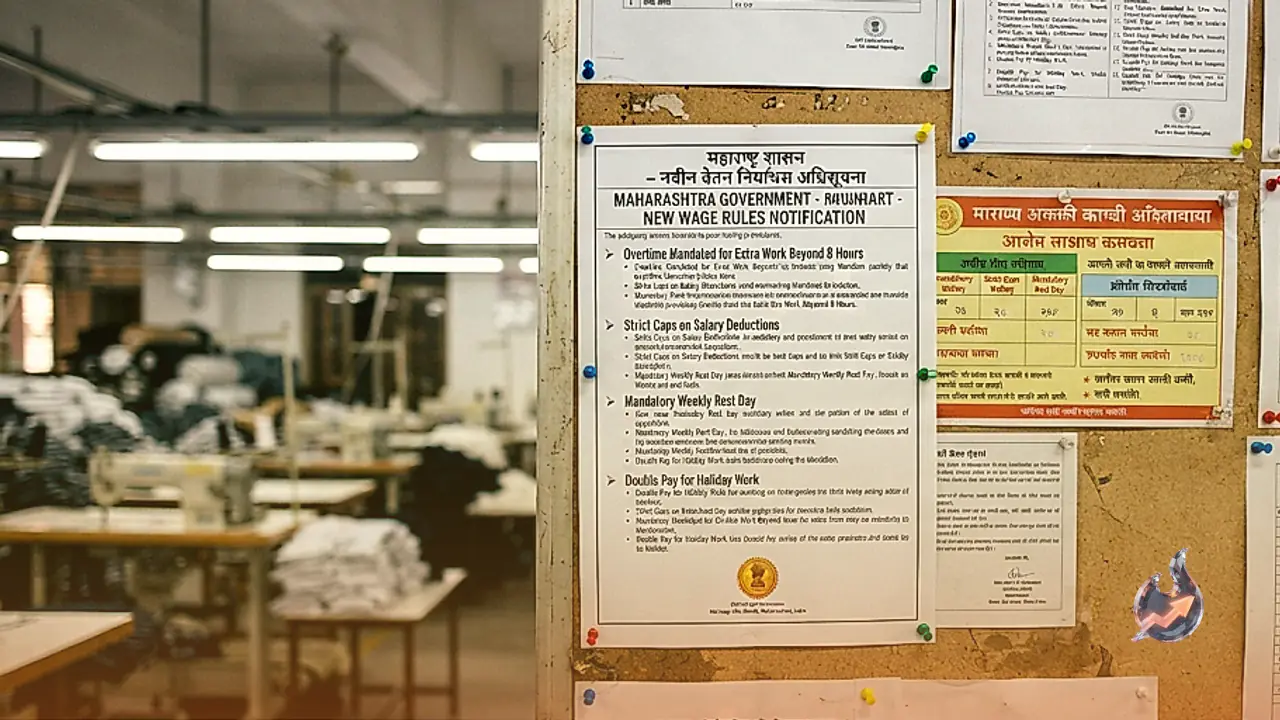
According to the updated regulatory framework, a normal working day for daily-waged personnel has been fixed at eight hours. For other categories of employees, total weekly working hours are restricted to a maximum of 48 hours. Providing a weekly rest day is mandatory for every employer. In situations where an employee is required to perform duties on their designated day of rest, the establishment must provide an alternative compensatory holiday. These measures are designed to prevent worker burnout and enforce balanced operational schedules across industries.
Double Compensation for Working on Rest Days
The revised compensation rules outline explicit provisions regarding overtime and holiday labor. If an employee renders services on their weekly rest day, they must be compensated at a rate of at least twice their normal wages. This facility extends equally to workers remunerated on a piece-rate basis. All overtime disbursements must comply strictly with applicable legal standards to ensure fair compensation for extra hours contributed by the labor force.
Cap on Salary Deductions Set at Fifty Percent
A crucial relief introduced for employees restricts employers from deducting more than fifty percent of an individual's total earnings within a single wage period. If recovery of a larger amount becomes necessary due to specific circumstances, the collection must be phased across subsequent wage periods. Furthermore, before imposing any penalty or deducting wages on account of recovered damages, employers are legally required to issue a written or electronic show-cause notice. The worker must also be granted an adequate opportunity to present their defense and explanation.
Dearness Allowance Revisions and Wage Calculation Formula
The updated rules mandate that the variable dearness allowance will be revised twice annually. These calculations will rely on the consumer price index for industrial workers published by the labor bureau under the central government, with computations finalized prior to April 1 and October 1 each year. Additionally, a standardized procedure for computing minimum wages has been established. Daily wages will be divided by eight to determine hourly pay and multiplied by 26 to arrive at monthly remuneration. Basic pay, dearness allowance, and retaining allowance form the core components of this standard definition.
Mandatory Wage Slips and Five-Year Record Retention
Employers are now legally obligated to maintain comprehensive employment records, including attendance registers, wage books, and overtime logs, which can be stored either physically or digitally. These documents must be preserved for a minimum of five years following the final entry. Additionally, providing a wage slip to every employee on or before the disbursement date is mandatory. In the event of an employee's death, nomination provisions ensure that unpaid dues reach designated beneficiaries. Unclaimed funds must be deposited with the assistant labor commissioner within specified timelines if disbursement fails.
Grievance Redressal and Revocation of Legacy Rules
Workers facing issues related to non-payment of wages, holiday remuneration, illegal salary deductions, minimum bonus disputes, or gender-based wage discrimination can now formally file grievances. Applications can be submitted individually, through registered labor unions, or via inspectors using prescribed electronic or physical formats. With the implementation of these modern provisions framed under the overarching wage code, the legacy Maharashtra Minimum Wages Rules of 1963 and Maharashtra Payment of Wages Rules of 1963 stand repealed. However, these regulations do not govern the determination of minimum wages for state government employees.