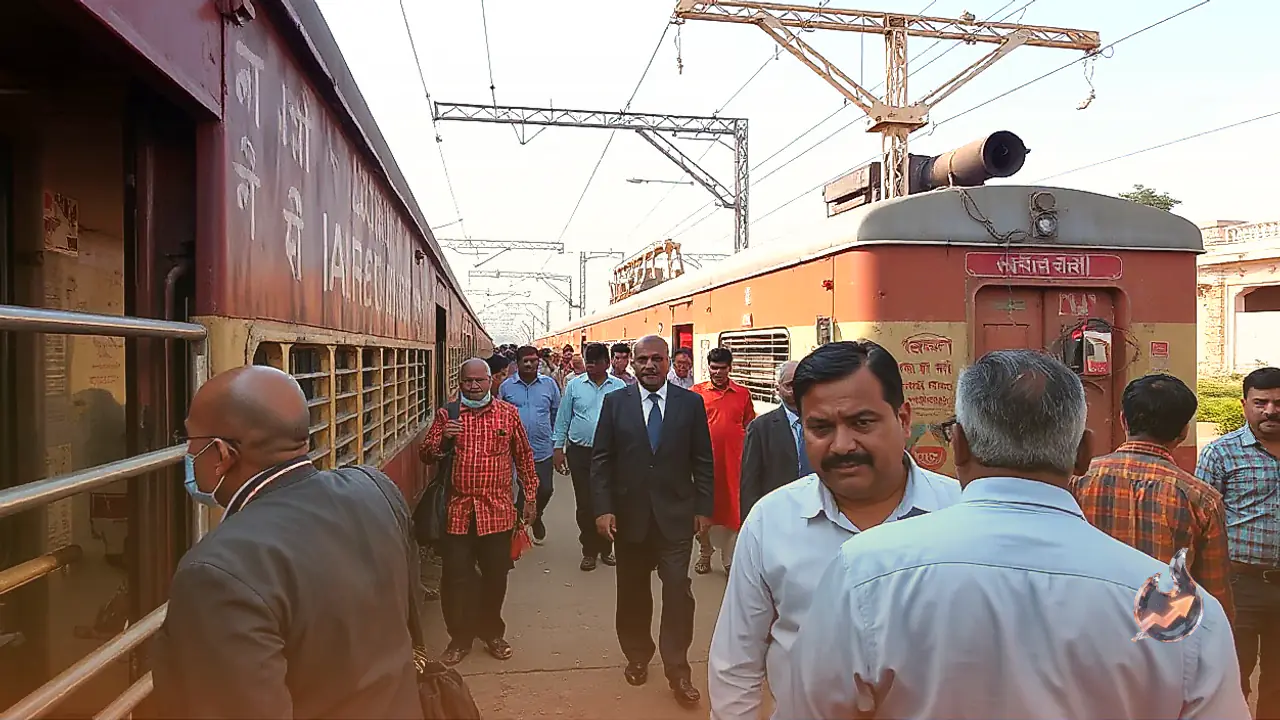

A meaningful chapter is unfolding in the historical connectivity between India and Nepal. Coinciding with the visit of the Nepalese Prime Minister to India, a new international passenger train service is being operationalized. The direct service connects Ayodhya, the birthplace of Lord Ram, with Janakpur Dham, the birthplace of Mata Sita. While the 604-kilometer route offers immense convenience to pilgrims, it also shines a spotlight on a 150-year-old historic link that originally powered the setup of North India's railway infrastructure.
Route Operations and Schedule Between Ayodhya and Janakpur
According to the operational blueprint prepared by Indian Railways, the weekly train will commence its journey from Ayodhya Cantt in Uttar Pradesh. Traversing through major junctions including Ayodhya Dham, Mankapur, Basti, and Gorakhpur, the train will enter Bihar. Its route through Bihar encompasses Narkatiaganj, Raxaul, Sitamarhi, Shisho, and Madhubani before reaching Jaynagar, which serves as the final railway station on the Indian side of the border. Crossing into Nepal from Jaynagar, the train covers a 28-kilometer stretch to reach Janakpur Dham.
As per the designated schedule, the train will depart from Janakpur Dham in Nepal every Saturday and begin its return trip from Ayodhya Cantt on Monday. Designed to accommodate diverse passenger preferences, the train features both air-conditioned coaches and sleeper-class compartments. Fares, official train numbers, and detailed stoppage timings are being released by railway authorities.
Locomotive Swap at Jaynagar Station
A notable technical element of this cross-border journey involves a locomotive change at the border. The initial 576-kilometer stretch from Ayodhya to Jaynagar will be powered by an electric locomotive, as the entire track infrastructure within India on this route is fully electrified. Upon arriving at Jaynagar, the electric engine will be detached and replaced with a diesel engine. This swap is necessary because the 28-kilometer track section inside Nepal is not yet equipped with overhead electrification lines.
Why British Railways Did Not Expand Into Nepal
Historical analyses often question why the British Empire, which constructed extensive rail tracks across India's plains and challenging mountain regions such as Darjeeling, Shimla, and the Nilgiris, refrained from building a rail network inside Nepal. The primary explanation lies in Nepal's independent geopolitical status. Following the Anglo-Nepalese War, the two sides signed the Treaty of Sugauli in 1816, recognizing the sovereignty of the Shah dynasty and maintaining Nepal as an independent kingdom.
British strategists were reluctant to maintain permanent military garrisons along the difficult Himalayan frontier, particularly given the proximity of Tibet and the Qing dynasty in China. Consequently, maintaining Nepal as a buffer state served British strategic interests. Although a British Resident was stationed in Kathmandu, administrative authority remained strictly in the hands of the Nepalese monarchy and government.
The Rana Regime's Policy of Isolation
Rail travel debuted in England in 1825, and the British East India Company introduced railways to India in 1853, initiating rapid track expansion across the subcontinent. During this period in Nepal, executive authority shifted from the Shah monarchs to the Rana family, whose heads assumed the office of Prime Minister and held absolute administrative power.
While the Rana prime ministers maintained diplomatic relations with the British and supplied Gorkha troops to the British Army, they deliberately pursued a policy of national isolation to protect their domestic rule. Fearing that easy road or rail connections from India could facilitate external intervention or political change, they strictly limited transport infrastructure. Paved roads to Kathmandu were intentionally avoided, naturally preventing the development of a rail grid within Nepalese territory.
How Nepalese Sal Timber Built North India's Tracks
Even though railways were not constructed inside Nepal during that era, the country played a vital role in enabling the growth of North India's railway grid. In the 19th century, laying durable railway tracks required heavy wooden sleepers placed beneath steel rails to maintain gauge width and absorb the weight of heavy trains. Unlike modern tracks that utilize concrete sleepers, early railway construction depended entirely on high-grade timber.
The preferred choice for sleeper production was Sal timber (also known as Sakhua), valued for its exceptional hardness, density, and resistance to environmental decay. As the British expanded railway routes across the expansive plains of Uttar Pradesh and Bihar, millions of sleepers were required. Massive quantities of Sal timber were sourced from the dense forests of the Nepalese Terai region to meet this demand. Sawn Sal logs supplied from Nepal served as the foundation upon which iron tracks were laid across Northern India. Decades after Nepalese timber laid the groundwork for Indian train travel, a direct passenger line now bridges Ayodhya and Janakpur Dham.