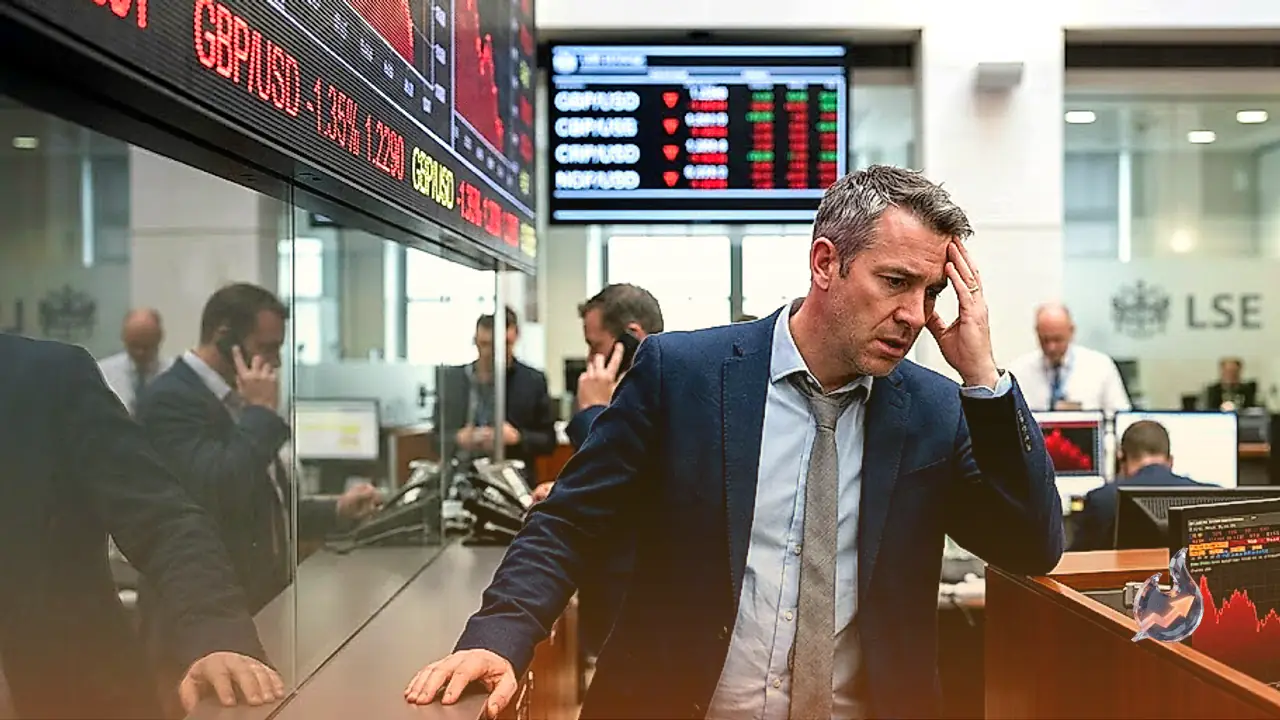

























The Australian Dollar remained under consistent downward pressure against the US Dollar, logging consecutive sessions of losses as a broader rally in the Greenback pushed major currency pairs lower. Surging US Treasury yields, alongside renewed worries about persistent inflationary impulses and potential monetary tightening by the Federal Reserve, have reinforced demand for the US currency across global trading floors. Crude oil price advances have added to underlying cost concerns, compounding the upward trajectory of fixed-income yields. In the spot market, the AUD/USD pair dropped toward 0.7012, testing territory adjacent to its 200-day Simple Moving Average situated at 0.7021. Live market figures reflect the exchange rate trading around 0.7013, shedding 0.31 percent against the previous close of 0.7034, following an earlier drop of 0.37 percent.
Surging US Yields and Wall Street Weakness
Sentiment across US equity bourses deteriorated during Thursday trading, prompting broad-based declines that left major benchmarks in negative territory. The US Dollar capitalized on the prevailing risk-off mood, extending its daily advance to four consecutive sessions as geopolitical negotiations between the US and Iran failed to deliver visible, concrete progress. Energy markets simultaneously exerted upward pressure on inflation expectations, with West Texas Intermediate crude climbing roughly 1.90 percent to trade at $93.21 per barrel. Even as discussions circulated regarding Tehran exploring diplomatic arrangements with Washington, oil prices maintained their upward momentum, propelling the 10-year US Treasury yield above the 5.20 percent milestone and underscoring higher-for-longer interest rate realities.
Hawkish Federal Reserve Commentary
Speeches from high-ranking Federal Reserve officials served as primary market catalysts throughout the trading day. John Williams of the New York Fed indicated that another interest rate increase remains viable this year to counter stubborn price pressures. Echoing this restrictive stance, Philadelphia Fed official Anna Paulson explicitly noted that additional rate hikes might be required to ensure inflation returns to mandate levels. Further emphasizing the central bank's vigilance, Beth Hammack of the Cleveland Fed warned of building inflationary forces and reiterated a hawkish policy outlook. Away from monetary deliberations, diplomatic attention turned toward dialogue between China’s President Xi and US President Trump, with both heads of state exchanging conciliatory statements and expressing mutual interest in future cooperative efforts across trade and artificial intelligence.
RBA Policy Horizon and Upcoming Economic Indicators
With domestic Australian data sparse in the immediate session, currency traders have pivoted their focus toward the upcoming Reserve Bank of Australia monetary policy meeting scheduled for September 29. Financial tracking figures from Prime Terminal indicate a 93 percent probability that the central bank will implement a 25-basis-point rate increase, lifting the official cash rate to 4.60 percent. Market participants will receive further economic guidance the following day, with Australia's latest inflation statistics slated for release on September 30. In the United States, upcoming macro releases include Durable Goods Orders and Consumer Sentiment metrics on September 25, which precede the highly anticipated Nonfarm Payrolls employment report scheduled for the subsequent Friday.
Technical Structure and Key Chart Boundaries
From a chart perspective, primary resistance sits near 0.7039 following the violation of an ascending support trend line. Higher up, the confluent technical zone encompassing the 50, 100, and 200-day Simple Moving Averages around 0.7092 represents a substantial barrier, with a horizontal ceiling established at 0.7198 capping broader recovery moves. Extended upside hurdles linger at prior support boundaries turned resistance at 0.7385, 0.8716, and 0.9569. On the downside, critical structural support is positioned around the upward trend line break near 0.6906, where a sustained breakdown could accelerate the prevailing bearish trajectory. Live technical indicators show the 14-day Relative Strength Index at 32, with the MACD registering in bearish alignment within a 52-week band of 0.6422 to 0.7277. Immediate intraday pivot parameters stand at 0.7014, flanked by resistance marks at 0.7015 and 0.7018, and floor levels at 0.7011 and 0.7010.
Broad Commodity and Foreign Exchange Cross-Currents
The buoyant US Dollar and elevated yields have reverberated across commodities and secondary foreign exchange crosses. Gold struggled to mount a meaningful recovery after slipping under $4,250 per troy ounce during Wednesday trading, remaining constrained by expectations of further US policy tightening. Meanwhile, USD/JPY consolidated around 158.00 in Asian dealing, retreating from three-week peaks as climbing Japanese government bond yields and lingering intervention warnings provided underlying support to the Japanese Yen. Addressing domestic economic conditions, the Bank of Japan advanced its policy normalisation roadmap, raising its short-term interest rate target from 1.00 percent to 1.25 percent via a 7-2 vote, a transition fully anticipated by global markets.