























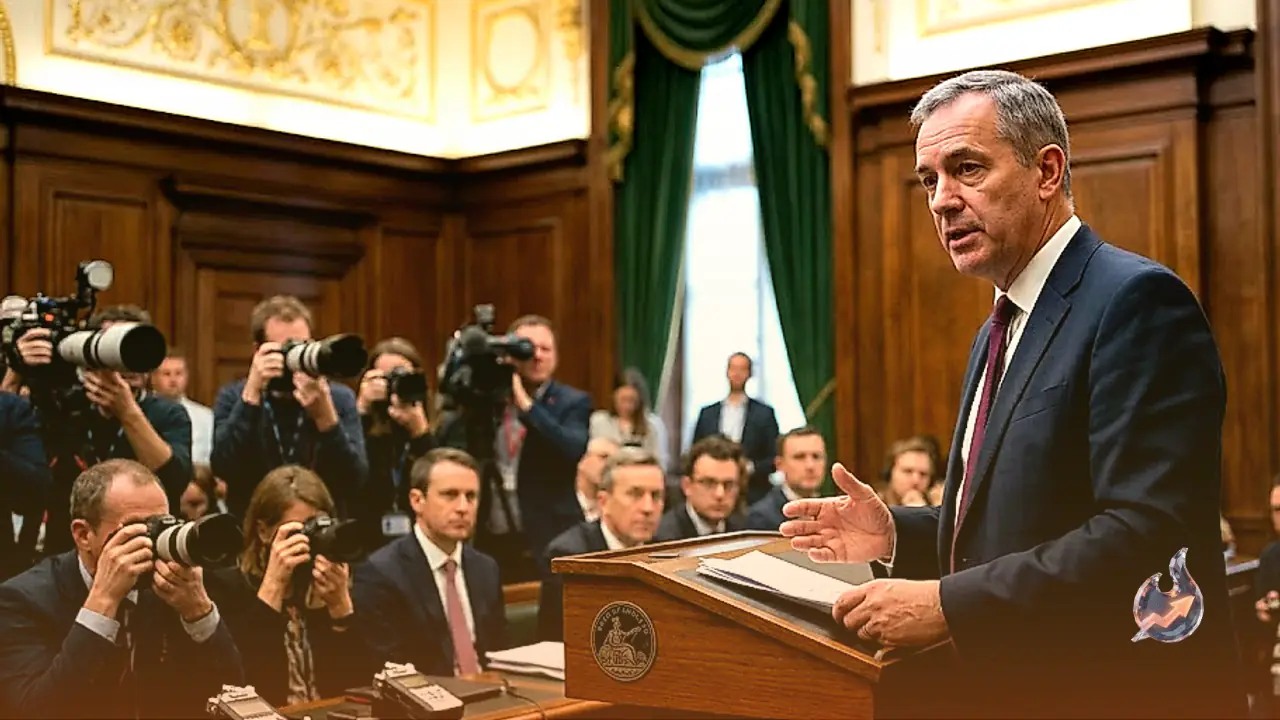

Andrew Bailey shared his assessment of the latest United Kingdom economic data, noting that activity appears slightly stronger and ruling out an immediate recession. However, the Governor cautioned that inflation risks remain tilted to the upside, driven largely by ongoing pressures in energy and food markets.
Economic Outlook and Recession Assessment
Bank of England Governor Andrew Bailey stated on Tuesday that he does not believe the United Kingdom economy is on the verge of a recession. Latest data reflects somewhat stronger activity and reasonable economic resilience, though activity remains soft by historical standards. Market interest rate pricing for the Bank of England reflects investor concerns regarding potential further increases in energy costs. Bailey also sought to dispel any notion that the central bank maintains an unconditional secret plan to raise interest rates aggressively.
Drivers of Inflation and Global Pressures
Risks to food price inflation remain skewed to the upside, exacerbated by geopolitical conflicts and commodity market disruptions. The conflict involving the United States and Iran has led to elevated energy prices with the potential to climb further, while Ukrainian strikes targeting Russian refineries continue to drive up the costs of refined oil products. These persistent cost pressures have contributed to rising mortgage rates across the United Kingdom, with the increase noted as larger than almost anywhere else within the Group of Seven nations.
The Bank of England dictates monetary policy for the United Kingdom with the primary objective of maintaining price stability, defined as a steady 2% inflation rate. The central bank utilizes adjustments to base lending rates to influence overall economic interest rates and the valuation of the Pound Sterling. When inflation exceeds the target threshold, the Bank of England typically raises interest rates to curb credit access, a move that generally strengthens the Pound Sterling by attracting global capital. Conversely, if inflation dips below target, indicating slowing growth, policymakers may lower borrowing costs to encourage commercial investment.
Quantitative Easing and Tightening Mechanisms
In extreme economic scenarios, the Bank of England can deploy quantitative easing to inject liquidity into a constrained financial system. This involves creating reserves to purchase government or high-grade corporate bonds from financial institutions, a process that usually results in a weaker Pound Sterling. Conversely, quantitative tightening represents the reverse policy stance enacted during periods of strengthening economic activity and rising inflation. Under quantitative tightening, the central bank ceases bond purchases and halts the reinvestment of maturing principal, a strategy that tends to support the Pound Sterling.
Meanwhile, foreign exchange markets show the AUD/USD pair holding above the 0.7200 mark during the Asian session on Tuesday, reaching its strongest level since May 14. The US Dollar remains under pressure as a strengthening Japanese Yen offsets hawkish Federal Reserve expectations. At the same time, the USD/JPY pair fluctuates near 154.00 during the American session following a rebound from a six-month low below 153.00, supported by upbeat Japanese wage growth data and revised gross domestic product figures. In energy markets, the US diesel crack spread recently surged past $100 per barrel for the first time, reaching an intraday record high above $102.00.