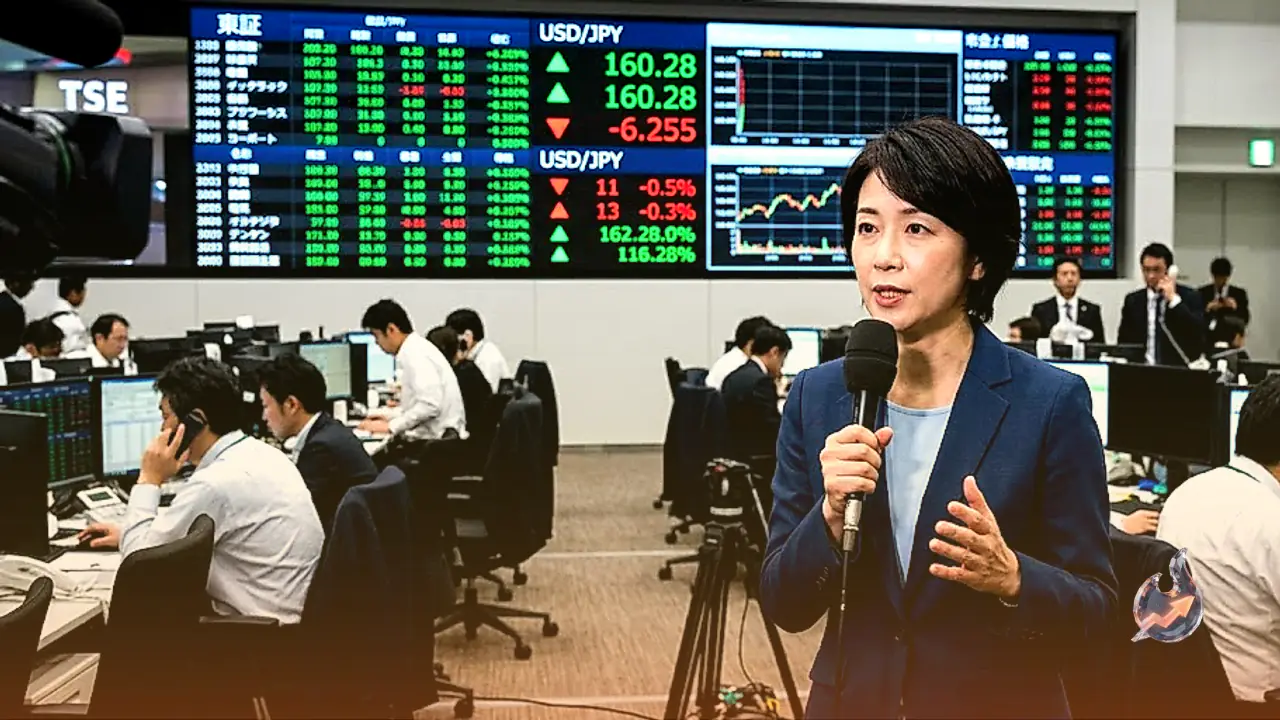























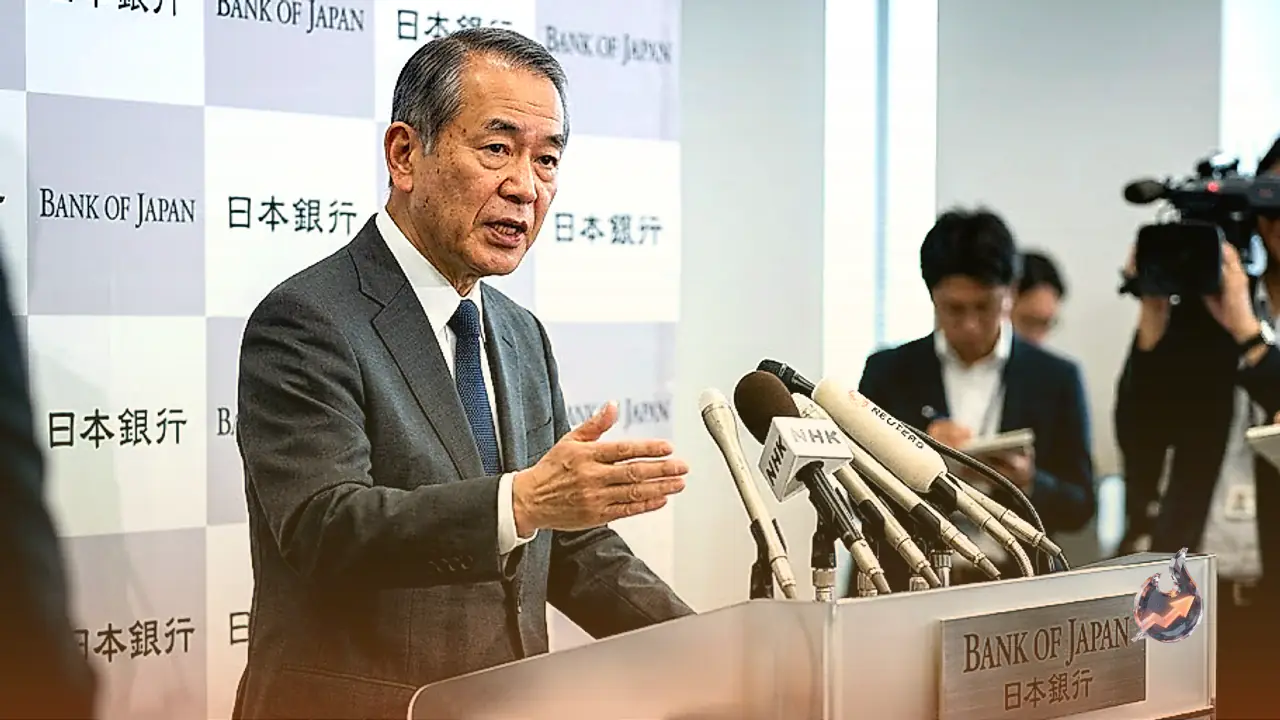

Bank of Japan (BoJ) board member Hajime Takata stated that the central bank must execute interest rate hikes nimbly after carefully evaluating the degree of accommodation in domestic financial conditions alongside global macroeconomic trends. Takata emphasized the critical need to closely monitor long-term interest rate movements while maintaining clear and transparent market communication. Following his remarks, the USD/JPY currency pair posted a modest 0.10% gain to trade at 160.35. The statement comes as global energy costs rise and geopolitical friction creates broader uncertainty across foreign exchange markets.
New Phase for Interest Rate Adjustments and Price Stability
Takata pointed out that the year 2026 marks the beginning of a distinct operational phase for Japan, one where monetary policy tightening will not follow a predetermined or fixed tempo. The BoJ needs to transition away from its previous framework designed to stimulate underlying inflation and instead demonstrate a strong commitment to preventing price levels from deviating too far upward.
He further highlighted the operational risks stemming from divergent monetary policy paths between Japan and other major global economies. As central banks take differing approaches, foreign exchange market volatility could intensify. Furthermore, ongoing surges in international energy prices raise the likelihood of domestic inflation overshooting the central bank's baseline targets, requiring vigilant oversight.
Bank of Japan Mandate and Policy Evolution
As Japan's central monetary authority, the Bank of Japan is tasked with managing monetary policy, issuing banknotes, and maintaining currency stability to achieve a steady annual inflation target of around 2%. To counter prolonged deflationary pressures and boost economic momentum, the BoJ launched an aggressive ultra-loose monetary policy in 2013, driven by Quantitative and Qualitative Easing (QQE) involving massive asset purchases of government and corporate debt.
By 2016, the central bank intensified its monetary easing by implementing negative interest rates and initiating Yield Curve Control (YCC) on 10-year Japanese government bonds. This prolonged easing phase officially shifted in March 2024, when the BoJ raised benchmark interest rates and stepped back from its ultra-loose policy framework.
Yen Depreciation, Salary Dynamics, and Energy Inflation
The extensive monetary stimulus program led to prolonged weakness in the Japanese Yen against major international currencies. This depreciation accelerated markedly during 2022 and 2023, as foreign central banks engaged in rapid rate hikes to tackle multi-decade high inflation, expanding the interest rate differential against Japan.
Although the Yen achieved partial stabilization following the BoJ's March 2024 policy pivot, the combination of a weaker currency and elevated global energy costs pushed domestic Japanese inflation past the 2% target threshold. Anticipated wage increases across Japanese firms have also added persistent momentum to underlying inflationary pressures.
Global Forex Markets and US Dollar Resilience
Beyond Japan, major currency pairs are reflecting shifts in global risk sentiment. The British Pound faced selling pressure, pushing GBP/USD down to the low 1.3500s, matching a two-week low. Simultaneously, EUR/USD extended its downward correction, breaking below the key 1.1600 support threshold as the US Dollar gained traction.
Throughout 2026, the US Dollar has responded to changing Federal Reserve rate expectations, persistent inflation readings, and discussions surrounding US fiscal sustainability, alongside growing market commentary around debasement trades.
Energy Spikes, Gold Trends, and Middle East Tensions
Geopolitical escalations in the Middle East have injected fresh volatility into financial assets. According to updates from US Central Command, military strikes targeted Islamic Revolutionary Guard Corps sites across southern Iran, including Qeshm Island near the Strait of Hormuz. The event drove crude oil prices to six-week highs.
In energy markets, the US diesel crack spread—measuring ultra-low sulphur diesel futures against WTI crude—surpassed $100 per barrel for the first time, setting an intraday record of just over $102.00. Meanwhile, Gold traded near a two-and-a-half-week low just above $4,300 per ounce, as rising inflation fears and Federal Reserve rate bets underpinned safe-haven demand for the US Dollar.