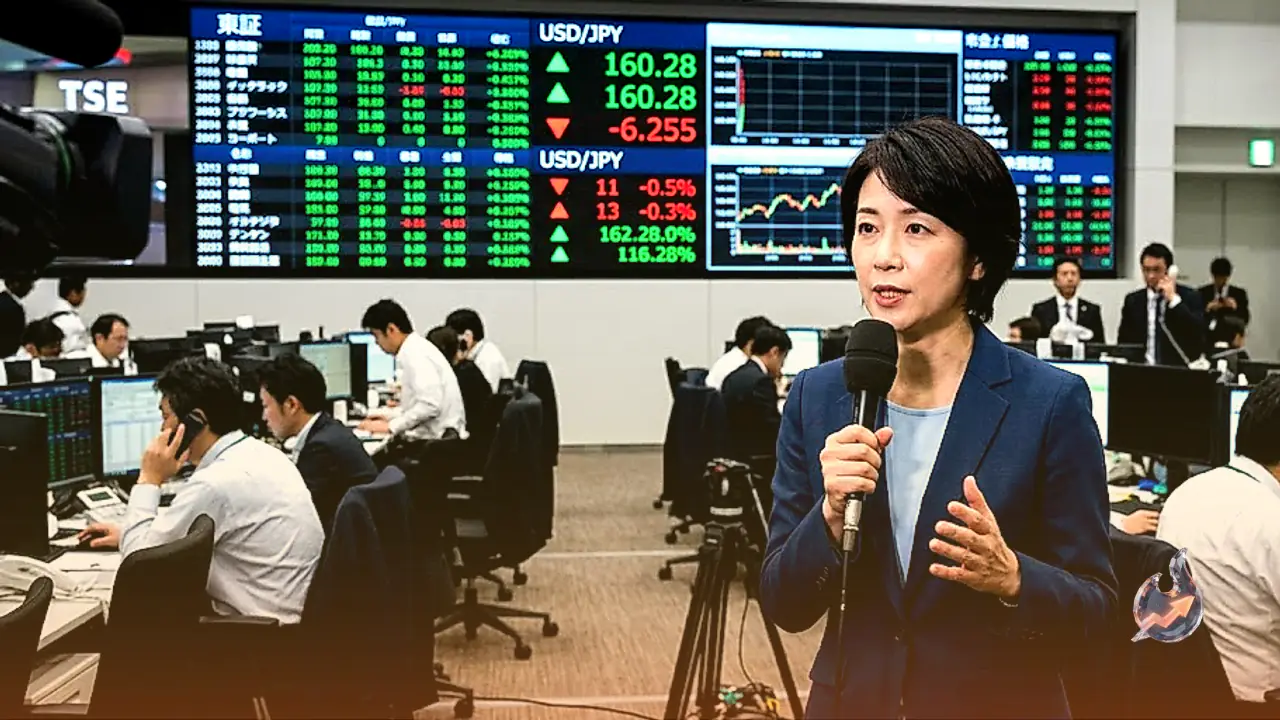



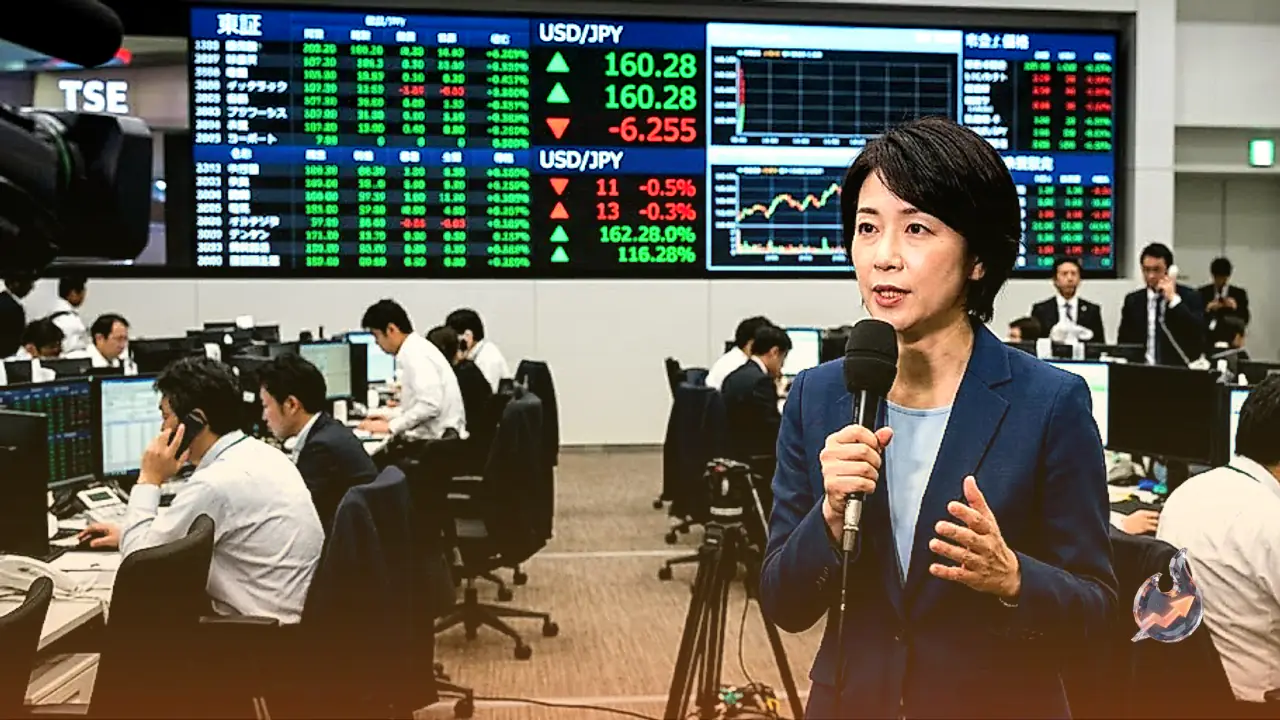



















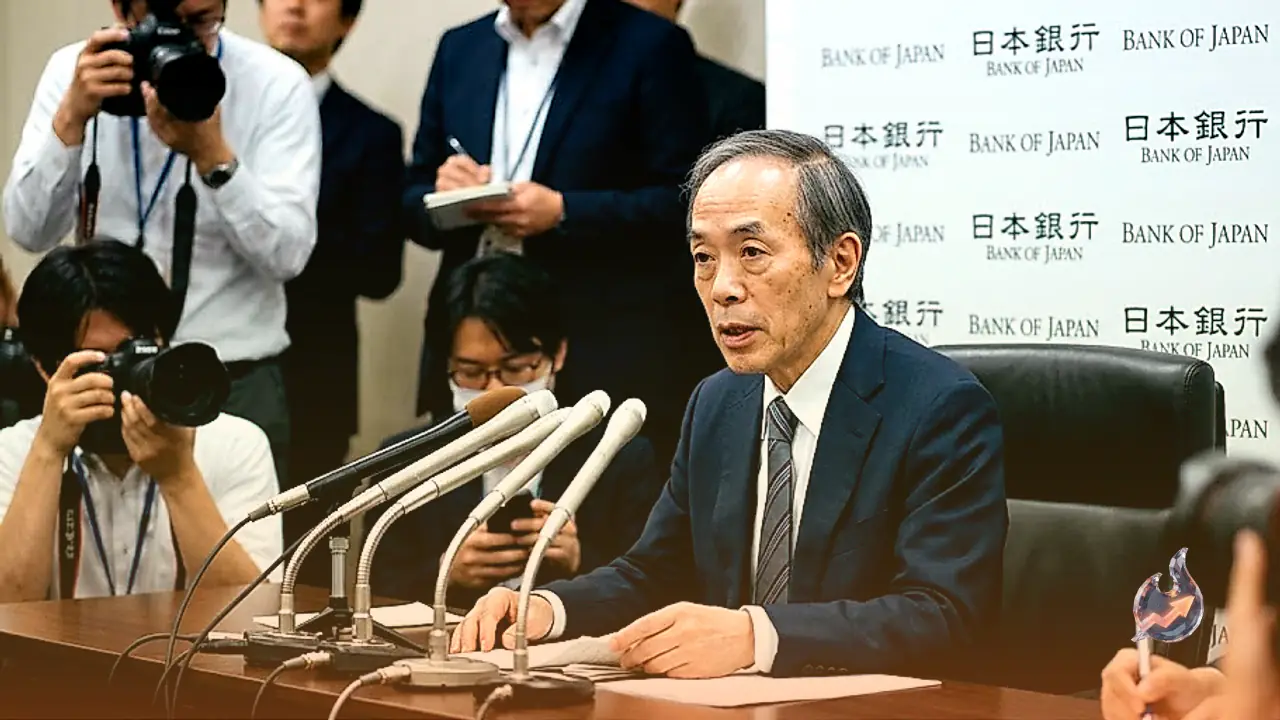

The Bank of Japan is recalibrating its monetary policy parameters amid ongoing shifts in global economic conditions. Governor Kazuo Ueda clarified that financial conditions in Japan remain loose, supporting the case for further interest rate hikes. Financial markets are currently pricing in a high probability of a policy rate increase at the central bank's upcoming September meeting. Ueda noted that the central bank continues to communicate with international peers to maintain price stability through appropriate policy measures in a dynamic international environment.
Governor Kazuo Ueda also held discussions with US official Bessent, though specific details of the meeting were not disclosed. Refraining from commenting on daily market fluctuations, the governor stated that economic data released since the July policy meeting aligns closely with the forecasts outlined in the July quarterly report. Consequently, the Bank of Japan's fundamental monetary framework remains largely unchanged from its July stance.
Bank of Japan Signals Further Policy Tightening
The Bank of Japan plans to evaluate economic scenarios and inflation risks during its upcoming policy board deliberations. Governor Ueda highlighted that geopolitical developments in the Middle East, global oil demand, and foreign exchange (FX) impacts on the domestic economy remain central to policy guidance. The central bank intends to discuss appropriate policy adjustments at its next meeting after examining prevailing financial conditions, inflation trends, and economic activity.
Ueda emphasized that the central bank has already raised its policy rate five times. Given these consecutive adjustments, policymakers must carefully assess the cumulative effect of past rate hikes on the broader economy. Upside inflation risks will also be evaluated during ongoing policy discussions. At the time of reporting, the USD/JPY currency pair was trading 0.02% higher on the day at 160.20.
Evolution of BoJ's Monetary Framework and Yen Dynamics
The Bank of Japan serves as the nation's central monetary authority, responsible for issuing currency and implementing policy to maintain price stability, anchored by a 2% inflation target. In 2013, the bank initiated an ultra-loose monetary policy framework aimed at revitalizing the economy and boosting inflation out of a prolonged low-inflation regime. This strategy relied on Quantitative and Qualitative Easing (QQE), expanding liquidity through asset purchases, including government and corporate debt.
In 2016, the Bank of Japan expanded its stimulus measures by introducing negative policy interest rates and establishing Yield Curve Control (YCC) to target 10-year government bond yields. However, in March 2024, the bank formally pivoted away from this ultra-loose stance by raising interest rates. The prolonged stimulus period led to a substantial depreciation of the Japanese Yen against major peer currencies. This currency weakness intensified through 2022 and 2023 due to widening interest rate differentials as other major central banks aggressively hiked rates to curb high inflation. The trend began to partially reverse in 2024 following the BoJ's policy exit. A weaker currency combined with elevated global energy prices pushed Japanese inflation above the 2% target, reinforced by expectations of rising domestic wages.
Foreign Exchange Movements: Dollar Strengths and Currency Pairs
Beyond Japan, broader foreign exchange markets are experiencing shifts driven by US Dollar strength. The British Pound (GBP/USD) traded on the back foot on Tuesday, falling toward the lower 1.3500s to touch two-week lows. The decline in Sterling coincided with Greenback gains as market participants digested recent US economic releases and persistent geopolitical uncertainty in the US-Iran region.
Simultaneously, EUR/USD extended its intraday correction, dropping below the key 1.1600 support level on Tuesday. The Euro's decline occurred despite weaker US data points, as safe-haven demand and rising Treasury yields lent support to the US Dollar.
Commodities and Energy: Gold Retreats and Diesel Crack Spread Surges
In commodity markets, Gold experienced a sharp downward correction, receding toward the $4,300 per troy ounce mark on Tuesday. The precious metal faced headwinds from the resilient US Dollar and a broad-based rise in US Treasury yields across the curve.
In energy markets, while crude oil benchmarks appeared relatively stable, middle distillates signaled market tightness. The US diesel crack spread, representing the differential between ultra-low sulphur diesel futures and WTI crude oil, surpassed $100 per barrel for the first time, setting an intraday record high above $102.00.
Global Sovereign Debt Sell-off and Market Implications
Global sovereign debt markets opened the month under pressure as bond yields moved higher worldwide. Debt issued by the UK experienced significant selling, with 2-year and 10-year Gilt yields rising by 10 basis points at one point on Tuesday before settling higher by 7 and 8 basis points respectively.