


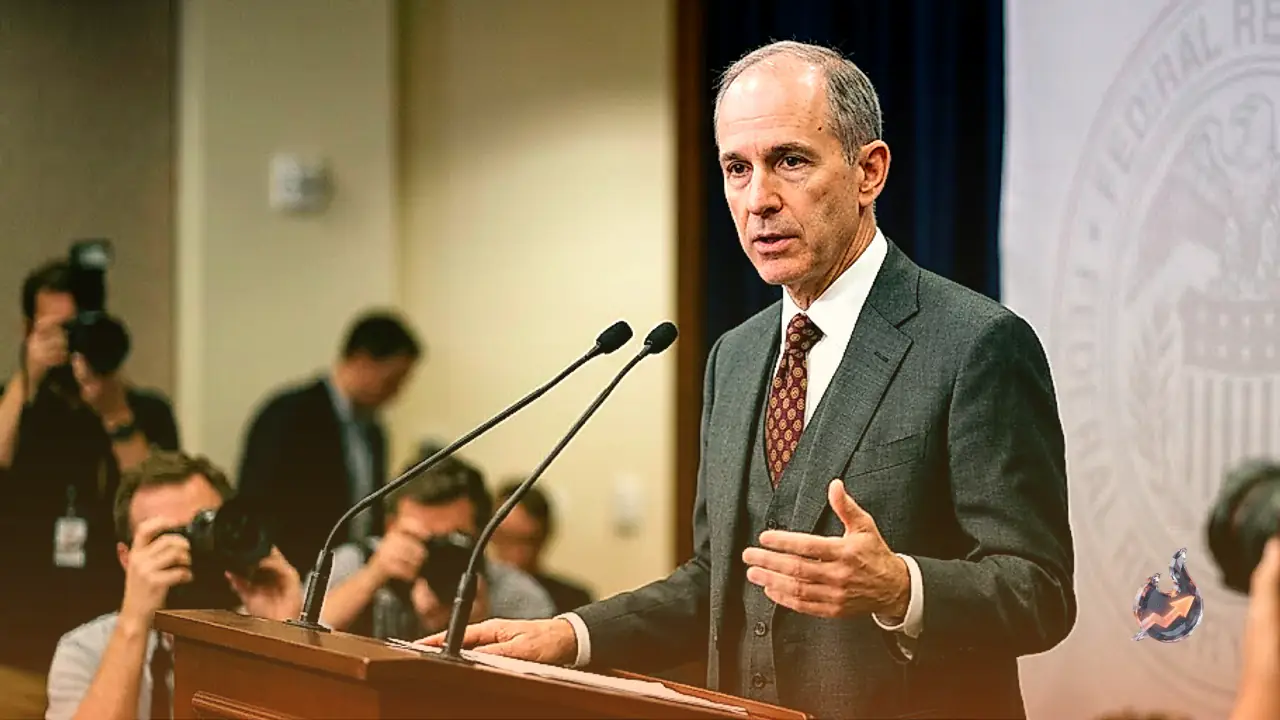



















A critical missing element across both 2026 interest rate adjustments by the Bank of Japan was decisive policy momentum. When the US Federal Reserve lifted its benchmark borrowing cost by 25 basis points on September 16, Japanese policymakers matched that move with an identical quarter-point increase on September 18. Because both institutions adjusted in lockstep, the yield spread between them remained pegged at precisely 2.75 percentage points before and after the announcements. Just as observed following the June adjustment, the Japanese Yen lost ground following the September hike, demonstrating that single, isolated quarter-point shifts do virtually nothing to erode the structural yield advantage favoring the Dollar.
The broader currency trajectory highlights this persistent vulnerability. When the Bank of Japan lifted its policy rate to 1% on June 16, USD/JPY hovered near the 160.00 handle. By late July, market pressure pushed the exchange rate toward 164.00, compelling Japan's Ministry of Finance to deploy sovereign currency reserves to buy Yen on July 30, with US monetary authorities joining the intervention the following day. Despite establishing Japan's highest domestic borrowing costs in 31 years, the domestic currency plunged to its weakest reading in roughly four decades barely five weeks later.
The September Division and Carry Trade Realities
On September 18, Japanese central bankers advanced the benchmark rate further to 1.25% through a 7-2 majority vote, with board members Asada and Sato formally dissenting in favor of holding policy steady. Spot foreign exchange rates stood near 157.00 on the decision day before marching upward to 159.00 within seven days. Market participants recognized that the split decision failed to deliver any firm commitment toward an accelerated tightening trajectory.
The fundamental valuation of the Yen against the Greenback remains anchored to the cash deposit yield differential. The Federal Reserve's target corridor currently peaks at 4.00%, maintaining a 2.75 percentage point premium above Tokyo's 1.25% benchmark. Consequently, the currency carry trade, borrowing inexpensive Yen to purchase higher-yielding Dollar-denominated instruments, continues to generate returns largely identical to those seen prior to either rate hike. Should the Bank of Japan maintain a conservative rhythm of one quarter-point increase every three months, eliminating that 2.75 percentage point spread would require nearly three years, assuming the Federal Reserve enacts zero additional rate increases over that span.
Meeting Cadence and Tokyo Inflation Pressures
The Japanese monetary authority convenes eight times per calendar year. Shifting from a quarterly quarterly cadence to implementing increases at consecutive policy gatherings would introduce roughly a full percentage point of tightening over a twelve-month horizon, a magnitude substantial enough to alter the Yen's foreign exchange trajectory.
Consumer price figures out of Tokyo reinforce the fundamental case for greater urgency. The capital city's core Consumer Price Index, which excludes volatile fresh food costs, climbed 2.7% year-over-year in September. This accelerated past August's 1.8% expansion and surpassed consensus projections of 2.4%. Crucially, this represented the first instance of core inflation exceeding the official 2% target in nine months, occurring even as government subsidies on regular gasoline expanded. Furthermore, the core-core measure that removes both food and energy components, viewed by central bank leadership as the most reliable indicator of underlying price pressure, advanced 3%, marking its highest reading in 13 months.
Governor Ueda's Inflation Warning and Three Core Risks
Governor Ueda reiterated that keeping underlying price growth anchored near 2% has become the central focus of monetary policy, highlighting three prominent channels that could drive prices higher: military conflict involving Iran, accelerating industrial demand tied to artificial intelligence applications, and persistent Yen depreciation. A depressed domestic currency automatically inflates the cost of essential imported commodities, led by crude oil, thereby positioning currency weakness as an explicit justification for policy tightening. However, formally citing this risk has not produced a stronger Yen compared to its level on the day of the September rate hike.
Institutional deliberations suggest upcoming official assessments may determine that underlying price growth, stripped of temporary fluctuations, has effectively reached the 2% threshold. While the July projection estimated that milestone would arrive between October 2026 and March 2028, the bank may now formally validate the target in the opening month of that 18-month projection window.
October Meeting Expectations and Technical Landscape
Internal sentiment indicates that numerous board members prefer holding rates steady during the October meeting. Derivatives markets assign a 26% probability to an October tightening move, while pricing in most of a quarter-point hike by December and projecting benchmark rates near 2.02% by September 2027.
This expected trajectory softened slightly from pricing recorded on September 29, despite public remarks from Governor Ueda, Deputy Governor Uchida, and three central bank officials emphasizing building inflationary momentum. Once underlying price gains stabilize at 2%, the institutional mandate pivots toward preventing an inflation overshoot, establishing the analytical rationale for accelerating rate hikes. Tying the 2% target directly to a faster schedule would bring potential increases into play for January and March, significantly lifting projected yields on Yen deposits over the coming year.
Across the Pacific, the Federal Reserve established its current 3.75%-4.00% target range on September 16 and convenes next on October 27-28. Following a modest 29,000 increase in US nonfarm payrolls for September, the CME FedWatch gauge calculated the odds of an October Federal Reserve increase at roughly 20%. While futures markets price slightly higher odds for an October move from Tokyo than Washington, internal policymakers view an October shift as a formidable hurdle.
From a chart perspective, USD/JPY tumbled from slightly above 160.00 in early September to just under 153.00 within a week before retracing roughly 70% of that selloff. The daily Stochastic Relative Strength Index (Stoch RSI) spent early October above 80 and began rolling over, indicating that upward momentum had stalled prior to Governor Ueda's address. The currency pair has not established a higher high since July.
For two consecutive weeks, spot exchange rates have fluctuated between 156.50 and 159.00, sitting directly above the 50-day and 200-day exponential moving averages (EMAs) that converge near 158.00. Current market pricing shows USD/JPY trading at 158.10, advancing 0.24% from the prior 157.73 close. Live indicators reflect a 14-day RSI of 55, a bullish MACD histogram at 0.27 (MACD 0.08 versus signal -0.19), and a golden cross with the 50-day EMA at 157.99 exceeding the 200-day EMA at 157.74. A daily settlement below 157.00 would breach both moving averages and the consolidation floor. If official communication confirms 2% underlying inflation alongside an accelerated cadence, December shifts toward a full hike expectation, potentially driving spot prices toward 155.00 and the September low near 153.00. Conversely, an unchanged path or renewed board dissents risks pushing the pair back toward 159.00 and 160.00, while a Fed hike on October 28 would widen the rate gap beforehand.