























The British Pound maintained positive momentum against the US Dollar during Thursday's early European trading, hovering near the 1.3490 mark. The currency pair continues to preserve a constructive technical foundation above its 100-day Simple Moving Average, supported by an upbeat Relative Strength Index. On the charts, immediate resistance is positioned at 1.3505, while 1.3390 serves as the primary floor of support. Global currency market participants are directing their full attention toward two dominant macro catalysts: the upcoming policy determination from the United Kingdom's central bank and the shifting political landscape across the Atlantic.
Democratic Sweep in US Midterms Weighs on Greenback
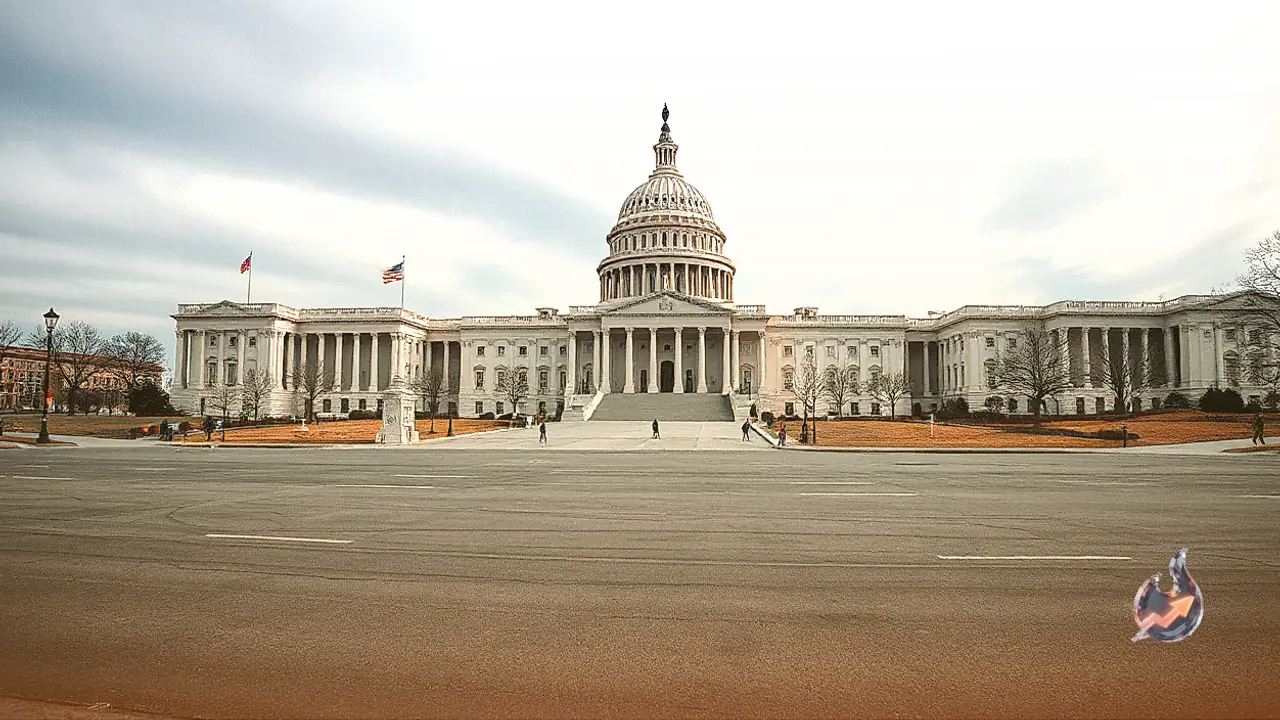
A dramatic transformation in the United States legislative branch has sent ripples across global foreign exchange desks. The Democratic Party secured majorities in both the Senate and the House of Representatives, wresting complete legislative control away from Republicans. This outcome delivered notable triumphs across several Republican strongholds for the first time in decades, reflecting a sharp electoral rebuke delivered by tens of millions of voters to President Donald Trump. The sudden shift in Capitol Hill's balance of power injects substantial uncertainty regarding future budgetary measures and tax policy. This broad political setback has weakened the US Dollar across key trading pairs, providing room for the British Pound and other major units to push higher.
Bank of England Rate Decision Takes Center Stage
Focus in London is squarely on the Bank of England as it prepares to release its latest monetary policy decision. Consensus forecasts from economists surveyed by Reuters indicate that the central bank is poised to lift the Bank Rate from 3.75% to 4% at its November gathering. If enacted, this policy adjustment would represent the first interest rate increase in the United Kingdom since August 2023. The central bank governs its benchmark adjustments based on the pursuit of price stability, defined as maintaining an inflation rate around the 2% mark. When price growth accelerates excessively, policy officials lean on higher interest rates to cool the economy, making borrowing more expensive for households and enterprises. In currency terms, elevated interest rates typically bolster the Pound Sterling because they make the UK financial system more appealing to international investors seeking higher returns on capital. Conversely, when price pressures subside too sharply, indicating softening economic momentum, policymakers look toward lowering rates to make credit more accessible and spur growth.
Daily Chart Analysis and Pivotal Technical Levels
The daily technical configuration for GBP/USD reflects an active bullish bias, with spot prices holding comfortably above the 100-day Simple Moving Average as well as the 20-day Bollinger middle band. Spot activity is currently challenging the upper boundary of its recent trading corridor, where the upper Bollinger band presents immediate resistance against further gains. The 14-period Relative Strength Index stands at approximately 66, confirming strong upside momentum while signaling that the pair is gradually approaching overbought territory.
Looking at the upside path, initial technical resistance emerges at the upper Bollinger band around 1.3505. A decisive daily settlement above this barrier would pave the way toward the July 15 peak of 1.3558, with the August 25 high of 1.3655 standing as the subsequent objective. On the downside, the primary support level rests at the 100-day Simple Moving Average at 1.3390, followed closely by the Bollinger middle band near 1.3345. A clear decline beneath these thresholds would undermine the prevailing constructive framework and bring the lower Bollinger band limit near 1.3185 into direct view.
Sterling's Role in Global Trade and Key Economic Drivers
Traced back to 886 AD, the Pound Sterling is the world's oldest surviving currency and functions as the official tender of the United Kingdom. Based on 2022 figures, it stands as the fourth most actively traded unit in the foreign exchange marketplace, capturing 12% of overall turnover with an average daily trading volume of $630 billion. Among its most prominent market pairings, GBP/USD, widely recognized in financial circles as 'Cable', makes up 11% of global currency activity. GBP/JPY, referred to by traders as the 'Dragon', constitutes 3%, while EUR/GBP accounts for 2%. The issuance of the currency is managed entirely by the Bank of England.
Macroeconomic indicators play an instrumental role in shaping the valuation of the British Pound. Key metrics such as Gross Domestic Product (GDP), Manufacturing and Services Purchasing Managers' Indexes, and nationwide employment figures heavily sway market sentiment. An expanding, resilient domestic economy tends to elevate Sterling, as it draws foreign capital while providing room for monetary authorities to maintain or raise rates. Conversely, deteriorating data points generally trigger capital flight and depress the currency. Additionally, the Trade Balance serves as a vital barometer by tracking the difference between export revenues and import expenditures over a given timeframe. High international demand for domestic goods generates net currency inflows, strengthening the currency through genuine commercial demand.
Market Reaction Across Currencies, Gold, and Digital Assets
The decline in the US Dollar, compounded by expectations of diplomatic progress with Iran, has sparked broad adjustments across global asset classes. The Australian Dollar consolidated above 0.7000 during Thursday's Asian trading hours, defending its rebound from a nearly three-week low. However, upside follow-through remained guarded as currency traders turned cautious ahead of the upcoming United States Non-Farm Payrolls release scheduled for Friday.
The US Dollar also traded with an offer tone against the Japanese Yen for a second consecutive session. The Yen drew backing from hawkish Bank of Japan minutes, which revealed that officials agreed to proceed with policy rate increases, alongside lingering concerns over currency intervention. Meanwhile, gold prices softened modestly after tapping a two-week peak during Asian dealings, but retained positive momentum around $4,130. The yellow metal capitalized on the greenback's descent to its lowest level since late September, consolidating a sharp jump of more than 3.5% logged during the previous session, which marked its biggest single-day advance since mid-August. In the cryptocurrency sector, altcoins recorded noticeable relief, with Ripple (XRP) clearing the upper trendline of a downward channel pattern to trade above $1.30, while Stellar (XLM) sustained above $0.168 and approached resistance near $0.173.