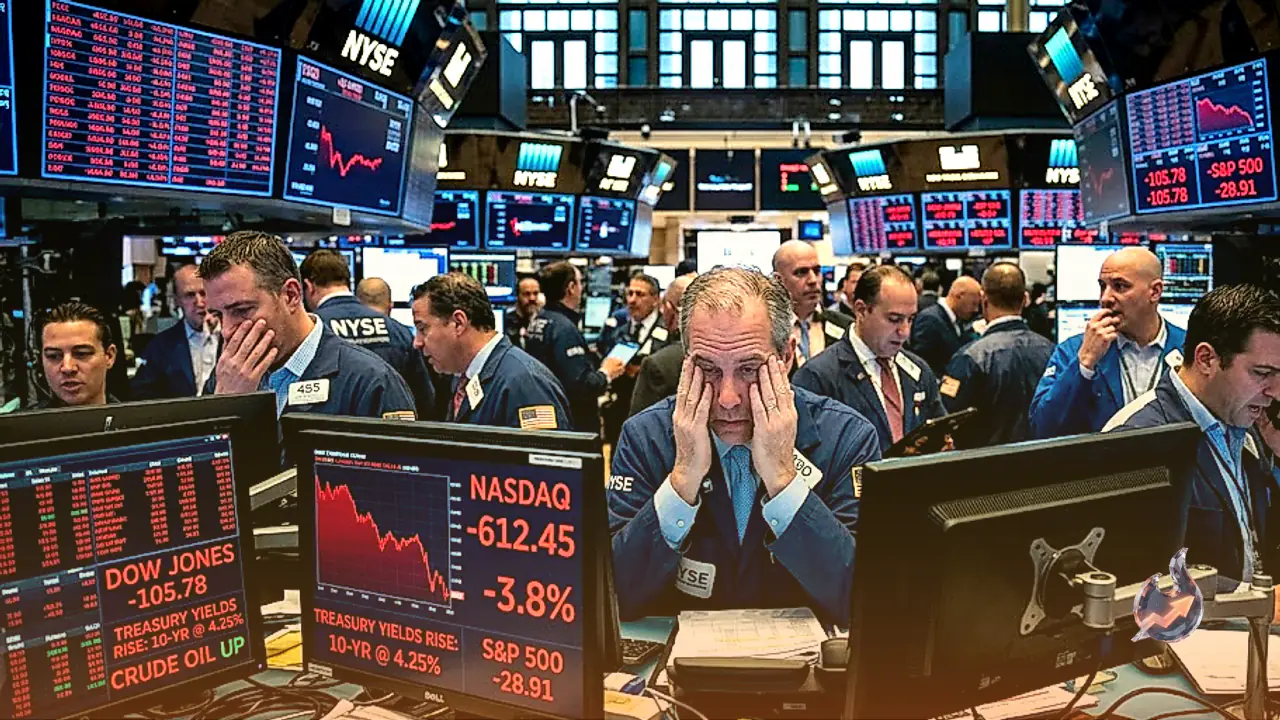
























The British Pound, widely known in currency markets as 'Cable', is currently struggling to sustain momentum just below the 1.3400 handle. Although it has recorded a modest gain of a quarter percent, the currency remains capped by the 200-day EMA, which has acted as a firm ceiling throughout the week. As of July 8, 2026, the GBP/USD pair is trading at 1.34, up from the previous close of 1.33, marking a 0.33 percent increase.
Energy shocks and Bank of England expectations
The bid currently supporting the Pound is not derived from domestic strength, but from external geopolitical shocks. Fresh US strikes on Iran have caused Crude Oil prices to surge by more than 6 percent. This sharp escalation has dragged Bank of England (BoE) tightening expectations upward alongside it. Markets now fully price in a 25-basis-point interest rate hike by the end of the year, a significant jump from the roughly three-quarters probability seen before President Trump declared the Versailles ceasefire over. The June decision to hold rates at 3.75 percent already featured two dissenters favoring a 4.00 percent rate, suggesting that if energy shocks persist, the hawkish bloc within the BoE will likely gain the upper hand.
The real economy trap
The same energy price shock that provides a bid to the currency is simultaneously cutting through the real economy, creating a persistent trap. Services inflation remains at 3.7 percent, a level the BoE cannot ignore, while the services Purchasing Managers Index (PMI) has dipped below the 50 mark. Simultaneously, payroll counts are shrinking and wage growth is cooling toward 3.4 percent. Hiking interest rates into a contracting services sector is rarely a formula for long-term currency strength, yet Sterling traders are currently pricing in both aspects of this contradictory scenario.
Federal Reserve policy stance
Wednesday's release of the Federal Open Market Committee (FOMC) minutes had a negligible impact on the pair, essentially resulting in a non-event. The account revealed a committee split almost evenly regarding the trajectory of the funds rate. The June dot grid showed nine members favoring further hikes, eight favoring a hold, and one supporting a cut. With the new Chair continuing to strip forward guidance from official communications, the Dollar remains well-bid, providing a firm ceiling for the Pound during every major inflation print.
Technical levels and outlook
The pair has spent the week grinding within a fifty-pip pocket beneath the moving average, and such stubborn compression often resolves violently rather than politely. The calendar between now and July 14 lacks the necessary horsepower to force a definitive breakout, leaving Strait of Hormuz headlines and the broader sentiment toward the Dollar as the primary wildcards. Resistance is firmly established at the 200-day EMA just below 1.3400, with further hurdles at 1.3450 and 1.3500. Conversely, the 50-day EMA within the 1.3350-1.3400 pocket supports intraday dips, ahead of 1.3300 and the June base at 1.3150. A daily close above 1.3400 is required for a bullish shift; until then, rallies are likely to be faded.
Understanding Pound Sterling
Dating back to 886 AD, the Pound Sterling is the world's oldest currency and the official tender of the United Kingdom. It stands as the fourth most-traded unit in the foreign exchange (FX) market, accounting for 12 percent of all transactions with an average daily turnover of $630 billion as of 2022. The most influential factor for the currency is the monetary policy of the Bank of England, which balances price stability at a 2 percent inflation target with interest rate adjustments. Strong economic indicators like GDP, manufacturing PMIs, and positive trade balances typically favor the Pound, while weak data tends to weigh it down.