
























Hungary's central bank, officially known as the Magyar Nemzeti Bank (MNB), has executed a 25 basis point reduction in its benchmark interest rate, lowering the country's base rate to 5.50%. This monetary policy action was implemented in exact accordance with unanimous market expectations across financial institutions and economic analysts. Prior to yesterday's official announcement, monetary policy makers had signaled during the summer months that there remained prospective room for further monetary easing before the overall rate-cutting cycle would be thoroughly re-evaluated using the upcoming September Inflation Report. However, yesterday's policy announcement introduced a subtle yet meaningful twist to this expected trajectory.
Central Bank Guidance and Monetary Policy Outlook
In its official policy communication, the central bank explicitly avoided pre-committing to any further monetary easing. Policy makers reiterated that decisions regarding the future path of Hungarian interest rates will be made strictly in September, guided by updated macroeconomic projections and economic forecasts contained in the upcoming inflation report. This refusal to guarantee ongoing interest rate cuts underscores a cautious, data-dependent approach by monetary authorities seeking to prevent inflationary pressures from re-emerging.
Reinforcing this cautious posture, MNB Governor Mihály Varga emphasized that the central bank will closely monitor prospective interest rate hikes and policy moves by major central banks globally. Governor Varga's remarks suggest that the broader international financial environment will serve as a definitive external limit on the potential scope of future Hungarian interest rate reductions. Foreign exchange analysts at Commerzbank, including Tatha Ghose, noted that the central bank's communication strategy successfully avoided locking the institution into a predetermined easing path, thereby offering a stable and predictable framework for market participants.
Foreign Exchange Market Reaction and Currency Dynamics
The foreign exchange market responded positively to the central bank's updated policy guidance. The Hungarian forint experienced a supportive boost in trading, although its rally relative to regional peer currencies such as the Polish zloty remained modest. Analyzing the overall market impact, Tatha Ghose concluded that the central bank's cautious messaging and policy guidance proved to be modestly supportive for the forint, reassuring currency traders that monetary authorities are prioritizing fundamental economic stability over aggressive rate cuts.
Broad foreign exchange markets also reflected cautious trading behavior across major currency pairs. The British pound (GBP/USD) traded with a mild negative bias below the 1.3650 handle during Wednesday's European trading session. This downward movement eroded a portion of the strong gains recorded during the previous trading day. Nevertheless, the currency pair remained within striking distance of its six-month high established last Friday, as currency traders adopted a watchful stance ahead of upcoming macroeconomic data releases from the United States.
Euro Performance and US Dollar Recovery Factors
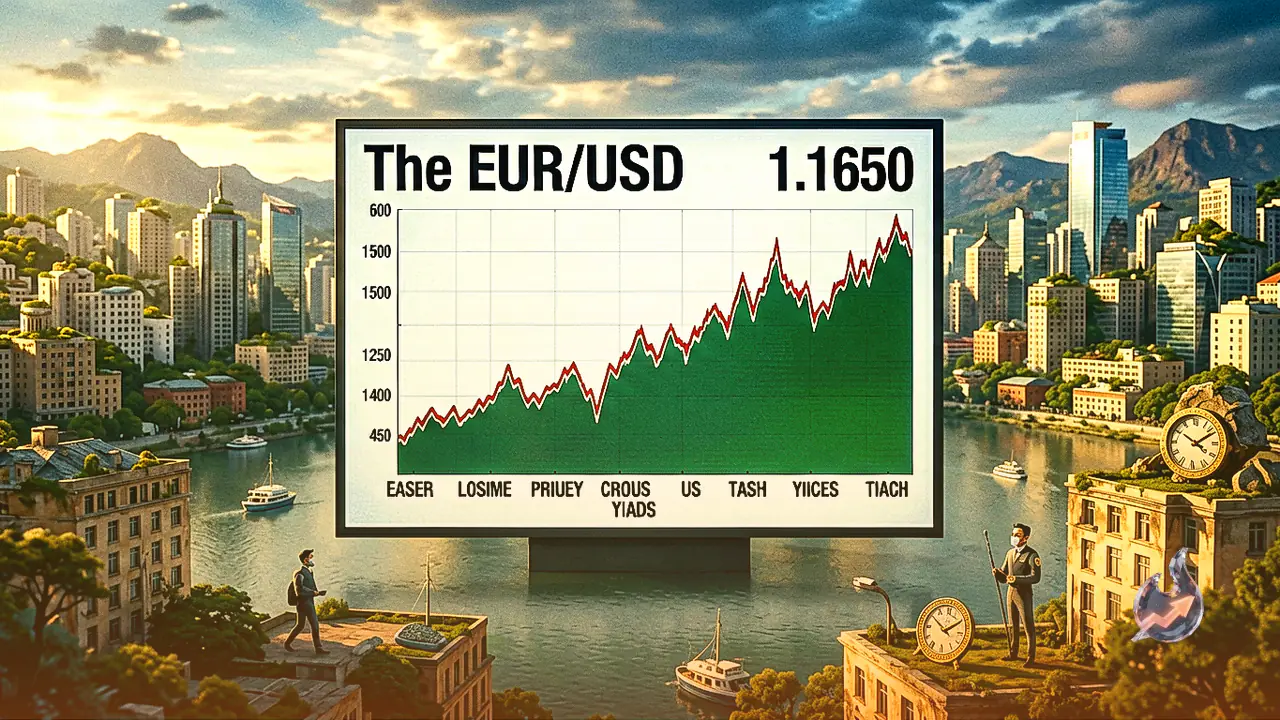
Similarly, the euro (EUR/USD) held lower ground toward the 1.1650 handle during the European trading session on Wednesday. The US Dollar mounted a modest recovery across global financial markets, propelled by profit-taking activities among market participants alongside persistent geopolitical uncertainty in the Middle East. Currency traders avoided making heavy directional commitments, preferring to wait for fresh economic catalysts before initiating new major trading positions.
Market participants are focusing their attention on key upcoming data releases, most notably the US Personal Consumption Expenditures (PCE) Price Index, which represents the Federal Reserve's primary measure for assessing consumer inflation. Additionally, investors are tracking another scheduled revision of second-quarter US Gross Domestic Product (GDP) growth figures. These upcoming economic figures are expected to provide significant direction to global currency trading desks and dictate short-term dollar trends.
Precious Metals Trends and Federal Reserve Rate Path
In commodity markets, gold prices maintained modest losses below $4,650 per ounce heading into Wednesday's European trading session. Despite the slight downward pressure, bullion lacked strong bearish conviction and remained contained within the broader price range established during the previous trading day. The minor rebound in the US Dollar exerted pressure on precious metal valuations as traders repositioned portfolios ahead of the US PCE inflation report.
Investor sentiment across precious metals is also heavily influenced by anticipation surrounding the annual Jackson Hole Symposium. Market participants are eagerly awaiting scheduled remarks from Federal Reserve Chair Kevin Warsh on Friday. Chair Warsh's upcoming address is expected to offer crucial insights and potential cues regarding the future trajectory of US interest rates and broader monetary policy direction.
Cryptocurrency Market Pullback and Meme Coin Dynamics
Digital asset markets witnessed a notable shift in momentum as popular meme cryptocurrencies began losing their bullish traction following double-digit gains achieved during the previous week. Tokens including Dogecoin (DOGE), Shiba Inu (SHIB), and Pepe (PEPE) faced downward price pressure, primarily driven by profit-taking activities among short-term traders looking to secure recent capital gains.
Market observations indicate that both DOGE and PEPE remain vulnerable to further downside correction as profit-booking continues across crypto exchanges. Conversely, SHIB managed to maintain its position near key technical support levels amidst the broader market consolidation. The pullback across meme coins reflects a broader market re-evaluation as crypto investors digest macroeconomic policy signals and shift toward risk-averse positioning across alternative asset classes.