























Bank Indonesia has opted to keep its benchmark policy interest rate unchanged at 5.75%, anchored by robust domestic economic activity and relative currency stability. Acting Governor Destry signaled a neutral stance while acknowledging lingering external vulnerabilities. The decision reflects confidence in second-quarter GDP figures and the resilience of the Indonesian Rupiah (IDR) amidst complex global market conditions.
External Vulnerabilities vs Domestic Catalysts
DBS Group Research economist Radhika Rao highlighted that macroeconomic risks for Indonesia remain largely tied to global factors. The country's currency and sovereign bond markets remain vulnerable to fluctuations in developed market bond yields, volatile energy prices, and elevated crack spreads driven by geopolitical developments. On the domestic front, outlooks have turned increasingly constructive as policymakers reinforce growth-oriented objectives for 2027 alongside ongoing fiscal discipline.
Refinements in Financial Market Operations
Bank Indonesia has refined several policy instruments introduced earlier. The hedging discount mechanism, previously restricted to portfolio investors, now extends to foreign direct investment (FDI) and offshore bank borrowings by domestic financial institutions. Additionally, a flexible rollover facility has been implemented to allow swap extensions aligned with the residual maturity of underlying assets, subject to specific regulatory conditions. Financial analysts anticipate rate stability through September, with the option of a single precautionary rate hike in 4Q26 should market conditions worsen.
Currency Fluctuations and Gold Correction
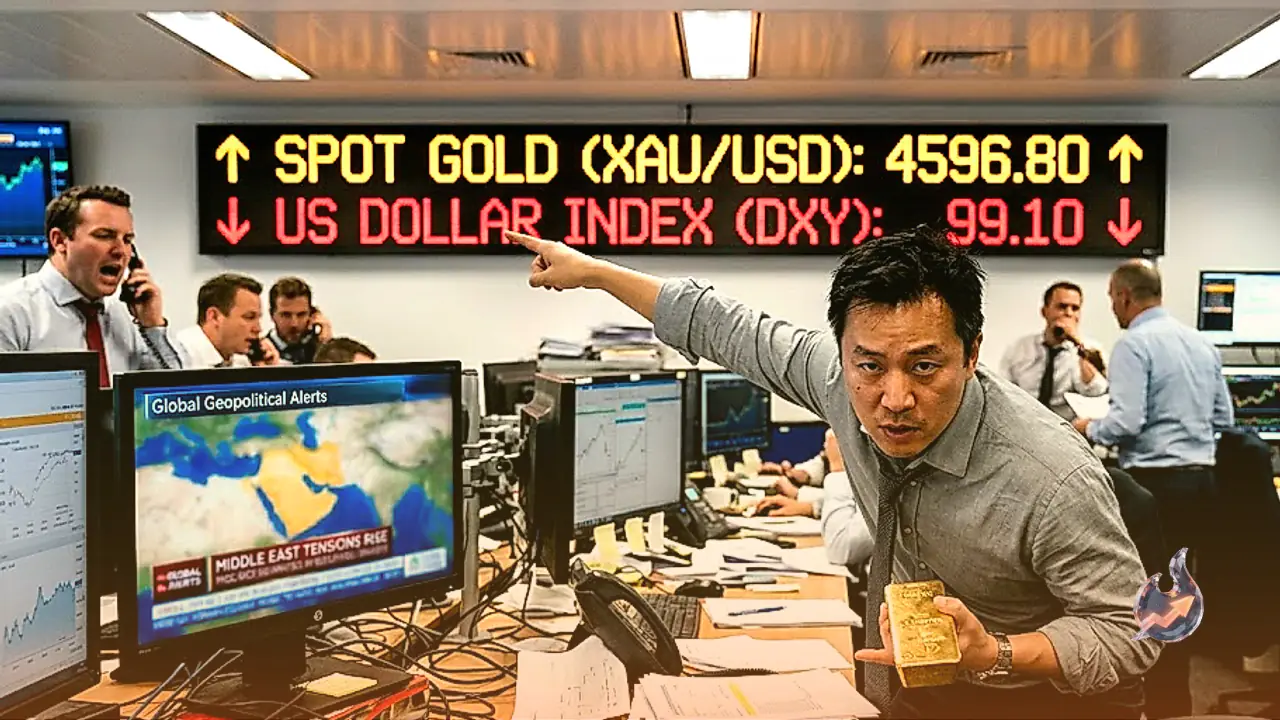
Across international financial markets, the US Dollar staged a partial recovery following recent pullbacks, pressuring major currency pairs. The GBP/USD pair retraced toward the 1.3630 mark after giving up earlier gains. Similarly, EUR/USD slid to trade near 1.1670, pulling back from sessions highs above 1.1700. Bullion markets also felt the strain of rising US Treasury yields and dollar strength, pushing spot gold below the key $4,500 per troy ounce threshold on Thursday.
Digital Assets Rally and US Treasury Intervention
In contrast to traditional commodities, cryptocurrency markets posted renewed gains. Bitcoin (BTC) surged past the $70,000 mark, while Ethereum (ETH) maintained solid footing above $2,200, and Ripple (XRP) recovered past $1.15. Concurrently, US government bond markets stabilized, with the 10-year Treasury yield edging up to 4.672%. To mitigate yield volatility, the US Treasury unexpectedly expanded its liquidity support buyback operations on Wednesday at 12:32 GMT. Maximum buyback capacity for 10-to-20-year and 20-to-30-year maturity sectors was doubled from $2 billion to at least $4 billion per session, effective September 9 through November 4.