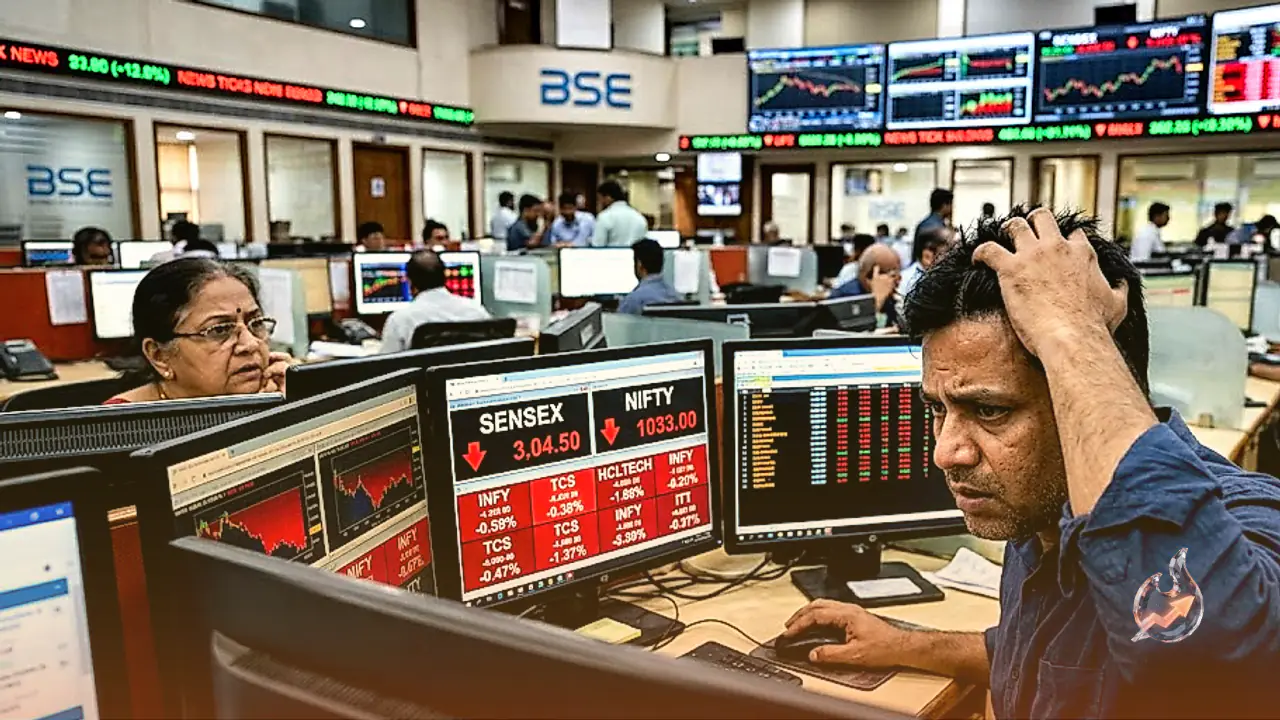

























The Indian equity markets are bracing for a highly cautious trading session on Thursday, July 23, as a confluence of domestic and international headwinds continues to weigh heavily on investor sentiment. Following three consecutive days of relentless selling pressure, market participants are finding themselves navigating a complex landscape characterized by an amalgamation of macroeconomic uncertainties and geopolitical instability. The overarching mood on Dalal Street has shifted from optimism to guarded defensive positioning, as market bulls struggle to find any significant positive triggers to arrest the ongoing slide. The combination of surging global energy costs, specifically the sharp spike in international crude oil prices, alongside an unabated exodus of foreign capital and escalating conflict in West Asia, has created a perfect storm for the domestic bourses. As the first-quarter earnings season for the financial year 2026-27 (Q1 FY27) starts to gather momentum, the broader market narrative is expected to be dictated by stock-specific volatility, while the benchmark indices themselves are projected to remain largely confined within a narrow, range-bound trajectory amid a lack of supportive global cues.
Wednesday's Market Carnage: Key Indices Breach Psychological Marks
The domestic market ended Wednesday's trading session on an explicitly weak note, decisively extending its losing streak for the third consecutive day. A massive wave of selling in heavyweight, large-cap stocks systematically dismantled the indices, exacerbated by a visibly weakening Indian rupee that continues to put pressure on overall market sentiment. At the sounding of the closing bell, the BSE Sensex had tumbled by a staggering 715.06 points. This steep decline of 0.92% dragged the 30-share index down to settle at 76,755.05. The situation was equally grim on the National Stock Exchange, where the broader NSE Nifty 50 index shed 191.45 points, or 0.79%, to close at 23,996.25. By slipping below the crucial psychological barrier of the 24,000 mark, the Nifty 50 has signaled a potential shift in the medium-term market structure. The inability of the index to sustain levels above this historical milestone has triggered further anxiety among retail and institutional investors alike, who are now recalibrating their risk exposure.
The Triple Threat: Crude Oil, Geopolitics, and Foreign Capital Outflows
A major catalyst for the current market anxiety is the concerning trajectory of global energy markets. Brent crude prices have surged significantly, nearing a five-week high of approximately USD 95 per barrel. For a heavily oil-dependent economy like India, a sharp uptick in crude oil directly translates to widening current account deficits and imported inflation, naturally spooking equity investors. Compounding this economic headache are the ongoing, unpredictable geopolitical tensions in West Asia, which continue to add a substantial risk premium to global assets. Furthermore, the persistent selling by Foreign Institutional Investors (FIIs) has severely drained liquidity from the Indian markets. This relentless outflow of foreign capital acts as a heavy anchor, preventing any meaningful recovery rallies and forcing domestic institutions to absorb immense selling pressure on a daily basis.
The Currency Conundrum: Weakening Rupee Adds to the Woe
Beyond the immediate threat of surging oil prices, the persistent weakness of the Indian rupee against the US dollar has emerged as another massive headwind for Dalal Street. The local currency's depreciation directly inflates the cost of imported raw materials, which subsequently squeezes the profit margins of domestic manufacturing companies. This currency devaluation acts as a double-edged sword, because while it theoretically benefits export-oriented sectors like IT and pharma, the broader market sentiment is severely dampened due to the looming threat of imported inflation. Furthermore, a consistently weakening rupee acts as a significant deterrent for Foreign Institutional Investors. When the rupee loses value, the dollar-adjusted returns for foreign funds shrink, prompting them to accelerate their selling spree. This vicious cycle of foreign selling leading to a weaker rupee, which in turn causes more foreign selling, is a critical dynamic that traders are watching with bated breath. Until the Reserve Bank of India steps in with meaningful interventions or global macroeconomic conditions stabilize, the currency market's volatility will continue to cast a long, dark shadow over Indian equities.
Technical Breakdown: Nifty 50 Exhibits Distinct Bearish Signals
Delving into the technical configuration of the primary benchmark, the NSE Nifty 50 has exhibited clear signs of structural weakness after enduring three successive sessions of downward momentum. Financial analysts at Bajaj Broking Research have highlighted that the benchmark index formed a rather significant bearish candlestick pattern during the latest session. This specific charting formation, characterized by a lower high and a lower low, is widely interpreted by market technicians as a strong indicator that the ongoing corrective phase still possesses considerable momentum. Furthermore, the index has visibly slipped below its rising trendline that had previously connected several major recent lows, telegraphing a tangible deterioration in the short-term trend. The overarching index is now widely expected to extend its consolidation phase within the defined boundaries of 23,800 to 24,350. Financial experts emphasize that only a decisive breakout above or a breakdown below this specific range will accurately signal the next directional trend for the broader market.
Crucial Support and Resistance Levels for the Nifty
Looking closely at the immediate price action, short-term support for the Nifty is currently placed at the 23,800 level. This particular zone is mathematically significant as it represents the exact confluence of the almost identical low registered over the last five weeks, paired seamlessly with the 50-day Exponential Moving Average (EMA). Bajaj Broking Research further stated that a decisive, high-volume break below Wednesday's intraday low of 23,961 could rapidly drag the Nifty down towards this vital support fortress of 23,800. Conversely, if the bulls attempt to stage a recovery, the 24,200 mark is fully expected to act as an immediate, heavy resistance zone. Technical analysts argue that only a sustained, confident move above this 24,200 ceiling could reliably signal a genuine pause in the currently ongoing corrective phase, offering a temporary sigh of relief for beleaguered market participants.
Bank Nifty Under Intense Selling Pressure
The financial sector has not been spared from the broader market bloodbath, with the Bank Nifty index remaining firmly under intense selling pressure throughout Wednesday's session, extending its own painful decline for the third straight trading day. According to detailed technical observations by Bajaj Broking Research, the banking-focused index formed a sizeable bearish candle, once again marked by a lower high and a lower low sequence. This specific price action strongly indicates continued, aggressive profit booking by large institutions after the index completely failed to sustain its position near the upper end of its established six-week consolidation range. The Bank Nifty has spent the past month and a half consolidating erratically between the broader boundaries of 56,500 and 58,700. As it now rapidly approaches the lower end of this historical range, traders are bracing for heightened volatility. A decisive breakout or breakdown from these levels is universally expected to determine the banking sector's next major directional move.
Mapping the Road Ahead for the Banking Sector
For the Bank Nifty, the absolute key support metric is solidly placed at the 56,500 level. This specific price point carries immense technical weight, serving simultaneously as the critical 20-week Exponential Moving Average (EMA) and the absolute lower band of the aforementioned six-week consolidation range. Should the market witness a decisive breakdown below this 56,500 floor, technical models suggest it will forcefully open the downside floodgates toward the 55,500 levels in the immediately forthcoming trading sessions. On the higher side of the technical spectrum, key resistance is rigidly placed at the 58,700 level. Market experts at Bajaj Broking Research firmly believe that only a highly convincing, volume-backed breakout above this 58,700 ceiling could fundamentally trigger the next leg of a bullish rally, potentially propelling the banking index toward 59,300 and eventually the psychologically massive 60,000 levels in the coming weeks.
Expert Insights: Focusing on Earnings and Global Macro Data
Looking beyond the charts, fundamental market experts believe domestic equities are likely to remain firmly range-bound with a distinctly cautious undertone. Siddhartha Khemka, the Head of Research for Wealth Management at Motilal Oswal Financial Services Ltd, articulated this sentiment clearly. He pointed out that Indian equities are fully expected to trade sideways with a marginal negative bias in the immediate near term. He specifically cited the continued geopolitical tensions in West Asia, Brent crude prices rising dangerously close to their five-week high of around USD 95 per barrel, and the relentless, continued selling by Foreign Institutional Investors as the primary culprits stifling market growth. Khemka strongly advised that stock-specific action is highly likely to dominate Dalal Street as the Q1 FY27 corporate earnings season progresses and individual company results are factored into valuations. Concurrently, while dealing with domestic earnings, institutional investors will closely monitor massive global macroeconomic developments, placing particular emphasis on the European Central Bank's (ECB) upcoming interest rate decision and the highly anticipated US jobless claims data, both of which are expected to heavily influence global liquidity flows and overall market direction.