























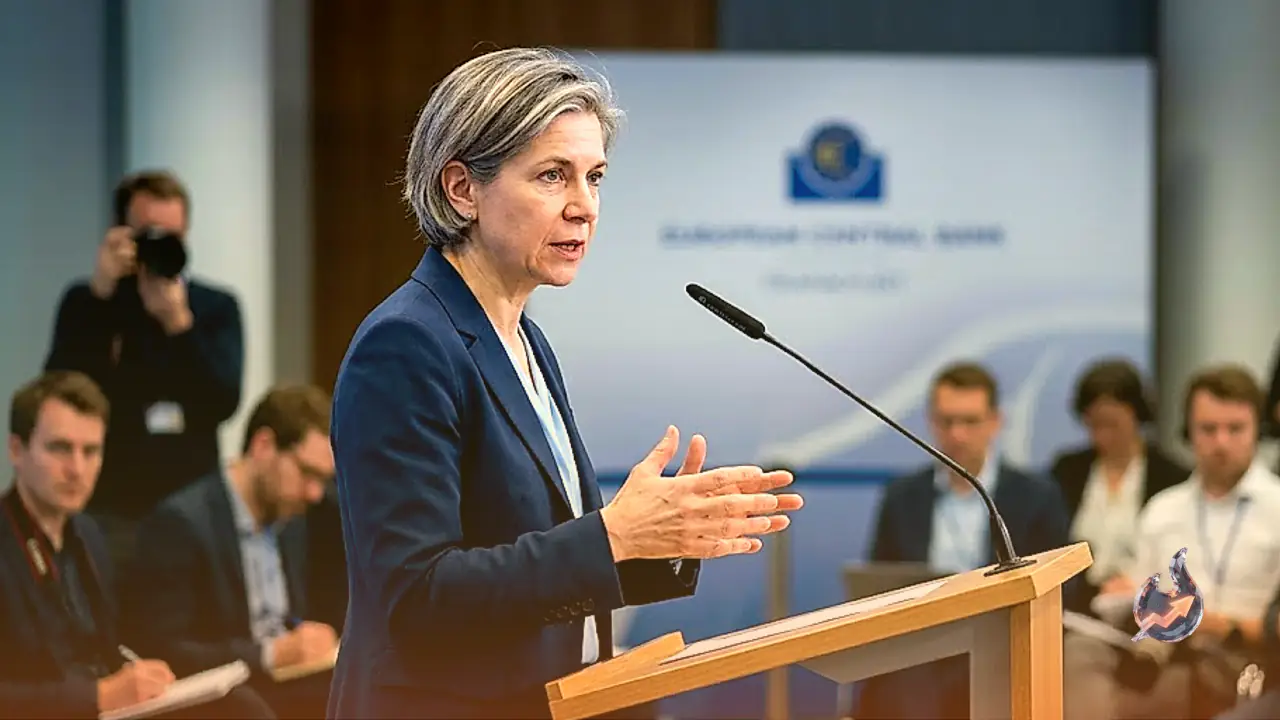

Isabel Schnabel, a member of the Executive Board of the European Central Bank, has expressed serious alarm over the trajectory of energy markets, characterizing recent price movements as quite concerning. The warning arrives as monetary officials weigh additional interest rate increases following the policy tightening enacted last week. In an economic environment marked by recurrent external shocks, policymakers are confronting mounting hurdles to safeguarding macroeconomic, fiscal, and financial stability across the Eurozone.
Refining Constraints Fuel Upward Pressure on Fuels
The inflationary threat emerging from the energy complex extends well beyond baseline crude oil benchmarks. Isabel Schnabel underscored that diesel costs are experiencing acute strains, largely driven by fundamental supply bottlenecks. Global oil refining capacities have fallen drastically and cannot be reconstituted on short notice. Because refinery throughput remains restricted, the mismatch between fuel availability and industrial demand continues to push refined product prices higher, creating stubborn cost headwinds across transportation and manufacturing sectors.
The European Central Bank Mandate and Policy Apparatus
Headquartered in Frankfurt, Germany, the European Central Bank functions as the monetary authority and reserve bank for the Eurozone economies. Its core statutory mandate focuses on preserving price stability by keeping headline inflation at approximately 2% over the medium term. The ECB adjusts interest rate benchmarks up or down as its front-line mechanism for steering economic conditions, where elevated policy rates typically boost the Euro against other currencies, while monetary easing tends to soften the exchange rate.
Key decisions on borrowing costs and liquidity are formulated by the ECB Governing Council during eight regularly scheduled policy meetings every year. Voting members comprise the governors of national central banks within the Eurozone alongside six permanent executive board members, led by ECB President Christine Lagarde.
Unconventional Tools: Quantitative Easing Versus Tightening
In periods of severe macroeconomic distress when lowering benchmark interest rates proves insufficient, the European Central Bank deploys Quantitative Easing. Under QE, the central bank creates Euros to purchase sovereign and corporate debt securities directly from commercial lenders and financial institutions. By expanding system liquidity, QE traditionally exerts downward pressure on the single currency. The ECB activated this tool during the 2009 to 2011 sovereign debt crisis, revisited it in 2015 to combat persistent disinflation, and utilized it again during the pandemic disruption.
Conversely, Quantitative Tightening represents the reversal of asset purchase programs once sustainable economic growth resumes and consumer prices pick up. Rather than injecting liquidity through bond purchases, the ECB stops acquiring additional paper and ceases reinvesting principal cash flows from maturing holdings. This systematic balance sheet reduction typically withdraws excess reserves and serves as a supportive or bullish factor for the Euro.
Cross-Currency Moves and International Market Trends
Across the broader currency arena, foreign exchange pairs experienced mixed trading action at the start of the week. In Monday Asian trading, AUD/USD dropped to a one-and-a-half-week low near 0.7140 before finding stability, lingering slightly above mid-0.7100s with an intraday loss of approximately 0.25%. Concurrently, USD/JPY recovered from Friday losses by advancing toward 154.00, though it remained restricted within a one-week consolidation band near the seven-month trough recorded the preceding Tuesday as traders awaited central bank decisions.
In the digital token space, Pi Network sustained its recent momentum, changing hands above $0.097 following two consecutive weeks of appreciation. Continued progress on developer infrastructure has strengthened fundamental utility, though chart advances remain capped by overhead Exponential Moving Averages. Meanwhile, participants in North American markets are preparing for Statistics Canada to release August Consumer Price Index figures, offering fresh perspective on domestic inflation following the Bank of Canada September 2 gathering, where borrowing costs were held unchanged at 2.25% in line with market consensus.
Live Technical Outlook on EUR/USD
Live market observations show the EUR/USD exchange rate trading at 1.15, marking an advance of 0.11% from its prior close of 1.15. The currency pair has fluctuated within a 52-week band between 1.13 and 1.20, with current trading volume pacing at 1.00 times its 20-day average. Technical indicators reflect underlying soft sentiment, with the 14-period RSI standing at 37 and MACD posting -0.00 against a 0.00 signal line. Moving averages show the 20-day, 50-day, and 200-day EMAs clustered at 1.16, alongside a 50-day SMA at 1.15 and 200-day SMA at 1.16, confirming a long-term downtrend underlined by an EMA50 below EMA200 death cross. The pair trades within 20-period Bollinger Bands bounded by 1.15 and 1.17 with an ADX reading of 26. Critical support stands at S1 1.15 and S2 1.14, while key resistance sits at R1 and R2 near 1.15.