
























The Euro has demonstrated notable resilience in foreign exchange trading, edging up from recent session lows of 0.8546 to trade around 0.8560 against the British Pound. Despite this modest upward movement, the single European currency remains largely constrained within its established monthly trading corridor. Financial markets have entered a period of relative calm, with traders closely monitoring macroeconomic indicators and monetary policy developments across key global economies. The recent price action reflects a balance between encouraging domestic economic reports from the Eurozone and broader macroeconomic anticipation ahead of major international data releases.
German Macroeconomic Data Provides Floor for Single Currency
Underlying support for the Euro has primarily stemmed from encouraging economic figures released out of Germany, the largest economy in the Eurozone. Revised figures for the second quarter revealed that German Gross Domestic Product (GDP) performed better than initial estimates had indicated. Adding to the positive momentum, the IFO Business Climate Index for August registered its highest reading in a full year. This survey highlighted marked improvements in both current business sentiment and economic expectations for the coming months, with both metrics surpassing consensus forecasts among market analysts.
These macroeconomic upgrades have provided currency traders with fundamental justification to support the Euro against its peer currencies. Market strategists at ING have noted these underlying strengths, projecting that the EUR/GBP exchange rate could appreciate towards the 0.8700 level over the coming months. The combination of stabilizing business sentiment and revised growth figures suggests that economic momentum within the core of the Eurozone may be firming up after a prolonged period of sluggish activity.
Global Significance and Liquidity of the Euro Currency
The Euro serves as the official national currency for 20 member nations of the European Union that comprise the Eurozone. Recognized as the second most heavily traded currency on the globe, trailing only the United States Dollar, the Euro occupies a central position in international finance, trade settlement, and institutional reserve holdings. Official foreign exchange statistics from 2022 indicate that the Euro was involved in approximately 31% of all global currency transactions, generating an immense average daily turnover exceeding $2.2 trillion.
Within the foreign exchange market structure, currency pairs involving the Euro represent a substantial share of daily trading volume. The EUR/USD pair is undisputed as the most heavily traded currency pair globally, capturing an estimated 30% of all international foreign exchange transactions. Other major Euro crosses also command significant market liquidity: the EUR/JPY pair accounts for 4% of total daily global volume, the EUR/GBP pair represents 3%, and the EUR/AUD pair comprises 2%. This massive liquidity ensures that macroeconomic announcements within the Eurozone resonate across global financial markets.
Monetary Policy Framework of the European Central Bank
Policy decisions governing the Euro are determined by the European Central Bank (ECB), situated in Frankfurt, Germany. As the primary monetary authority and reserve bank for the entire Eurozone, the ECB is tasked with establishing interest rate benchmarks and executing monetary policy across all member states. The core primary mandate of the ECB is the maintenance of price stability, which requires a continuous balancing act between curbing inflationary pressures and providing adequate monetary stimulus to encourage broader economic expansion.
The primary tool utilized by the ECB to achieve its macroeconomic objectives is the adjustment of benchmark interest rates. When interest rates are elevated or when market expectations lean towards rate hikes, the Euro generally experiences upward valuation pressure. Higher interest rates enhance yield returns on euro-denominated assets, attracting international capital flows. Conversely, interest rate cuts or accommodative policy stances tend to weigh on the currency's foreign exchange value. The ECB Governing Council convenes eight times per year to render monetary policy decisions. This decision-making body consists of the governors of national central banks from all Eurozone countries alongside six permanent executive board members, including ECB President Christine Lagarde.
Economic Indicators, Inflation Metrics, and Regional Core Output
Monetary policy expectations for the Eurozone are heavily reliant on inflation metrics, most notably the Harmonized Index of Consumer Prices (HICP). When inflation data exceeds market forecasts, particularly if consumer prices rise above the ECB’s official 2% target, central bank officials face heightened pressure to implement tighter monetary policy by raising interest rates. High interest rates relative to other major global economies increase the relative appeal of the Eurozone as a destination for foreign portfolio investments.
Beyond inflation, broader economic indicators play a decisive role in shaping market sentiment toward the single currency. Metrics such as Gross Domestic Product (GDP), Purchasing Managers' Indexes (PMIs) across manufacturing and services sectors, employment statistics, and consumer confidence surveys provide direct insights into economic health. Strong economic data routinely boosts the Euro by drawing foreign direct investment and signaling potential interest rate hikes. Conversely, weak indicators weigh down currency performance. Within the Eurozone, data from the four largest member economies—Germany, France, Italy, and Spain—carries disproportionate weight, as these four nations combined account for approximately 75% of the total Eurozone economic output.
Trade Balance Impact on Regional Currency Strength
Another critical macroeconomic metric impacting the Euro is the regional Trade Balance. This trade accounting indicator tracks the net differential between the monetary value of goods and services exported by a country or economic region and the value of goods imported over a given period. The balance of trade directly influences currency valuation through foreign exchange demand dynamics.
When a country or trade bloc produces highly desired export goods, international buyers must acquire the local currency to settle those transactions, generating persistent market demand. Consequently, a positive net trade balance—where export revenues exceed import expenses—provides underlying fundamental strength to the currency. Conversely, a negative trade balance or widening trade deficit indicates greater outflow of local currency to purchase foreign goods, creating persistent downward pressure on the currency's value.
Currency Crosses and Commodities Across International Markets
While EUR/GBP remains rangebound, broader foreign exchange markets are observing shifting dynamics across major currency pairs. The GBP/USD exchange rate has traded with a slight negative bias below the 1.3650 mark during European trading on Wednesday, giving back a portion of the sharp gains registered in the preceding session. Nevertheless, the British Pound continues to trade within striking distance of its six-month high recorded last Friday. Foreign exchange traders remain cautious as they await the upcoming release of the US Personal Consumption Expenditures (PCE) Price Index, which is expected to offer fresh momentum for Dollar-denominated pairs.
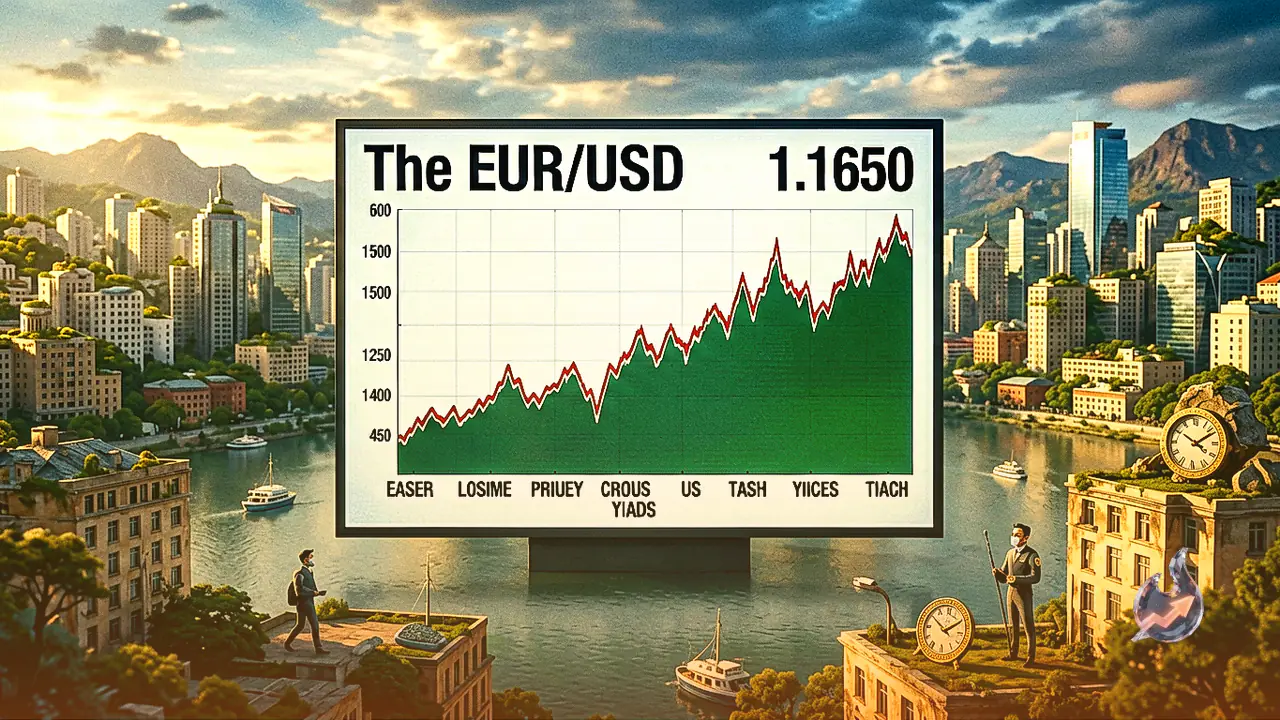
Concurrently, EUR/USD has traded lower toward the 1.1650 region during Wednesday's European session. The US Dollar has shown a modest recovery, fueled by profit-taking by market participants and ongoing geopolitical uncertainty in the Middle East. Beyond the PCE inflation metric, market participants are also closely following another upcoming revision of United States second-quarter GDP figures. In commodity markets, Gold has recorded modest losses below $4,650 per ounce, staying contained within its previous daily range as dollar strength exerts pressure. Market sentiment around interest rate expectations is also being shaped by remarks delivered by Federal Reserve Chair Kevin Warsh at the Jackson Hole Symposium on Friday.
Digital Asset Developments: Meme Coins Retrace Recent Gains
In the cryptocurrency space, high-volatility meme coins including Dogecoin (DOGE), Shiba Inu (SHIB), and Pepe (PEPE) have experienced a loss of bullish momentum following substantial double-digit gains recorded last week. Profit-taking among crypto traders has placed downside pressure across these digital assets. Both DOGE and PEPE face risks of further price corrections, whereas SHIB has managed to stabilize near a technical support level while broader crypto market sentiment adjusts to shifting macroeconomic conditions.