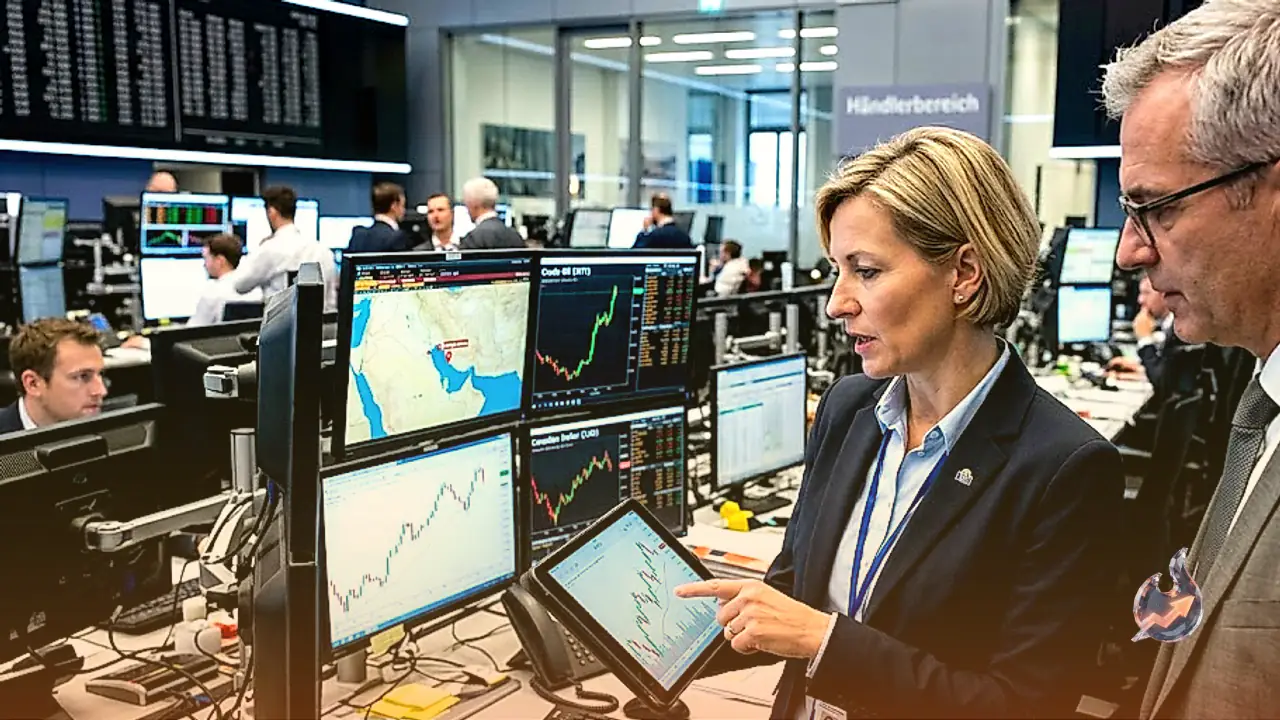























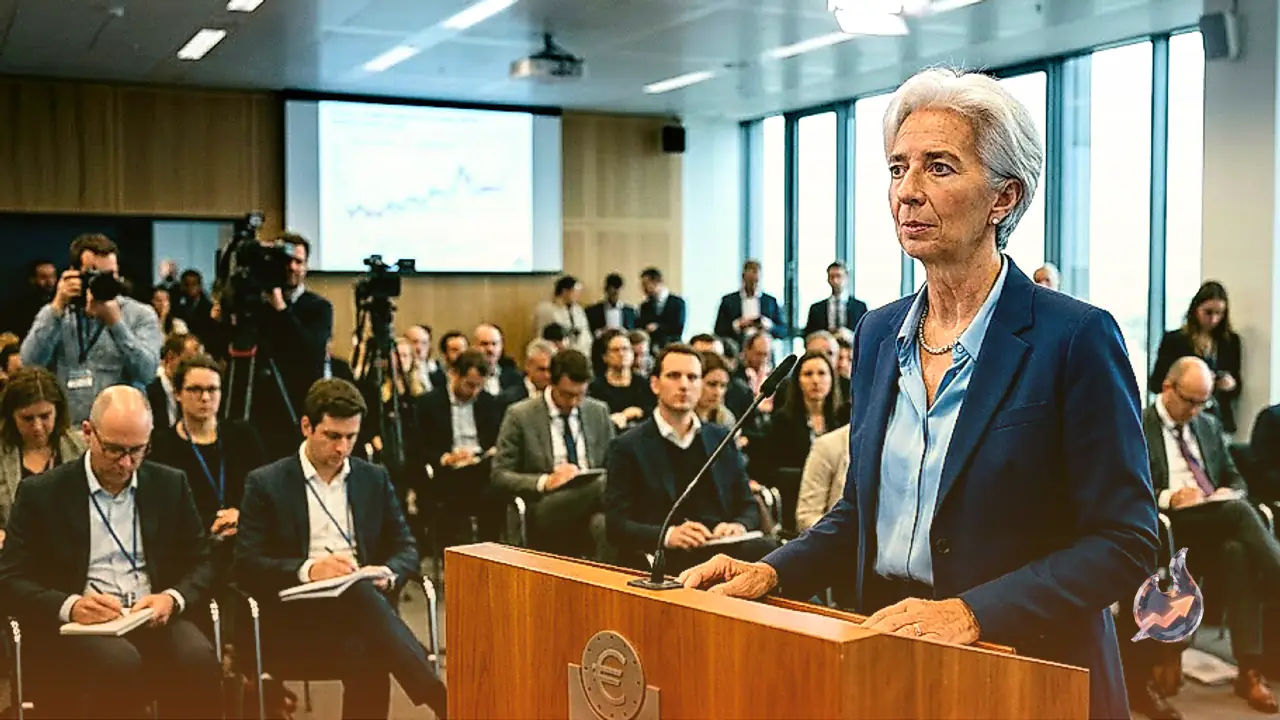

Geopolitical tensions and energy market supply constraints continue to shape international foreign exchange dynamics, driving monetary policy expectations across major central banks. Financial markets have fully priced in a 25 basis point interest rate increase by the European Central Bank on Thursday, which would bring its key policy benchmark to 2.5%. This policy adjustment is primarily fuelled by surging crude oil and refined fuel costs caused by the ongoing conflict between the United States and Iran. Concurrently, hawkish commentary from Bank of England Governor Andrew Bailey has provided solid structural backing for the British Pound Sterling, as escalating energy prices keep inflation risks firmly skewed to the upside in the United Kingdom.
ECB Rate Policy Expectations Driven by Rising Energy Costs
Rising energy prices across Europe have added pressure on the European Central Bank to tighten monetary policy further to prevent secondary inflationary pressures. Market pricing shows complete consensus for a 25 basis point rate hike to 2.5% during Thursday's policy meeting. Intensifying hostilities in the Middle East, coupled with disruptions in global fuel supplies, have pushed oil and refined product prices significantly higher. Elevated energy costs directly increase manufacturing, logistics, and household operational expenses, ultimately elevating broader consumer price indexes. By advancing rate hikes to anchor inflation expectations, the ECB provides fundamental support to the Euro relative to the US Dollar and other major currencies.
Hawkish Stance from Bank of England Amid Inflation Risks
Bank of England Governor Andrew Bailey emphasized that global geopolitical conflicts are acting as a persistent cost-push threat to the UK economy. Specifically, the military confrontation involving the United States and Iran, alongside Ukrainian drone strikes targeting Russian petroleum refineries, has restricted global refining output and driven prices higher. According to quantitative speech tracking analysis, Governor Bailey recorded a hawkishness score of 7.2 out of 10, notably above his historical baseline average of 6 out of 10. This higher metric underscores a decisive stance focused on price stability. Bailey warned that upside risks to UK inflation remain prominent, reassuring market participants that the central bank remains committed to high borrowing costs, which continues to support Sterling resilience during market pullbacks.
Historical Significance and Structure of the British Pound
The Pound Sterling holds the distinction of being the oldest currency still in active continuous use, dating back to its establishment in 886 AD. Serving as the official currency of the United Kingdom, Sterling ranks as the fourth most traded currency worldwide in foreign exchange markets. According to benchmark 2022 financial data, Sterling accounts for approximately 12% of total global foreign exchange transactions, generating an average daily turnover of $630 billion. The currency is managed and issued by the Bank of England. Among its primary trading pairs, GBP/USD, traditionally referred to as 'Cable', accounts for 11% of global foreign exchange volume. The GBP/JPY pair, known among currency traders as the 'Dragon', represents 3% of trading activity, while the EUR/GBP pair comprises 2% of total market transactions.
Monetary Policy Mechanics and Economic Health Indicators
Monetary policy established by the Bank of England remains the central determinant of Sterling valuation. The central bank operates under an explicit mandate to preserve price stability, targeting a sustainable annual inflation rate of approximately 2%. When headline inflation accelerates beyond this target, the central bank intervenes by raising interest rates, rendering credit more costly for consumers and commercial enterprises. Higher interest rates enhance yield returns, attracting international capital flows into UK-denominated assets and thereby strengthening Sterling. Conversely, during periods of economic stagnation or sub-target inflation, the central bank lowers interest rates to encourage commercial borrowing and capital investment. Beyond interest rate decisions, macroeconomic indicators such as Gross Domestic Product (GDP), Manufacturing and Services Purchasing Managers' Indexes (PMI), and employment figures provide critical direction for Sterling. Additionally, the Trade Balance indicator, measuring net trade inflows, plays a crucial role, as net positive balances generate natural commercial demand for the national currency.
EUR/USD Technical Analysis and Live Market Overview
Live market observations reveal that the EUR/USD currency pair is trading near 1.16, marking a 0.13% increase from its previous closing level of 1.16. The pair has maintained a 52-week trading range between 1.13 and 1.20, with trading volume running at 1.00 times its 20-day moving average. Technical momentum metrics show the 14-day Relative Strength Index (RSI) at 59, reflecting moderate bullish momentum. The Moving Average Convergence Divergence (MACD) histogram sits near 0.00 relative to its signal line, displaying neutral to mildly cautious alignment. Moving averages demonstrate consolidation, with the 20-day, 50-day, and 200-day Exponential Moving Averages (EMA) aligning at 1.16. The 50-day Simple Moving Average (SMA) rests at 1.15, while the 200-day SMA stands at 1.16. Bollinger Bands span from 1.15 to 1.17, while the Average Directional Index (ADX) reads 27, signaling an established trend. Key short-term support is identified near 1.15, with resistance overhead around 1.17.
Global Currency Markets, Commodities, and Crypto Developments
Broader financial markets displayed significant cross-asset movements alongside major currency pairs. In Asian trading, the AUD/USD pair consolidated above 0.7200, supported by elevated consumer and producer inflation data from China and growing expectations of interest rate adjustments by the Reserve Bank of Australia. Meanwhile, USD/JPY maintained a bearish bias around 153.50 during European hours, influenced by strong Reuters Tankan business sentiment data that reinforced expectations of Bank of Japan policy normalization. In commodity markets, spot Gold rebounded from a one-week low to reclaim the $4,400 per ounce threshold, breaking a three-day declining streak amid broad US Dollar weakness. In energy markets, the US diesel crack spread surged past $100 per barrel for the first time on record, hitting an intraday peak of over $102.00. In digital assets, Pi Network (PI) expanded its recovery above $0.098 after finding support around its 50-day Exponential Moving Average.