




















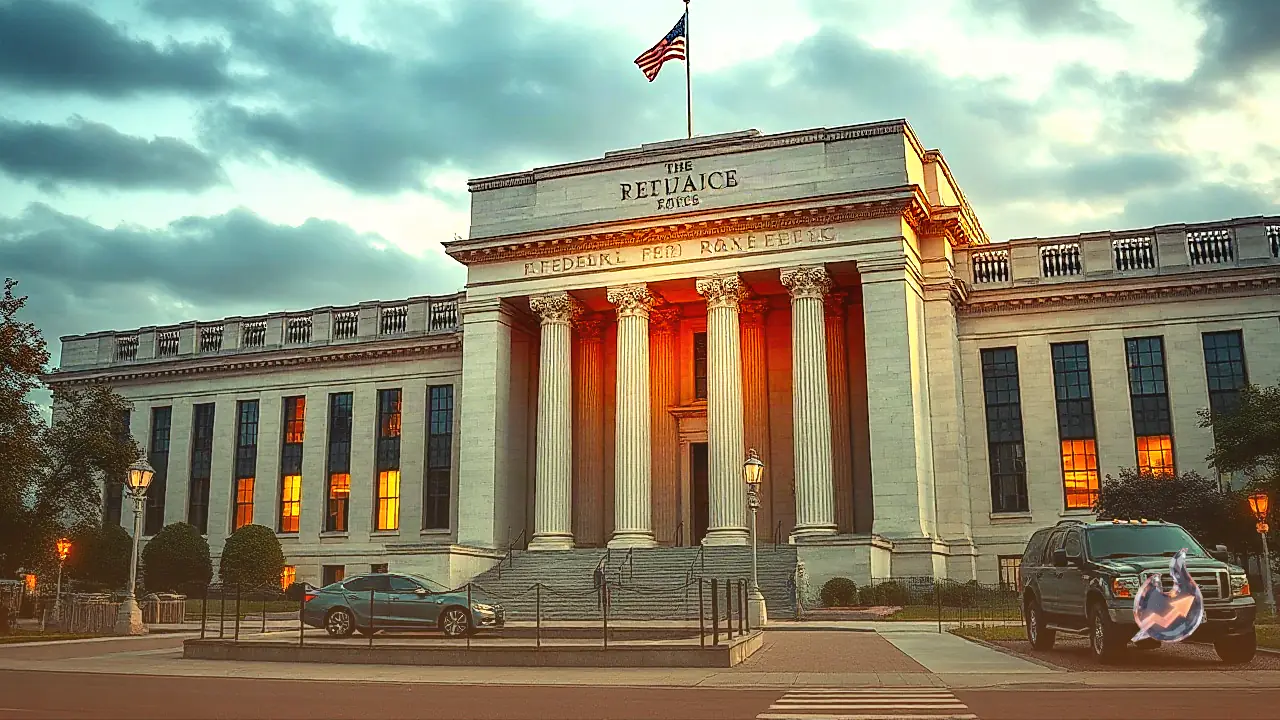

The Federal Open Market Committee is evaluating a potential structural overhaul of its policy calendar that would reduce its annual scheduled meetings from eight to six. Details buried deep within the published July meeting minutes indicate that the Chairman presented this proposal to committee participants, suggesting that spacing gatherings roughly two months apart would allow greater accumulation of economic data between decisions. Proponents of the change argue that longer intervals between policy meetings would provide both central bank governors and staff researchers more dedicated time to evaluate broader strategic questions rather than reacting to short-term data noise. Although the Chairman solicited preliminary feedback from officials, no official determination was reached during the session, and the existing schedule of eight annual meetings will remain entirely unchanged through 2026.
The Strategy Behind Reducing Communication Channels
The proposal to trim meeting frequency reflects a broader, multi-year institutional trend wherein the central bank has progressively scaled back its formal public communication frameworks. Over recent years, monetary policymakers have repeatedly retreated from explicit forward guidance, shorter statement texts, and detailed interest rate dot-plot projections. Each individual reduction in transparency has been defended by central bank leadership on reasonable technical grounds. For instance, committing to pre-announced policy paths via forward guidance creates significant institutional liabilities during unpredictable supply side shocks. Similarly, streamlining post-meeting policy statements prevents market participants from over-analyzing minor linguistic adjustments, while dialing back dot-plot projections discourages traders from speculating on individual participant forecasts instead of reacting to fundamental economic data.
However, when evaluated collectively, these incremental communication rollbacks paint a clear picture of a monetary authority steadily narrowing the occasions on which it is contractually required to justify its policy choices to the public. The argument for holding six annual meetings relies on identical reasoning: broader data windows reduce pressure to make hasty policy moves based on transitory volatility. Yet, the tradeoff is purely mathematical. A central bank committee meeting eight times per year has eight distinct opportunities to recalibrate policy rates. Moving to a six-meeting schedule reduces those intervention points to six. This proposal arrives precisely as the committee recorded a three-way formal dissent, indicating that internal friction is rising rather than dissipating, making fewer opportunities for formal debate a risky governance strategy.
Unpacking the July FOMC Dissent and Hawkish Alignment
The headline result of the July gathering was a 9 to 3 vote to keep the benchmark federal funds rate steady. The three voting members who dissented in favor of an immediate 25-basis-point interest rate increase were Beth Hammack, Neel Kashkari, and Lorie Logan. While the voting tally captures the official decision of the twelve voting members, a deeper analysis of the broader nineteen participants present at the meeting table reveals significant hidden hawkish momentum.
The published minutes note that several meeting participants advocated for an immediate quarter-point rate hike. The document further clarifies that a few of those specific participants argued that tightening policy immediately would prevent the need for a far more aggressive sequence of rate increases later in the cycle. In central bank phrasing, a few represents a strict subset of several, which logically implies that the broader group favoring an immediate rate hike consisted of at least four or more participants. Because only three formal dissenting votes were cast, at least one non-voting regional Federal Reserve bank president supported an immediate rate hike but lacked the voting mandate to register an official dissent.
Furthermore, the minutes highlight that many participants judged that additional monetary tightening would likely become necessary if inflation failed to demonstrate convincing progress toward the 2% target. Additionally, some participants questioned whether existing financial conditions were sufficiently restrictive to return inflation to baseline targets. Because many represents a significantly larger grouping than several, the apparent 9 to 3 consensus to hold rates steady was actually a highly conditional compromise, with a substantial portion of the committee leaning toward further rate increases.
Hidden Friction Over Statement Language and Price Stability
The July meeting minutes also exposed subtle divisions over the precise wording of the post-meeting policy statement. The committee's official statement has been compressed over time to just 115 words, leaving virtually no margin for ambiguity. Regarding the language adopted in June that explicitly committed the committee to restoring price stability, the minutes reveal that almost all voting members agreed it was appropriate to retain that sentence in the July statement.
In central bank terminology, almost all of twelve voting members is not unanimous. This wording confirms that at least one voting member who ultimately voted with the majority to keep interest rates unchanged actually opposed including the core price stability commitment in the final text. In a communication framework where nearly all ancillary documentation has been removed, the specific wording of a 115-word statement represents the primary anchor for market expectations. The fact that even this streamlined text contained an unrecorded policy split demonstrates how fragile internal consensus has become.
Labor Market Assessments Versus Unexpected Data Reality
During their deliberations on July 29, committee members characterized overall labor market conditions as stable, noting that labor supply and demand had achieved a healthier balance while payroll gains had shown signs of strengthening earlier in the year. Some participants took an even more optimistic view, interpreting the expansion of job creation beyond healthcare and social assistance sectors as concrete evidence of modest economic strengthening. Conversely, a few participants pointed to underlying vulnerabilities, citing persistently low job-finding rates and elevated long-term unemployment figures.
Just nine days after the meeting concluded, official employment figures presented a dramatically different economic reality. Non-farm payrolls contracted by 23,000 jobs, marking the first negative monthly employment reading since December and representing the fourth consecutive monthly decline from March peak levels. The minority faction of participants who had warned of labor market weakness was proven correct almost immediately, while the broader committee majority that opted to hold interest rates steady based on optimistic employment assumptions found its thesis undermined by real-world data.
Shift in Market Pricing and Critical Calendar Milestones
Prior to the release of the July minutes, financial market pricing indicated approximately a one-in-three probability of a July rate hike, followed by a full 25-basis-point rate increase by September and another rate hike by the end of the first quarter of 2027. In stark contrast, the median respondent to the Federal Reserve Desk survey of market expectations anticipated no interest rate changes throughout 2026 or 2027, projecting that the next policy move would be a rate cut in early 2028.
Within three weeks of the July meeting, market expectations shifted dramatically toward the survey's conservative outlook. Futures markets completely priced out the likelihood of a September rate hike, pushing expectations for any monetary tightening well into 2027. This rapid realignment represents an unusual market shift, as financial futures curves typically dictate the trajectory of central bank survey expectations rather than adjusting to them.
Looking ahead, financial market participants are focusing on two critical calendar milestones. August 28 will provide crucial updated employment and economic data, verifying whether the labor market stability that justified holding rates unchanged remains intact. Subsequently, September 16 marks the committee's next policy decision, where analysts will watch the dissent tally closely. If the previous 9 to 3 vote expands to 8 to 4 while inflation remains elevated, it will signal that conditional hawkish participants are converting into active dissents. As official policy statements remain truncated, internal policy debates are increasingly spilling into meeting minutes three weeks after decisions occur.
Broader Global Financial Market Movements: Forex, Gold, and Crypto
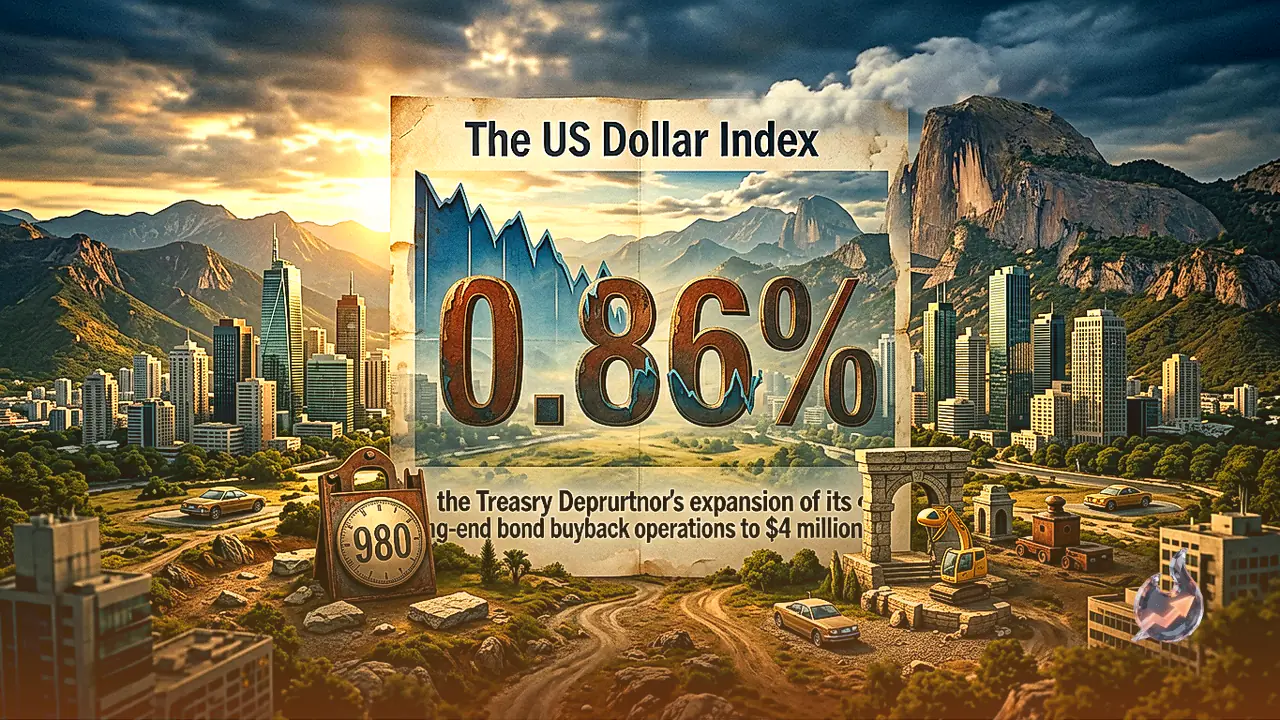
The publication of the meeting minutes coincided with notable volatility across foreign exchange, commodities, and cryptocurrency markets, driven in part by unexpected fiscal liquidity announcements from the US government. The US Department of the Treasury announced plans to double the scale of its liquidity support buyback operations for longer-dated nominal coupon securities. This expansion injected substantial liquidity into fixed income markets, placing significant downward pressure on the US Dollar and pushing Treasury yields lower across the curve.
In currency markets, the British Pound capitalized on US Dollar weakness, extending its daily advance to trade above 1.3600, its highest level since mid-May. Sterling received additional momentum from official UK economic data showing that annual Consumer Price Index inflation accelerated to 2.9% in July, matching market forecasts. Furthermore, UK core CPI inflation rose to 2.6% year-on-year in July, surpassing analyst expectations of 2.5% and reinforcing expectations of sustained interest rate support from the Bank of England.
Concurrently, the EUR/USD currency pair gathered strong bullish momentum, surging past 1.1650 to reach its highest trading level since early June. The Euro's upward trajectory was primarily fueled by relentless selling pressure on the US Dollar following the Treasury buyback announcement, as foreign exchange traders reassessed US yield differentials.
Precious Metals and Cryptocurrency Dynamics
In precious metals, spot Gold (XAU/USD) experienced solid buying interest during American trading hours, recovering all losses sustained in the prior trading session. The precious metal benefited directly from the retreat in long-term US Treasury yields and the accompanying weakening of the US Dollar, which enhanced the appeal of non-yielding assets among international investors.
Meanwhile, cryptocurrency markets displayed a more cautious trading pattern. Bitcoin (BTC/USD) upside remained constrained below the $65,000 resistance level, while strong buying support prevented drops below $64,000. The digital asset's early-week recovery momentum slowed as market participants carefully weighed the potential macroeconomic and financial implications of escalating geopolitical tensions in the Middle East. Despite broader currency market shifts, digital asset traders maintained a cautious stance pending further clarity on global risk sentiment.