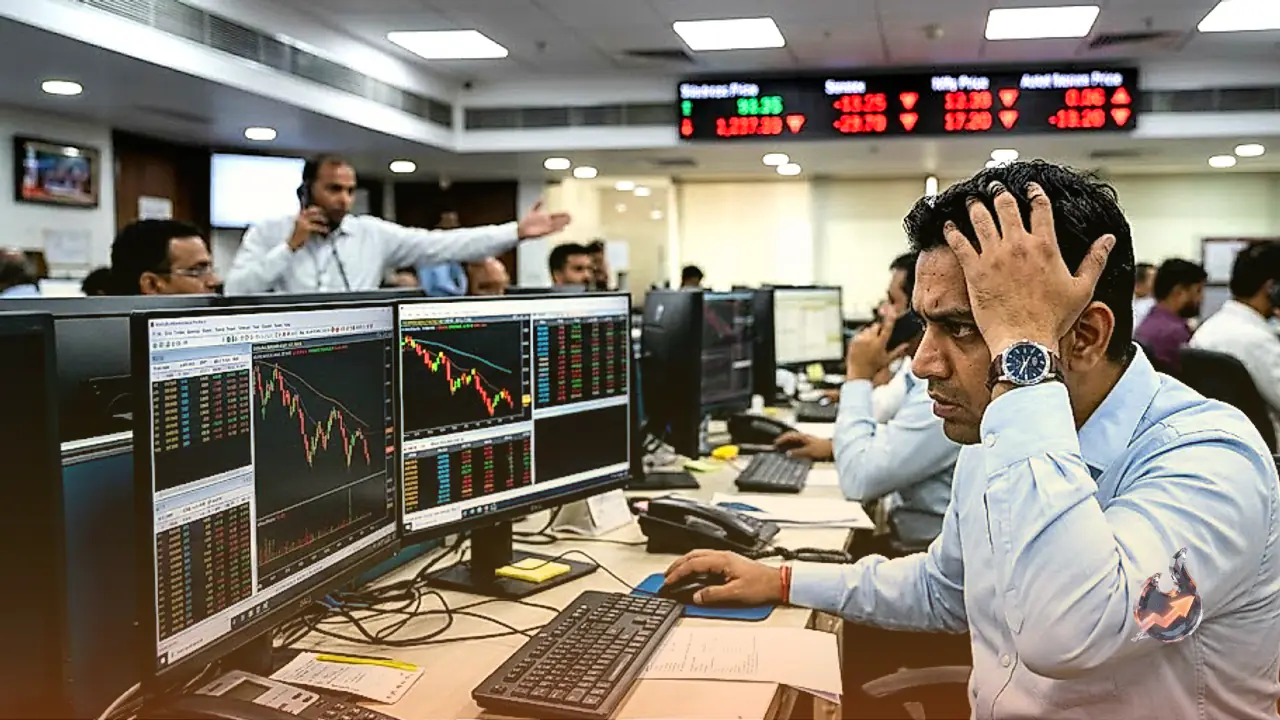

























As the European Central Bank prepares to deliver its highly anticipated interest rate decision, global financial markets are bracing for a complex balancing act. While the prevailing consensus among economists and analysts points to the central bank leaving borrowing costs unchanged during today's session, the possibility of a surprise rate hike remains a lingering risk that cannot be entirely dismissed. The overarching expectation is for a "hawkish hold," a scenario where the ECB pauses its rate-hiking cycle but aggressively signals its readiness to tighten monetary policy further if inflation flares up again. This cautious yet firm approach is largely being dictated by a confluence of external pressures, most notably the renewed escalation of geopolitical tensions in the Middle East and a troubling divergence in global energy markets. The European Central Bank is navigating an incredibly narrow path. On one side, the risk of prematurely declaring victory over inflation could lead to a resurgence in consumer prices, severely damaging the institution's credibility. On the other side, maintaining a restrictive monetary policy for too long risks plunging the fragile European economy into a deep and prolonged recession. The aggressive posturing expected from the governing council is a strategic maneuver designed to keep financial conditions tight without necessarily inflicting the immediate pain of a direct rate hike. This psychological warfare with the markets is a testament to the complex environment central bankers currently face.
The Inflation Battle and Energy Market Divergence
A primary concern for the governing council is the recent trajectory of European gas prices, which have been accelerating at a notably faster pace than crude oil. This energy dynamic poses a unique threat to the Eurozone's economic stability, as the bloc remains highly sensitive to natural gas supply shocks. The dominance of hawkish voices within the ECB is being fueled by these inflationary risks. Policymakers are acutely aware that their primary objective during this meeting is to preserve current market pricing, which anticipates roughly 45 basis points of easing by the end of the year. By maintaining a strict tone, the ECB aims to prevent any risk of inflation expectations becoming de-anchored, a scenario that would require even more painful economic interventions down the line. To achieve this delicate balance, the central bank may need to provide clear indications that a subsequent rate hike in September remains a viable option on the table. Market observers anticipate that this signal might not be delivered bluntly during the official press conference, but rather through the familiar mechanism of post-meeting media leaks designed to steer market sentiment.
Forex Market Reactions and Technical Outlook
The anticipation surrounding the ECB's move has provided solid support for the Euro across foreign exchange markets. The EUR/USD pair has extended its gains for a second consecutive session, trading around the 1.1410 level during Asian trading hours on Thursday. Live market data reflects a cautious optimism, with the EUR/USD currently trading at 1.14, marking a slight increase of 0.22% from the previous close. The technical picture reveals a pair navigating a long-term downtrend, underscored by a recent "death cross" where the 50-day Exponential Moving Average (EMA) sits at 1.15, below the 200-day EMA of 1.16. With the Relative Strength Index (RSI) hovering at a neutral 47 and the MACD showing a slightly bullish histogram, the pair remains confined within its Bollinger Bands, finding immediate support near 1.14 and facing resistance at 1.15. Across the English Channel, the GBP/USD pair witnessed a moderate rebound to near 1.3385. However, the upside momentum for the British Pound appears constrained. Recent data indicating cooler-than-expected inflation in the United Kingdom has tempered expectations for aggressive action by the Bank of England. Additionally, the broader risk-off sentiment stemming from Middle Eastern conflicts is limiting the appeal of riskier assets. Currency traders are now shifting their focus to the upcoming UK Retail Sales report due later on Friday, which will provide critical insights into the health of the British consumer.
Commodities: Safe Havens and Supply Fears
The ripple effects of geopolitical instability are starkly visible in the commodities sector. Gold, the traditional safe-haven asset, has consolidated its position above the significant psychological threshold of $4,100 per ounce during the Asian session. The precious metal has seemingly stalled its modest pullback after touching an over two-week high, as investors continue to seek refuge from global uncertainties. Concurrently, crude oil prices have surged to fresh highs not seen since June 11. This spike is being driven by a further escalation of tensions between the United States and Iran, which has stoked fears of potential disruptions to global energy supplies. The rising cost of oil is inherently inflationary, thereby bolstering expectations that the US Federal Reserve may be forced to maintain or even increase its interest rates to combat a renewed wave of price pressures.
Cryptocurrency: Signs of a Market Bottom?
In stark contrast to the anxiety gripping traditional markets, the cryptocurrency sector is showing intriguing signs of resilience. According to Matt Hougan, Chief Investment Officer at Bitwise, the next major crypto bull market could be catalyzed by the increasing convergence between blockchain-based financial infrastructure and the traditional financial system. In a recently published report, Hougan posited that the digital asset market might be exhibiting early indications of a cyclical bottom. He highlighted a notable divergence in performance: Bitcoin has managed to gain 9% since the beginning of July, a period during which the tech-heavy NASDAQ 100 index experienced a 6% decline. This decoupling suggests that cryptocurrencies may be beginning to trade on their own underlying fundamentals rather than merely acting as high-beta tech stocks. The increasing adoption of blockchain technology for real-world financial applications, such as tokenization of traditional assets and cross-border payment settlements, is providing a fundamental floor to the market.
Altcoin Consolidation and Derivatives Data
Despite Bitcoin's relative strength, major altcoins are trading with noticeable caution as they navigate crucial technical junctures. Ripple's native token, XRP, is currently testing significant resistance at its 50-day Exponential Moving Average. Meanwhile, Stellar (XLM) continues to consolidate around a vital support zone at $0.187. The hesitancy in the spot market is mirrored in the derivatives sector, where data presents a mixed picture with a slight bearish tilt. This combination of technical resistance and ambiguous derivatives positioning indicates that crypto traders remain highly cautious, keeping the next major directional move for these digital assets highly uncertain as they await clearer macroeconomic signals.