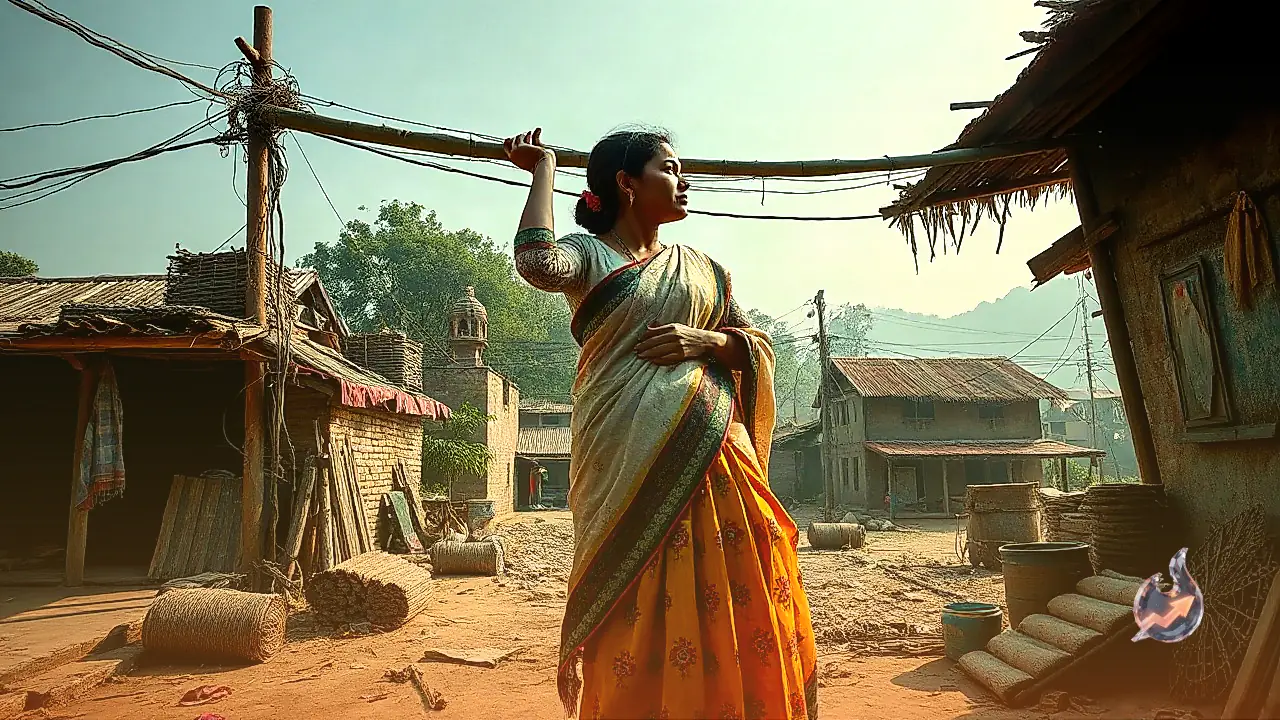
















In Jharkhand's capital Ranchi, artisans are crafting salwar suits and sarees that weigh as little as 100 grams, yet sell for as much as ₹10,000. The fabric is hand-spun from bamboo fibre, and its biggest draw is that it keeps the body warm during winter while feeling cool in summer. The craftsman behind this specialised technique in Ranchi is Mohammed Siraj.
Bamboo Thread's Secret: Warmth Without Weight
Demand for this bamboo fabric peaks during the winter months because it naturally warms the body. The finished pieces also look strikingly beautiful, carry a premium finish, and stand apart from ordinary clothing available in the market. Mohammed Siraj says he runs his own factory in Ranchi, where his team manufactures the fabric themselves, and the business brings in a solid income. According to him, once a customer buys the fabric, they become an instant fan and keep coming back looking for more. The reason lies in how astonishingly light it is, wearing it feels almost like wearing nothing at all, yet it is as soft and comfortable as cotton. Siraj explains that this quality comes purely from the natural texture of bamboo thread, something difficult to replicate with any other fibre.
Sohrai and Warli Paintings on Every Piece
Another standout feature of these salwar suits and sarees is the traditional Sohrai and Warli-style artwork hand-painted onto them. This artwork elevates the beauty of the kurti and salwar suit and gives them an identity distinct from regular garments sold in the market. By etching these two traditional Jharkhand art forms onto fabric, the artisans are also keeping local culture alive.
Three to Four Days to Make, Priced Between ₹1,200 and ₹10,000
Making a single salwar suit or saree takes four to five artisans between three and four days. That's because every step of the work is done with extreme precision, and no machines are used at any stage. Whether it's painting the fabric or stitching the entire salwar suit, everything is done entirely by hand. This is what makes the process time-consuming and pushes the price higher than ordinary clothing. The price starts at ₹1,200 and goes up to ₹10,000, depending on the design, the labour involved and the intricacy of the painting.
Menswear Too, With Customers Across the Country
Mohammed Siraj says his workshop doesn't just make clothes for women, it also stitches bamboo-fibre outfits for men, including full pants and shirts. He says customers for these bamboo garments come from all over India, and demand sometimes gets so high that the collection goes out of stock. That's how this small Ranchi factory has built a distinct identity among customers across the country.