























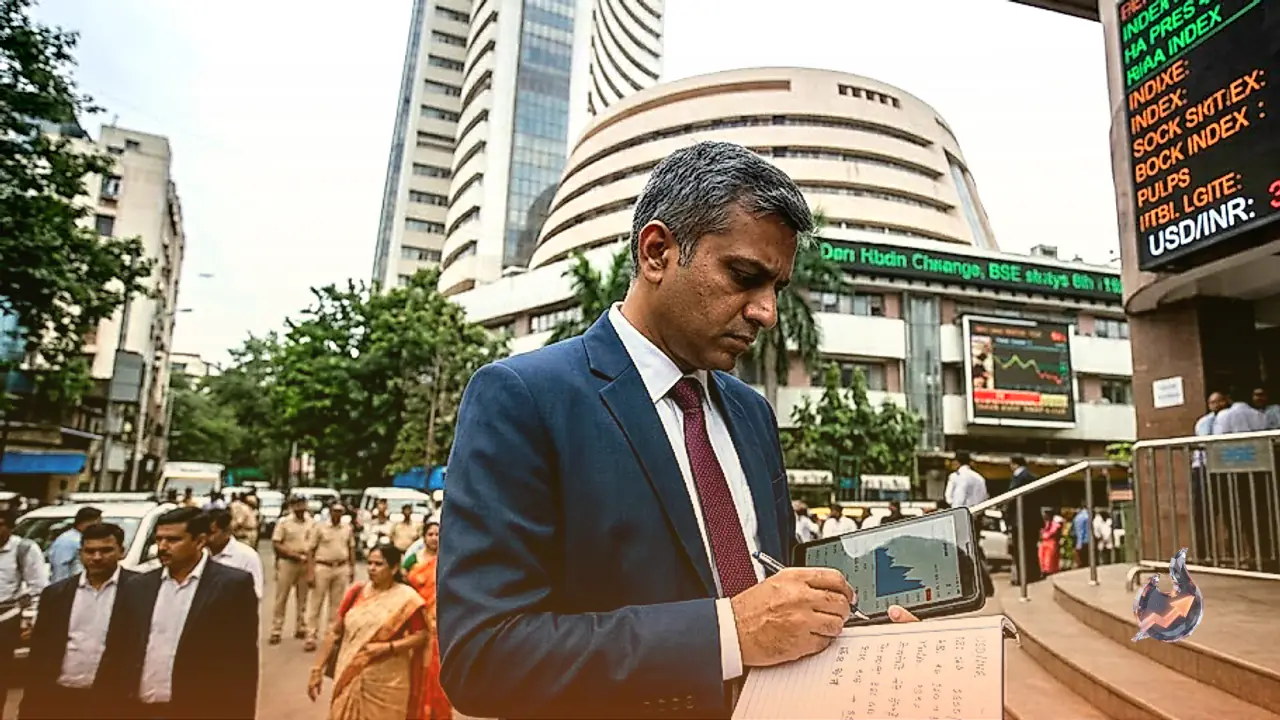

The Indian Rupee remains on the defensive against the US Dollar as elevated US Treasury yields continue to exert strong downward pressure on emerging market currencies. Financial market participants widely anticipate that the Federal Reserve will maintain an aggressive stance and continue its monetary policy tightening cycle even after delivering an interest rate increase later in the session. Concurrently, an acceleration in domestic inflation metrics has intensified market expectations that the Reserve Bank of India will be compelled to initiate a series of rate increases to keep price pressures in check.
Surging US Yields and Monetary Policy Trajectories
In global fixed-income markets, benchmark 10-year US Treasury yields eased slightly by 0.35 percent to trade near 4.98 percent, yet remained precariously close to the 19-year high of 5.04 percent recorded on Tuesday. US government borrowing costs have escalated substantially as financial markets price in deeper and more prolonged policy tightening by the Federal Reserve amid persistent inflation headwinds. Strategists at Deutsche Bank noted that market participants are factoring in an increasing probability of a full-scale hiking cycle across the coming months as they reassess the trajectory of policy rates. Examining the broader yield curve, Deutsche Bank underlined that 90 basis points of rate increases are currently priced in through the June 2027 monetary policy gathering, illustrating how entrenched the expectations for further tightening have become.
Furthermore, policy leadership appears untethered from external political constraints. Federal Reserve Chairman Kevin Warsh is seen in a position to execute hawkish policy actions without political interference, especially as recent remarks from US President Donald Trump signaled that the administration has come to terms with the prevailing reality of higher interest rates.
Reserve Bank of India Market Operations and Persistent Inflation Pressures
Faced with persistent currency depreciation, the Reserve Bank of India has maintained an active presence across foreign exchange channels. The Indian central bank has reportedly engaged in interventions across both spot transactions and Non-Deliverable Forwards (NDF) markets, offloading US dollars from foreign reserves to absorb volatility and provide structural support to the domestic currency. Nevertheless, the Rupee has faced headwinds in reclaiming lost territory against the resilient greenback.
On the domestic macro front, structural inflation dynamics are presenting fresh hurdles. Research analysts at Societe Generale pointed out that the recent acceleration in services inflation represents a critical juncture for monetary policy, demonstrating that broader pricing pressures are becoming firmly entrenched beyond the erratic swings of volatile food categories. Societe Generale emphasized that headline consumer price inflation has remained above the median policy target for a third successive month while underlying core inflation measures have begun to firm, significantly diminishing the central bank's leeway to look through food-led spikes. Given these economic conditions, Societe Generale maintained its projection that the Reserve Bank of India will embark on a mini rate-hike campaign, delivering an initial 25-basis-point rate increase at its October policy meeting, followed by matching 25-basis-point adjustments at its December and February gatherings. While not forming their central baseline projection, the institution also cautioned that an outright 50-basis-point rate hike cannot be excluded if domestic inflationary trends deteriorate further.
Technical Indicators and Current Market Structure
From a technical charting perspective, the daily timeframe reveals USD/INR changing hands around 95.93. The currency pair retains a constructive bullish undertone in the near term as it sustains its upward momentum above the 20-day exponential moving average (EMA) situated at 95.37, indicating that buying interest is actively reasserting dominance following recent corrective pauses. The 14-day Relative Strength Index (RSI) registers at 63.2, maintaining its stance firmly within bullish territory while staying below overbought boundaries, which suggests that upside momentum remains healthy without presenting immediate exhaustion signals. On the downside, the 20-day EMA at 95.37 stands as primary technical support where dip-buying momentum could resurface, whereas upside targets remain oriented toward challenging the record peak near 97.00.
Integrating current live market data, USD/INR trades at 95.88 at the closing bell, representing a 0.08 percent advance from the previous close of 95.80. The 52-week trading envelope spans from 85.86 to 97.05, accompanied by daily trading volume measuring exactly 1.00 times its 20-day historical mean. Live technical readings place the 14-period RSI at 56, while the MACD reads 0.13 relative to a -0.01 signal line, yielding a constructive histogram value of 0.14. Moving averages show the 20 EMA at 95.42, the 50 EMA at 95.37, and the 200 EMA at 93.36, with the 50 SMA at 95.57 and the 200 SMA at 93.63. A classic golden cross formation, characterized by the 50 EMA trading above the 200 EMA, underscores a persistent long-term uptrend. Bollinger Bands with parameters (20,2) span from 93.89 to 96.49 around a central baseline of 95.19, with the current exchange rate contained within these boundaries. The 14-period ADX stands at 34, confirming strong directional trend strength, while the stochastic oscillator displays a fast line at 87 against a signal line at 90. Average True Range (ATR 14) registers at 0.62, defining normal daily price fluctuations. The 20-day support is pegged near 93.55 with resistance around 96.13, while central pivot, resistance, and support benchmarks converge at 95.88.
Macroeconomic Drivers Shaping Rupee Valuation
The Indian Rupee ranks among global currencies with elevated sensitivity to shifts in external economic fundamentals. Because India relies heavily on international crude oil imports to fuel domestic energy consumption, movements in petroleum prices directly impact import bills and foreign exchange demand. In addition, the vast majority of international trade settlement is denominative in US dollars, making global greenback strength and foreign capital flows major determinants of Rupee performance. Direct regulatory intervention by the Reserve Bank of India in foreign exchange markets, alongside the domestic benchmark interest rate trajectory, serves as a primary stabilizing mechanism.
The Reserve Bank of India executes market interventions to maintain orderly exchange rate movements, which safeguards international trade competitiveness. Simultaneously, the monetary authority aims to anchor inflation around its statutory 4 percent target by recalibrating policy rates. Elevated interest rates tend to bolster the Rupee via carry trade dynamics, whereby global institutional investors secure capital in low-interest economies and redeploy funds into higher-yielding sovereign assets, capturing the yield spread. Wider macroeconomic parameters driving currency movements encompass GDP growth rates, the overall merchandise trade balance, and foreign direct investment (FDI) alongside foreign institutional investment (FII) flows. Rapid economic expansion drives inbound capital allocation, increasing demand for domestic legal tender, while an improving trade deficit and positive real interest rates (nominal rates minus inflation) provide lasting support.
Conversely, when domestic consumer prices outpace those of major trading partners, currency depreciation often follows as purchasing power erodes. Elevated inflation raises import expenditure, requiring larger volumes of domestic currency to clear foreign obligations. Nevertheless, if elevated inflation spurs decisive rate tightening by the central bank, heightened foreign yield-seeking inflows can subsequently cushion and reinforce the Rupee.
Broader Financial Markets: Commodities, Currencies, and Equities
Cross-asset dynamics across the Asian trading session on Wednesday mirrored cautious risk sentiment ahead of critical central bank developments. The Australian Dollar sustained its downward momentum for a third consecutive session, hovering near a monthly low and defending the 0.7100 handle against the US Dollar. A combination of prospective Fed rate hikes and crude-fueled inflation anxieties propelled sovereign bond yields, keeping the US Dollar Index supported near two-week highs. Escalating geopolitical friction across the Middle East further enhanced safe-haven demand for the US Dollar, penalizing risk-correlated commodity currencies.
Meanwhile, USD/JPY advanced above 155.00 to mark a fresh one-week high in Wednesday's Asian trading window. Rising US bond yields and heightened geopolitical tensions involving the United States and Iran reinforced the greenback's primary reserve currency appeal. However, pair momentum remained capped beneath mid-155.00 levels as traders refrained from aggressive positioning ahead of the Federal Reserve announcement and the Bank of Japan's two-day policy symposium commencing Thursday. Japan's ultra-loose monetary regime has historically supplied trillions of dollars in low-cost funding to international assets, establishing the Japanese Yen as a predominant carry trade vehicle. With the Bank of Japan widely expected to execute further policy normalization, this structural funding environment faces potential transformation.
In commodity markets, spot gold encountered difficulty sustaining intraday gains, lingering below the 4,350 dollar per ounce threshold during Asian trading hours. A slight pause in the US Dollar's upward ascent provided modest underlying support, though traders largely elected to stay sidelined prior to central bank guidance. Concurrently, Asian equity bourses posted restrained advances on Wednesday, taking cues from steadier US equity index futures while contending with elevated energy benchmarks, Middle East geopolitical developments, and surging bond yields.