























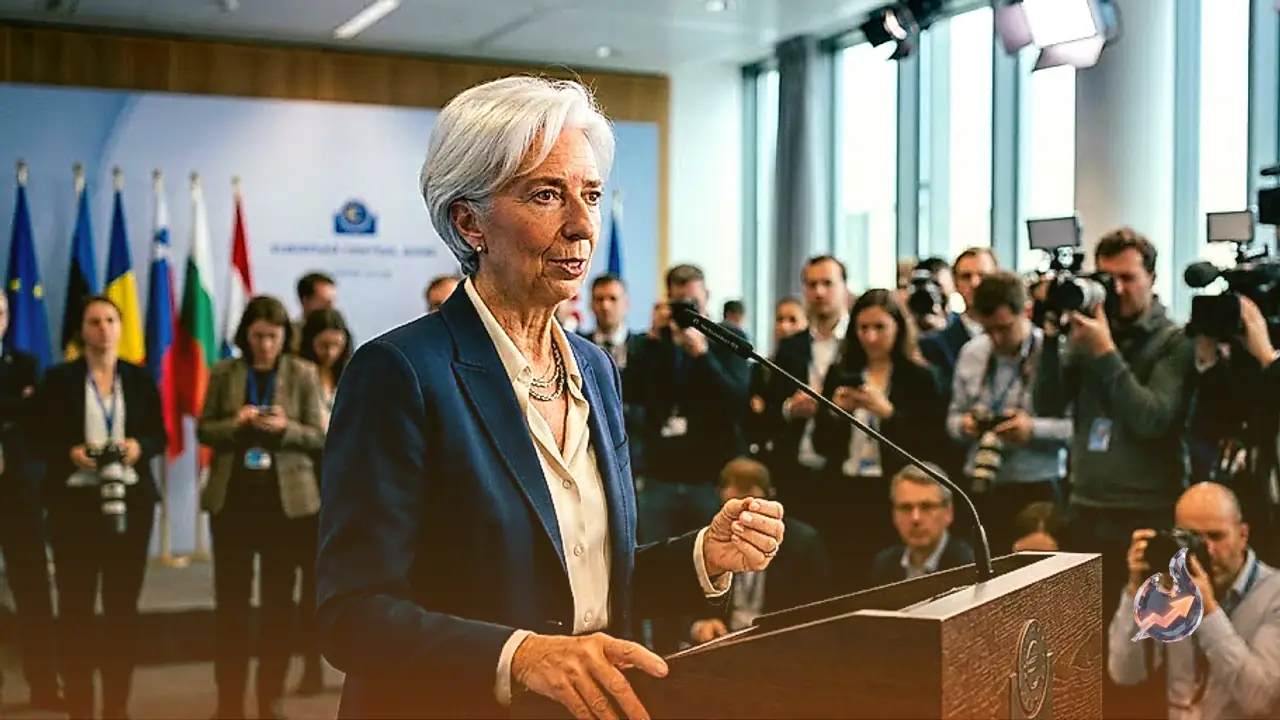

European Central Bank head Christine Lagarde has reaffirmed that future adjustments to benchmark borrowing costs will be evaluated independently on a meeting-by-meeting basis rather than following a predetermined trajectory. Delivering an assessment of economic conditions, she pointed out that broader economic expansion is turning out to be slightly more promising than initially projected. Alongside this, she remarked that secondary inflationary consequences have not yet materialized across the regional economy. The observation of resilient economic activity softens the urgency for immediate or aggressive monetary easing, providing a degree of support that cushions the Euro against sustained downward pressure.
Prudent Stance Grounded in Emerging Data
Despite the slightly stronger economic backdrop, the commitment to address policy choices meeting by meeting, coupled with the absence of second-round price pressures, highlights a guarded and data-reliant approach rather than an outright tightening campaign. Market assessments reflect that while the commentary tilted marginally hawkish relative to prevailing sentiment, the limited disclosure of novel strategic shifts has kept currency fluctuations largely tactical and contained, rather than initiating a durable trend change across Euro pairings.
Fluctuations Across Global Currency Pairs
Elsewhere in the foreign exchange landscape, the Australian Dollar maintained a firm footing against the US Dollar for a second consecutive session, holding ground above 0.7100 during Friday's Asian trading hours. A retreat in US Treasury bond yields placed upward constraints on the Greenback, providing breathing room for competitor assets. Compounding this momentum, hawkish pronouncements from Reserve Bank of Australia Governor Bullock fueled expectations of higher borrowing costs, lending solid backing to the Aussie. Nonetheless, restrictive policy forward guidance from the Federal Reserve and ongoing geopolitical tensions kept a floor under the US Dollar, preventing a broader slide and capping the pair's advance.
Bank of Japan Rate Hike and the Changing Yen Dynamic
In Japanese monetary affairs, the Bank of Japan moved decisively by hiking its key policy rate to 1.25 percent following a surprise 7-2 voting split among board members. Remarks delivered by Bank of Japan Governor Ueda during the post-decision press briefing provided substantial relief to the domestic currency, halting the USD/JPY climb that had touched two-week peaks around 157.30. For more than a decade, Japan operated as a global monetary outlier, with rock-bottom borrowing costs acting as a primary cheap funding avenue that deployed trillions of dollars across worldwide asset markets. The central bank's transition toward tighter borrowing parameters indicates that this prolonged era of hyper-low funding advantages is embarking on an entirely new chapter.
Gold Strengthens as Treasury Yields and Energy Prices Retreat
Precious metals experienced renewed buying appetite, with Gold registering follow-through demand for the second consecutive trading day and hitting a fresh weekly peak ahead of the European session. A recent cooling in crude oil values helped soothe prompt market anxieties regarding uncontrolled inflationary spikes. Consequently, US bond yields fell back further from multi-year peaks, curbing upside momentum in the US Dollar and reinforcing investor appetite for bullion.