




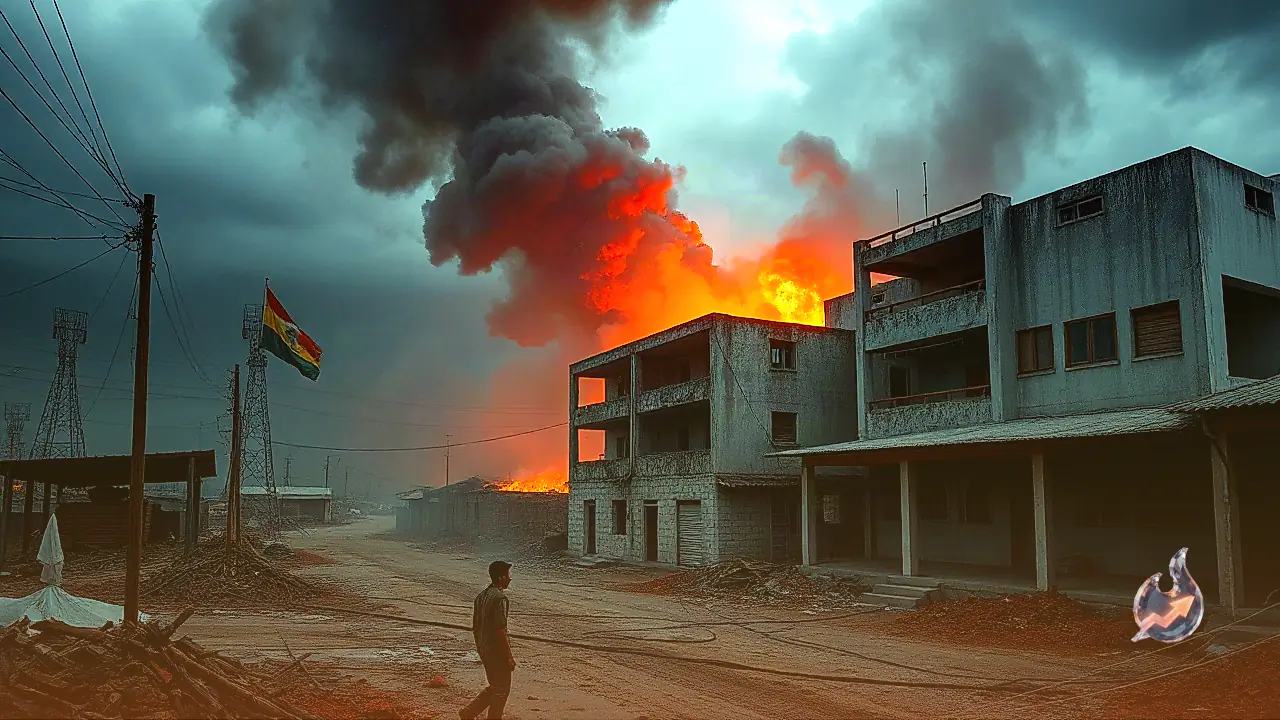




















Crude oil has come storming back, and analysts at Deutsche Bank say the rebound ranks among the sharpest the market has seen in months. The trigger is the worsening standoff between the United States and Iran, where repeated American strikes have kept traders on edge and driven energy prices sharply higher. Brent has just logged its strongest weekly gain since April, and that momentum carried straight into the start of this week.
Over the past week Brent crude climbed +15.91%, including a +4.59% jump on Friday alone, to settle at $88.10 a barrel. That was its biggest weekly advance since April. The buying did not stop there. Early this week Brent added another +2.45% to reach $90.26 a barrel, a move that followed a ninth consecutive night of US strikes against Iran.
Why the conflict is moving the oil price
The core worry is supply. With the exchange of strikes between Washington and Tehran showing no sign of easing, traders have grown nervous about the flow of energy from a volatile part of the world, and that anxiety has fed straight through into higher crude prices. When tensions flare in a major oil-producing region, markets tend to price in the risk of disrupted supply well before any barrel actually goes missing.
Inflation fears back on the table
This is not just an oil story. European natural gas prices have been climbing at the same time, and that combination has revived fears of a more persistent inflation shock. The front-month gas future surged +19.95% last week, with a +5.79% gain on Friday, lifting it to €58.01 per MWh, its highest level since March. Costlier oil and gas mean higher bills for factories, transport and power, expenses that eventually filter down to everyday prices.
How stocks and bonds are reacting
Despite the escalation, US equity futures held up relatively well. S&P 500 contracts were up +0.15% and Nasdaq futures gained +0.47%. Bonds told a different story. Government bond futures weakened, a classic sign that investors are bracing for firmer inflation and, potentially, tighter policy staying in place for longer.
The bigger question: when does expensive oil bite?
Deutsche Bank strategists are also flagging a broader question, namely at what point higher oil prices start to drag the whole market lower. That theme runs through a piece of thematic research dated July 14 and a commodities outlook dated July 15, both of which probe this 'pain threshold', the level at which pricey crude could tip into a wider risk selloff.
Where crude sits right now
According to live market data, crude oil is trading around $82.36, barely changed from the previous close of $82.49, a slip of -0.16%. Over the past year it has ranged between $54.98 and $119.48. Its RSI stands at 58, momentum leaning slightly positive but not yet overbought. The bottom line is simple: until the US–Iran confrontation cools, the path of oil and gas will remain the single biggest risk hanging over the market.