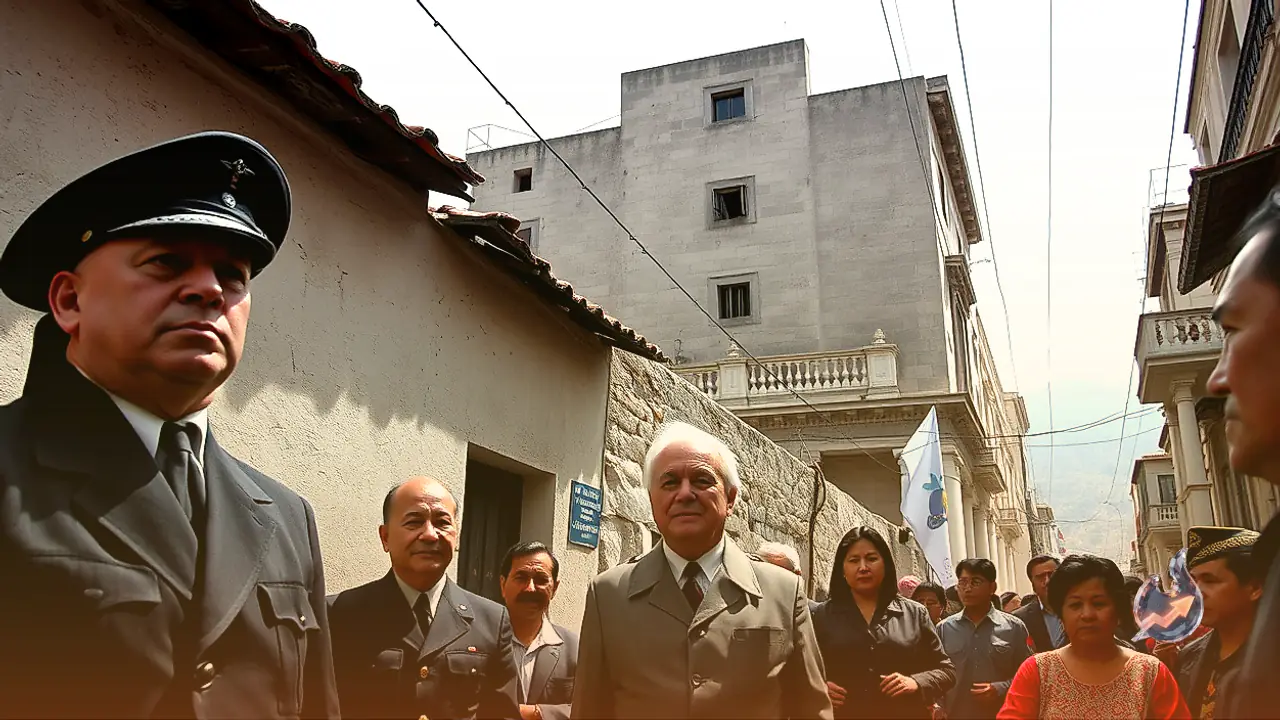




















A powerful explosion ripped through a military barracks in the Bolivian town of Viacha on Friday afternoon, killing at least two people, injuring dozens more and leaving officials bracing for a death toll that could climb far higher once the full scale of the disaster becomes clear.
Explosion strikes an artillery regiment's base
Bolivia's Defence Minister Ernesto Justiniano said at least 58 people were injured when "pyrotechnic material" stored at the site detonated at around 14:30 local time (18:30 GMT) on Friday. The barracks house an artillery regiment and stand in Viacha, a town roughly 30km (19 miles) from the Bolivian capital, La Paz. Pyrotechnic material generally refers to explosive or flare type substances used for signalling, displays or training, and such stockpiles can ignite violently if exposed to heat, impact or a stray spark, which is why the blast was powerful enough to be felt well beyond the barracks walls.
Officials fear the toll could reach 10 to 15
Although only two deaths have been officially confirmed so far, health official Rita Nebraska told local television that between 10 and 15 people were believed to have died in the explosion. That gap between the confirmed figure and the feared toll suggests rescue teams are still working through the aftermath of the blast and have not yet managed to account for everyone who was inside or near the barracks when it went off. Confirming a final number after an explosion of this kind can take time, since it typically involves recovering and identifying victims amid the debris, verifying hospital admissions, and cross checking the list of personnel and civilians who were on site when the blast occurred. Families of soldiers and staff based at the facility are likely facing an anxious wait as the search continues.
Dozens of homes damaged as crews search the rubble
Police said the blast had damaged dozens of homes in the neighbourhood surrounding the barracks, with the force of the explosion largely shattering windows rather than bringing down entire structures. That pattern, glass breaking over a wide radius without buildings collapsing, is common in explosions involving stored pyrotechnic or explosive material, where the shockwave can travel outward with enough force to break windows far from the source without necessarily flattening nearby structures. Emergency workers have since moved in to comb through the rubble at the barracks itself, looking for casualties or survivors who may still be trapped, while residents nearby have been left to deal with the damage to their own properties.
Warning that a second blast could follow
Nebraska also warned that there remains a risk of a further explosion at the barracks, and she urged residents and onlookers to stay at least 150m away from the military base while the site remains unstable. Such warnings are standard practice after incidents involving stored munitions or pyrotechnics, since heat from an initial blast can cause additional material nearby to ignite in a chain reaction, which is why cordons and minimum safe distances are enforced until specialists can declare a site secure. The warning points to the possibility that more of the stored material could still detonate as crews work to secure the area and clear away the debris, meaning the danger has not fully passed even after the first explosion.
Fireworks were kept at the barracks, cause still under investigation
Police spokesman Roger Roca said fireworks had been stored at the barracks, which appears to explain what fuelled the explosion, though he stressed that the precise cause of the blast remains under investigation. Storing a large quantity of fireworks at a working military barracks that also houses artillery is unusual, and it is this detail that investigators are expected to focus on as they try to establish exactly how the blast started and whether proper safety protocols were being followed at the site. Authorities have not yet said why the fireworks were being kept there or what specifically triggered the detonation.
Viacha declares three days of mourning
In response to the disaster, Viacha's local authorities have declared three days of mourning for the victims. Such a declaration is typically used by local governments to acknowledge the scale of a tragedy, and it underscores how deeply the town has been shaken even as the confirmed casualty figures continue to be updated and the search and investigation work carries on at the site. For a town of Viacha's size, a multi day mourning period also means the disaster is likely to dominate public life for several days, as attention shifts from emergency response to remembering those who died and supporting the families of victims and the injured.